If you have difficulties in registration or sign in, please refer to our registration guide at http://help.hpathy.com or shoot us an email at mail@hpathy.com. We are always around the corner to help you become pat of the world's largest online homeopathic community!
The benefits of membership:
Become a member to read the articles, join Hpathy Social, participate in groups, discuss in forums, create your own blog, submit seminars and enjoy all the resources as a privileged member of Hpathy.com. The membership is FREE!
Not a member yet?
Signing up is easy and takes less and 2 minutes. Take a moment to create a user and get verified instantly. Register now to join the best homeopathy community on the web.
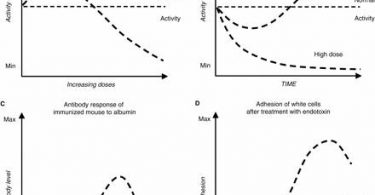
The foundation of homeopathic medicine is the 'Similia Principle', also known as the 'Principle of Similarity' or also as the 'Simile', which reflects the inversion of pharmacological effects in healthy subjects as compared with sick ones. This article describes the inversion of effects, a widespread medical phenomenon, through three possible mechanisms: non-linearity of dose-response relationship, different initial pathophysiological states of the organism, and pharmacodynamics of body response to the medicine. Based on the systemic networks which play an important role in response to stress, a unitary and general model is designed: homeopathic medicines could interact with sensitive (primed) regulation systems through complex information, which simulate the disorders of natural disease. Reorganization of regulation systems, through a coherent response to the medicine, could pave the way to the healing of the cellular, tissue and neuro-immuno-endocrine homeodynamics. Preliminary evidence is suggesting that even ultra-low doses and high-dilutions of drugs may incorporate structural or frequency information and interact with chaotic dynamics and physical-electromagnetic levels of regulation. From the clinical standpoint, the 'simile' can be regarded as a heuristic principle, according to which the detailed knowledge of pathogenic effects of drugs, associated with careful analysis of signs and symptoms of the ill subject, could assist in identifying homeopathic remedies with high grade of specificity for the individual case.Keywords: action - reaction principle - biologic networks - homeopathic medicine - hormesis - inverse effects - paradoxical pharmacology - response to stress - self-organization - Similia principle - Wilder's rule--------------------------------------------------------------------------The article was initially published in Evidence-based Complementary and Alternative Medicine : eCAM. Please cite the original source as - Bellavite, P., Ortolani, R., Pontarollo, F., Pitari, G., Conforti, A. (2007). Immunology and Homeopathy. 5. The Rationale of the 'Simile'. Evid Based Complement Alternat Med 4: 149-163