
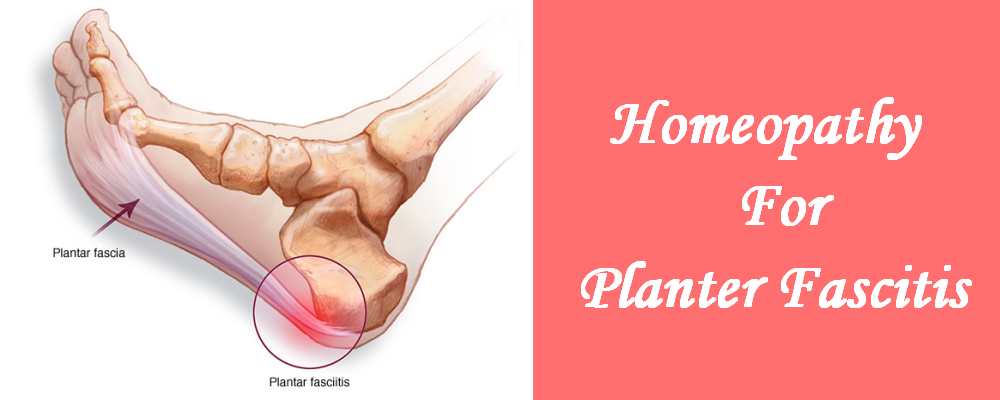

Are you looking for a homeopathic cure for plantar fascitis? This article discusses the homeopathy treatment of plantar fascitis along with the best homeopathic medicine for plantar fascitis treatment.
Plantar Fascitis is inflammation of the plantar fascia or arch tendon of the foot. It is an overuse injury causing heel pain which may radiate forward into the foot. Plantar fasciitis can also be known as a heel spur although they are not strictly the same. A heel spur is a bony growth that occurs at the attachment of the plantar fascia to the heel bone (calcaneus). A heel spur can occur (with repetitive pulling of the plantar fascia) on a foot with no symptoms at all and a painful heel can have no heel spur present.
Plantar Fasciitis is an inflammation (irritation and swelling with presence of extra immune cells) of the thick tissue on the bottom of the foot that causes heel pain and disability.
What is Plantar Fascia?
The planter fascia is a wide, nonelastic ligamentous tissue that extends from the anterior portion of the calcaneus to the heads of metatarsals, supplying support to the longitudinal arch of the foot. This tissue can become strained from overuse, unsupportive footwear, a tight Achilles tendon, or running on hard surfaces.
Most often, the cause of planter fasciitis is chronic irritation. Cross-country and track athletes are prone to overuse injuries in which the planter fascia is continually strained from running and jumping.
Cause of Plantar Fascitis
- The cause of plantar fasciitis is unclear and may be multifactorial. Because of the high incidence in runners, it is best postulated to be caused by repetitive microtrauma.
- Possible risk factors include obesity, occupations requiring prolonged standing, heel spurs, pes planus (excessive pronation of the foot), and reduced dorsiflexion of the ankle.
- Sex-The condition occurs equally in both sexes in young people. Some studies show a peak incidence may occur in women aged 40-60 years.
- Age-The condition can occur at any age. As mentioned, a peak incidence may occur in women aged 40-60 years.
Homeopathy Treatment & Homeopathic Remedies for Pain in Feet, Soles, Heel
Homeopathy treats the person as a whole. It means that homeopathic medicine plantar fascitis focuses on the patient as a person, as well as his pathological condition. The homeopathic medicine plantar fascitis are selected after a full individualizing examination and case-analysis, which includes the medical history of the patient, physical and mental constitution etc. A miasmatic tendency (predisposition/susceptibility) is also often taken into account for the treatment of chronic conditions. The medicines given below indicate the therapeutic affinity but this is not a complete and definite guide to the treatment of this condition. The homeopathic medicine plantar fascitis listed against each medicine may not be directly related to this disease because in homeopathy general symptoms and constitutional indications are also taken into account for selecting a remedy. To study any of the following remedies in more detail, please visit our Materia Medica section. None of these homeopathic medicine plantar fascitis should be taken without professional advice.
Homeopathic Remedies
Causticum
Cramps in the feet. Pains in the instep, in the ankle bones, in the soles of the feet, and in the toes, on walking. Neuralgic pains in the soles of the feet. Contraction in the instep, with tensive pain when stepping. Coldness of the feet. Swelling of the feet. Pains in the varices. Tingling in the soles of the feet. Festering vesicles and ulcerations on the heels.
Adapted to persons with dark hair and rigid fibre; weakly, psoric, with excessively yellow, sallow complexion; subject to affections of respiratory and urinary tracts.
Graphitis
Congestion in the legs and in the feet, when standing upright. Swelling of the legs and of the feet, with hardness and shooting pain. Stiffness of the instep. Shooting pain, like that of an ulcer, in the heel and in the soles of the feet, on rising from the sitting posture. Cold feet, even in the evening in bed. Feet burning. Fetid sweat on the feet. Contraction of the toes. Swelling and distortion of the toes.
Suited to – Excessive cautiousness; timid, hesitates; unable to decide about anything. Fidgety while sitting at work. Sad, despondent; music makes her weep; thinks of nothing but death.
Medorrhinum
Burning in feet, wants them uncovered and fanned. Cold feet with chills all over. Oedema of feet followed and better by diarrhea. Soreness in ball of foot under toes. Cold, sweating feet.
For the constitutional effects of mal-treated and suppressed Gonorrhoea.
For persons suffering from gout, rheumatism, neuralgia and diseases of the spinal cord and its membranes- even organic lesions ending in paralysis- which can be traced to a sycotic origin.
Pulsatilla
Painful sensation of numbness in soles of feet and in balls of the toes. Red-hot swelling of feet, extending up to calf,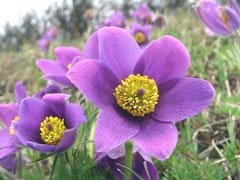 with stinging pain. Swelling of top of foot. Oedematous swelling of feet, worse in evening. Piercing shootings and incisive pains in heels (towards evening). Shootings in soles of feet and extremities of toes. The complaints are worse when one allows the feet to hang down.
Adapted to persons of indecisive, slow, phlegmatic temperament; sandy hair, blue eyes, pale face, easily moved to laughter or tears; affectionate, mild, gentle, timid, yielding disposition- the woman’s remedy. Weeps easily: almost impossible to detail her ailments without weeping.
Sulphur
Shootings in feet. Coldness in feet, especially in evening, in bed, or burning sensation, chiefly in soles of feet. Burning in feet, wants to find a cool place for them, puts them out of bed to cool them off. Burning in soles, on stepping after sitting a long time, and itching, especially on walking, wants them uncovered. Cramp in soles at every step. Soles cold and sweating. Sweat on right foot. Swelling of feet, and especially of the ankles. Gnawing vesicles on soles. Ulcer on instep.
Adapted to persons of a scrofulous diathesis, subject to venous congestion; especially of portal system. Persons of nervous temperament, quick motioned, quick tempered, plethoric, skin excessively sensitive to atmospheric changes. For lean, stoop-shouldered persons who walk and sit stooping like old men. Standing is the worst position for sulphur patients; they cannot stand; every standing position is uncomfortable. Dirty, filthy people, prone to skin affections. Aversion to being washed; always <. after a bath.
Zincum met
Stiffness of joint of the foot after being seated for some time. Wrenching pain in joints of feet and toes. Burning sensation in feet. Inflammatory swelling of feet. Homeopathic medicine plantar fascitis has weakness and trembling of feet. Feet sweaty and sore about toes, fetid suppressed foot-sweat with much nervous excitement. Coldness of the feet at night. Nervous, fidgety movement of the feet, after retiring and during sleep. Tearing in margin of right foot. Ulcerative, boring pains in heels, worse when walking than when sitting. Profuse sweat on the feet.
Persons suffering from cerebral and nervous exhaustion; defective vitality; brain or nerve power wanting; too weak to develop exanthemata or menstrual function, to expectorate, to urinate; to comprehend, to memorize. Incessant and violent fidgety feeling in feet or lower extremities; must move them constantly.
Natrum Carb – sore pain in ball of foot, on stepping; throbbing and crawling in both heels, as from an ulcer, evenings in bed; corns, with drawing, stitching pains in them.
Magnum – rheumatic patients cannot bear any weight on the heels, the pressure causing dark, almost bluish spots.
Sabina – suffering from rheumatic inflammation; sharp stitches from within outward in both heels; aggravates at night; arthritic pains, violent, boring in toes, especially in great toe.
Ammonium Crud – soreness of heels; large horny places on the soles, close to toes; great sensitiveness of soles when walking.
Lycopodium – pains in the heels like pebbles under them on walking or putting pressure or weight upon them.
Silicea – tearing pains in heels due to sprained ankles.
Petroleum – aching in heels relieved by elevating feet; pains like electric shocks.
Cyclamen – burning sore pains in heels-better by moving about, massage and warmth, worse by sitting or standing and by a cold bath.
Borax – pain in heels; burning pain in great toe; inflammation of the bulb of toes, stitches in soles.
Clinical features of Plantar Fascitis
Symptoms
• Pain beneath heel.
• Pain extends medially into sole.
• Pain worse on standing, walking.
Signs
• Marked tenderness at site of attachment of planter fascia to calcaneum.
• Tenderness at heel pad.
Clinical presentation of planter fasciitis
The pain of planter fasciitis is historically Insidious in nature, is worse after rest, and may radiate to the medial ankle or lateral aspect of the foot. The pain is most severe with the first few steps of the day, or when the toes are dorsiflexed. It is often relieved by walking on the lateral aspect of the foot.
Diagnosis of the Planter Fasciitis
Diagnosis of planter fasciitis is made on the basis of history and physical examination. Radiographs are obtained to rule out stress fractures and bones apurs of the calcaneus. On examination, pain is elicited by palpitation at the anteromedial aspect of the heel on the planter surface.
GENERAL MANAGEMENT for Plantar Fascitis
• Reassurance.
• Exercise.
• Avoid precipitating causes.
• Correct maintaining causes.
• Advise foot wears having soft rubber cushioned soles.
• Short wave diathermy helpful in relieving pain.



It’s really good medicine.