
There is no aspect of the history of Dr. Hahnemann’s medical discoveries that is less known, less understood, and more ignored and denied than the curious story of his use of dual remedies. It is a story that has critical implications for understanding both his earlier and his later insights and writings. It is a story that has only been partially told and then that part only in disjointed bits and pieces. Thanks to extensive research several years ago, the whole story was published in the book, An Affair to Remember: The Curious History of the Use of Dual Remedies, Its Significance and Suppression.
Historical understanding is one of the three pillars of human comprehension according to the Greeks, the other being didactical (rational explanation) and polemical (critical analysis).
The story of dual remedies starts ostensibly in the Spring of 1833 with the receipt by Dr. Hahnemann of a letter from one of his closest proteges, Dr. Julius Aegidi. Dr. Hahnemann was at the pinnacle of an illustrious career, having written the Organon and also the radical Chronic Diseases, which insights were the basis for a revised edition of the Organon, its fifth since 1810, but the first major revision of this seminal work. Hahneman was just completing these revisions, and in his 78th year could look back with pride on what he had accomplished.
Aegidi was an Italian physician converted to homeopathy through Hahnemann’s cure of his psoric disease in 1823. He subsequently became an enthusiastic supporter of Hahnemann, perhaps the closest, next to Boenninghausen [1] [1], as shown in the intimacy of letters exchanged and the personal relationship developed with the founder of homeopathy. At the time of our story, Dr. Aegidi was working in Düsseldorf, Germany thanks to Hahnemann’s personal interventions with certain of the aristocracy in that city.
Dr. Aegidi’s letter was most remarkable. Dated 15 May 1833, the letter reported on 233 cured cases. That, in and of itself, was not remarkable. However, the method of cure used by Aegidi was: two highly potentized substances at the same time.
Hahnemann replied in a letter a month later, 15 June 1833 [2] [2]. His reply was equally, if not more, remarkable. Hahnemann assured Aegidi that he welcomed the approach and that it was entirely consistent with his previous teachings. Anyone with a passing knowledge of homeopathy would be forgiven for expressing surprise at this point and perhaps suspecting an April Fool’s prank. In this light, let’s consider the reply and the ensuing events in some detail. First, we have the text of Hahnemann’s reply:
Dear Friend and Colleague,
Do not think that I am capable of rejecting any good thing from mere prejudice, or because it might cause alterations in my doctrine. I only desire the truth, as I believe you do too. Hence I am delighted that such a happy idea has occurred to you, and that you have kept it within necessary limits; ‘that two medicinal substances (in smallest dose, or by olfaction) should be given together only in a case where both seem Homoeopathically suitable, but each from a different side.‘ Under such circumstances the procedure is so consonant with the requirements of our art that nothing can be urged against it; on the contrary, homoeopathy must be congratulated on your discovery. I myself will take the first opportunity of putting it into practice, and I have no doubt concerning the good result. I am glad that von Boenninghausen is entirely of our opinion and acts accordingly. I think, too, that both remedies should be given together; just as we take Sulphur and Calcarea together when we cause our patients to take or smell Hepar sulph, or Sulphur and Mercury when they take or smell Cinnabar. Permit me then to give your discovery to the world in the fifth edition of the ‘Organon,’ which will soon be published. Until then, however, I beg you to keep it to yourself, and try to get Mr. Jahr, whom I greatly esteem, to do the same. At the same time I there protest and earnestly warn against all abuse of the practice by a frivolous choice of two medicines to be used in combination. (Haehl, Vol. II, p. 85, bold added)
Indeed, Hahnemann was so impressed and convinced of the consonance of Aegidi’s discovery with his own work that he wrote to von Boenninghausen,[3] two days later, on 17 June 1833, stating:
I too have made a beginning with smelling two suitably combined remedies, and hope to have some good results. I have also dedicated a special paragraph in the fifth edition of the ‘Organon,’ to this method, and in this way introduced it to the world. (Haehl,, Vol. II, p. 253, bold added)
We shall see later that Boenninghausen had already been doing similar work with dual remedies in mixtures, and that Hahneman was fully aware of this. For the moment, let’s look at what Hahnemann proposed to put in the new, 5th edition of the Organon, then already being readied for publication. The new paragraph on the use of two remedies together was to have been as follows:
Section 274b. There are several cases of disease in which the administration of a double remedy is perfectly Homoeopathic and truly rational; where, for instance, each of two medicines appears suited for the case of disease, but each from a different side; or where the case of disease depends on more than one of the three radical causes of chronic disease discovered by me, as when in addition of psora we have to do with syphilis or sycosis also. Just as in very rapid acute diseases I give two or three of the most appropriate remedies in alternation; i.e., in cholera, Cuprum and Veratrum; or in croup, Aconite, Hepar sulph. and Spongia; so in chronic disease I may give together two well-indicated Homoeopathic remedies acting from different sides, in the smallest dose. I must here deprecate most distinctly all thoughtless mixtures or frivolous choice of two medicines, which would be analogous to Allopathic polypharmacy. I must also once again particularly insist that such rightly chosen Homoeopathic double remedies must only be given in the most highly potentized and attenuated doses.” (Thomas L. Bradford, The Life and Letters of Hahnemann, p. 486, bold added)
While Aegidi’s letter marks the formal beginning of our story, the origins of this momentous part of Hahnemann’s life and works can be discovered to lie in his very early works. However, the implications of his discoveries of 1796 only bore fruit years later. We’ll pick up the story several years before Aegidi sat down to write about his discoveries with the use of two remedies in mixture.
Both Hahnemann and Boenninghausen were aware of what Aegidi was doing well before Aegidi wrote his letter on the 233 cured cases. According to Boenninghausen, writing to Hahnemann, a certain Dr. Stoll of Cologne:
…had suggested dividing the remedies into two classes, the one of which should act upon the body and the other upon the soul. He thought that these two kinds of medicine should be combined in a prescription in order to supplement each other.
His method making some noise in Cologne, and Dr. Aegidi, then at Düsseldorf, having in vain endeavoured to discover the essential secret of this novelty, the latter induced me to endeavour to find out. I succeeded in doing so. (Bradford, p. 492)
Hahnemann indicates his awareness of the matter in an earlier letter to Aegidi of 28 April 1833. At this point, Hahnemann is cautious about the use of mixtures given his general criticisms of polypharmacy and his wariness over the ability of others to undermine the hard fought gains he had made in medical reform.
Do not cease from announcing publicly in great detail your work in the Düsselthal institution. But do cease to pay any attention to Dr. Stoll’s mixtures; otherwise I might fear that you were not yet convinced of the eternal necessity of treating patients with simple unmixed remedies. I have seen even shepherds and hangmen do some wonderful things now and then. Are we to chance to luck in the same way? (Haehl, Vol. I, p. 393)
In this same letter, Hahnemann indicates his general concern to maintain the purity of his system against allopathy, echoing the struggles he was having in this regard:
The purifying and separating of the true from the false which I undertook with the highest motives and which has the unmitigated approval of the best and most dependable of my students, must draw the world’s attention to real values. What have you to fear from a frank and earnest separation of pure homoeopathy from that humbugging which must be the grave of homoeopathy if it is allowed to continue advertising itself as genuine and gradually insinuating allopathy again — a very convenient resource for the sluggards? The science and I have need of fewer but truer adherents, I do not wish to see my colleagues increased by a large number of those false coiners. I wish to count as mine only a few good men and true. (Haehl, Vol I. p. 256)
Hahnemann had reason indeed at this point to be cautious. He had just announced to the world, in 1828, his discoveries of the chronic miasms, in particular psora, after a 12 year quest. The “psora theory” had not been well accepted by many if not most homeopathic doctors of the time, a result that Hahnemann had feared would happen. [3] [4]
At the same time, as a result of his concern over the introduction of allopathic methods of treatment (e.g., blood-letting, crude drugs, emetics, etc.) by those who did not have full confidence in the curative and healing powers of his new system, Hahnemann had felt the need to intervene in a dispute between homeopaths in Leipzig attendant on the opening of the first homeopathic hospital in the world in that city. The dispute was not only public, but unusually bitter and contentious.
As Hahnemann himself wrote to Boenninghausen towards the end of 1833 about the Leipzig matter:
Already four years ago, I wrote a friendly but forcible pastoral letter to the Leipsic Society, in which I showed them my displeasure at the unscrupulous and criminal behaviour of some of them, who treated their patients with homoeopathic and allopathic measures simultaneously, to the detriment and shame of our science. But I saw no signs that these arbitrary fellows, who boasted of being the most distinguished of all the homoeopathic physicians, took any heed of it.
…Yet, what happened? Of course after Müller’s public declaration of intentions, they dared not be so bold as to use venesection, leeches, emetics, laxatives, etc. in the Homoeopathic Hospital…But now there anger against me became loud…an open revolt against me signed by the whole of the Society…
…This is how I am treated by these ungrateful ones… (Haehl, Vol. II, p. 289-291)
Aegidi had taken the step of urging Hahnemann to reconcile with the Leipzig homeopaths, but Hahnemann reiterated his strong opposition to the false homeopathy of the Leipzig doctors in the letter of 28 April 1833 already referred to above. [1] [4] [5]
You have not judged my proceedings against the pseudo-homeopaths from a right point of view. How can you advise me to offer these public cheats my conciliatory hand?
It is just this purging and this division of the true from the false, that I have undertaken from higher motives, and which has met with the unanimous approval of the best and the most reliable of my pupils, that will point out to the world, what is genuine. What do you fear, from a public and serious separation of pure homoeopathy from that imposture, which is bound to become the grave of true homoeopathy, if it were to continue to proclaim itself as the genuine article, and at the same time, overshadow it with allopathic practices, which of course would be very opportune for the lazy ones?
I, and our art, have only need to a few true followers; I do not wish to have as colleagues that large crowd of forgers of base coins. I only wish to number among my own a few good men. Do speak to our worthy Boenninghausen on that subject; he will enlighten you and make you understand what I cannot accomplish by letter owing to the overwhelming amount of other work. Let it suffice that your opinion on this subject, I regret to say, is erroneous… (Haehl, Vol. II, p. 282)
Here are clear examples of the reaction of those “moderates” who saw much good in homeopathy but also wished to see a union of it and the prevailing medical system, the one thing Hahnemann most feared (that is, co-option by the Old School, leaving homeopathy gutted and lifeless). [1] [5] [6]
With this extravagance Hahnemann’s homoeopathy had reached the highest summit, and would have undoubtedly gone under, if sensible physicians had not taken the matter in hand, and protected the great discovery which this genius had made, and saved it for the benefit of humanity. There is indeed something tragic in it, if we consider how Hahnemann himself moved by hatred against the older medical school, developed his own creation more and more one-sidedly, and drove it even to a sharper point, until he nearly destroyed it. (von Brunnow, Haehl, Vol. II, p. 164).
Hahnemann remained faithful to his strict dogma in spite of all these letters, and spoke most violently against the behaviour of the more moderate school of homoeopathy …I had prefaced this second translation [in French of the Organon], which came out in 1832, with a new detailed introduction, in which I declared myself a follower of the new moderate ideas, and… he was very irate about it, and demanded from me a repudiation of all the heretical parts that displeased him, in some homoeopathic periodical.” (von Brunnow, Haehl, Vol. II, p. 165)
The “psora theory,” that is, the discovery of the chronic miasms, had brought clearly back to Hahnemann’s consciousness the supersensible (phenomenal) nature of the constant (tonic) diseases, as opposed to the more sensible dimension of the pathic diseases (symptoms), something he had discovered in 1796, but which had been overshadowed by the intense work on the elaboration of the technique to address the pathic diseases (homeopathy). It was difficult for many, still ensconced in the material world of the Old School, to accept the phenomenological reality of disease and in particular, the chronic miasms. [6] [7] Haehl writes that the Psora Theory “aroused the criticism of friend and foe to a tremendous extent” right from the start and that these views “seemed to be even more idiotic than the high dilution medicines.” (Vol. I, p. 137)
Already, in Hahnemann’s lifetime, following his move to Paris, the German Central Association (of homeopaths) moved to formally rejected the theory, but nonetheless “recognised fully the efficacy of the psora remedies in chronic diseases,” (Haehl, Vol. II, p. 163). Practicality took precedence, even if rejecting the theory meant rejecting the very principles that had led to their discovery int he first place. None are so blind as those that can see, but seeing, see not.
Here we find the seeds of a still prevailing attitude to Hahnemann’s deeper insights, particularly as relate to the tonic side of disease (supersensible domain) in the form of rejection by both followers (reject the theory of disease, but accept the use of the remedies in practice on the basis of the law of similars) and critics (ridicule). His earlier works, on materia medica and on the law of similars leading to the Organon, had been criticized, but had also garnered many followers who saw here a useful and necessary reform of medicine. However, such followers and supporters, headed by Hufeland and his influential medical journal, never ceased to think that the reformers could eventually be reconciled with the “mother church” of prevailing authority in medicine. If Hahnemann at any time thought this might be possible (and there is no evidence that he did), such thoughts would have been entirely banished by his work between 1810 and 1830 which brought fully to his consciousness the dynamic (non-material), dual (constant and variable) and hierarchical (jurisdictions and layers) nature of disease and medicine.
These new insights, however, could not be grasped by those without the proper capacity to “see” them. For those living in a different paradigm or organizing idea, these new insights were ridiculous indeed. They felt that they could use the practical results of the theory without needing to accept the theory itself, a form of empiricism that Hahnemann rejected. Without the strong foundation of the theory, the practical results would simply lead to the absorption of the practice into the all-encompassing power and authority of the Old School.
It is no wonder that Hahnemann felt the need, because of the public nature of the operations of the Liepsic Homeopathic Hospital and its symbolic importance for the advance of homeopathy with the authorities and the public, to take the offensive in such a strong and uncompromising manner against the Leipzig Homeopathic Society for using allopathic methods simultaneously with homeopathic ones. [7] [8]
Hahnemann also warned Aegidi against straying from the true path, telling him that he has nothing to fear from a separation of true from false homeopathy. However, at this point Hahnemann was already fully aware that Aegidi and Boenninghausen were looking into Dr. Stoll’s “mixtures.” and through his lengthy work on chronic diseases, was also becoming more conscious of the dual nature of disease (constant and variable diseases).
Hahnemann had further begun using remedies in quick alternation in acute self-limiting diseases. While he may have formally considered or intended that such use of two remedies be after the full action of the first remedy, it is conceivable that in practice Hahnemann may have found the need to use remedies in close enough proximity that there was the possibility of overlapping action (that is, that the second remedy was prescribed and ingested while the secondary action of the first remedy had not yet exhausted itself).
In a letter to Dr. Stapf of 24th April 1830, Hahnemann wrote how he had cured himself using Staphysagria and Arsenicum in short alternation. Also, during the cholera epidemic of 1831, we find a recommendation for the use of several remedies in alternation.
This evidence comes from a paper written by Dr. O.A. Julian in 1984, who also lists ten more examples of Hahnemann’s use of remedy combinations. Clearly, the concept of using more than one remedy within the time frame of action of another remedy was starting to form in his consciousness. Certainly, in the new paragraph on dual remedies proposed for the 5th Edition, Hahnemann refers to the use of dual remedies as being similar in concept to his previous use of two remedies in quick alternation in acute diseases.
Dr. Julian’s evidence is discussed in an article in Homeopathy On-line:
When Hahnemann started to develop his homeopathic treatment, orthodox doctors often used many drugs in combination. Hahnemann severely criticized this polypharmacy. In order to study the effects of each homeopathic remedy Hahnemann did not use combinations of remedies in the early years and objected to the use of remedy combinations by other homeopaths. Hahnemann’s warnings against using combinations of homeopathic remedies have become an entrenched doctrine in some homeopathic quarters.
However, combinations of homeopathic remedies have been used successfully for well over a century by homeopaths on the European Continent.
Continental homeopaths have known for over a century that Hahnemann did in fact sometimes use remedy combinations, despite what he wrote in the Organon.[9] This was confirmed by Dr. D. Demarque during the 41st Congress of the International Homeopathic League in Rio de Janeiro in 1986. Dr. Demarque’s statement caused great controversy at the congress and it was alleged that he was advocating ‘polypharmacy.’ However, Dr. P. Fisher, editor of the British Homeopathic Journal, wrote in his report on the congress that: ‘Demarque’s historical evidence appeared to be irrefutable.’ (BHJ 1987, pp. 6-7)
The late Dr. Julian also showed clearly in a paper published in 1984 that Hahnemann had in fact used remedy combinations. In a letter to Dr. Stapf, Hahnemann wrote on 24th April 1830 how he cured himself during a serious illness by taking Staphysagria and Arsenicum alternatively at short intervals. During the cholera epidemic of 1831 Hahnemann recommended the use of several remedies, among them Bryonia and Rhus Toxicodendron, taken in alternation. (Julian 1984, p. 42)
In the paper referred to, Julian gave ten more examples, with references, showing that Hahnemann had indeed used remedy combinations. Many of the references were to Dr. Richard Haehl’s German biography, Samuel Hahnemann, sein Leben und Schaffen, which was published in 1922. An English translation of this book has only been published quite recently.
The most recent reference to Hahnemann using polypharmacy is the following: ‘Another extremely interesting feature of Hahnemann’s practice at this time is his use of two remedies at once.’ (Handley, 1988)
Continental homeopaths have known from Hahnemann’s own time that he did use combination remedies, and the material in the German biography of Hahnemann by Dr. R. Haehl has been available to homeopaths who can read German for 74 years. But these historical facts have not been easily accessible to English speaking homeopaths who do not read German. So it is not surprising that Anglo-American homeopaths have believed for a long time that Hahnemann never used remedy combinations. The documented historical fact, however, is that he did.’ (see Homeopathic Drainage Treatment According to Vannier, Dr. Eddy De Ruyter, Homeopathy On-line, Vol. 6).
Hahnemann had further developed a dual conception of the Living Power of the human being as well as a duality between the Spirit (Geist) pole and the nature (Wesen) pole. Thus, he had come to realize the profound duality of life.
Given all this, Hahnemann’s almost immediate welcoming of Aegidi’s use of dual remedies in mixture as being “fully consonant with the homeopathic art,” is not at all surprising.
Boenninghausen’s Dual Remedy Case
Boenninghausen, who along with Aegidi, had started to explore the use of dual remedies with Hahnemann’s knowledge and tacit consent, provides us with a striking example of the dual remedy concept from this period.
Boenninghausen fell ill in April 1833 with a serious intestinal blockage, and was, he felt, on the verge of death when he found almost instant relief in Thuja. He then wrote to Hahnemann about this incident and received a reply dated 28th April 1833. Hahnemann relates that he too had fallen ill on or about 3 April 1833 for two weeks from an illness that had threatened his life.
He had been saved only by the use of several remedies in a short period of time. What is interesting is that Boenninghausen had also had to use two other remedies, approximately eight days apart, to complete the cure begun by Thuja, and that these were precisely the two remedies Hahnemann had suggested he take not knowing that Boenninghausen had already taken both, each one well-indicated for the case.
In spite of the great care I took, some vexation… may have contributed to my getting a suffocative catarrh, which for seven days before the 10th of April, and for fourteen days afterwards, threatened to choke me… Only since the last four days I feel myself saved. First by smelling twice of Coffea cr. X-o, then of Calcarea; also Ambra contributed its share…[10]
I was sorry to hear from all my heart, that you have been so sick… Now if you would have an additional advice for the restoration of the activity of your bowels, I would call your attention to Conium and to Lycopodium, and to take daily walks in the open air. (Boenninghausen, Lesser Writings, p. 205-206)
At this point in the article Boenninghausen comments on Hahnemann’s suggestion of two remedies:
I would add here that a few days after sending off my letter [likely the 15th of April] in which I had neither asked for his advice nor spoken of any additional treatment I had taken the homoeopathically indicated Lycopodium, and so also about eight days before receiving the letter [“first days of May”][11] from our Hahnemann Conium, each in a minimal and single dose, and nothing else at all… What a mass of observations and of experience was required, together with what a rare divining power, in order to give in advance (in a disease which had only been communicated as to its leading characteristics and as to the mere naming of the first remedy used), two remedies which only subsequently, through their symptoms, were so distinctly and determinedly indicated, as homoeopathically suitable, that of all the other remedies none could come into competition and the result had already proved the correctness of the advice before it had become known to me! (Boenninghausen, Lesser Writings, p. 206)
We need to note that this was two medicines (Boenninghausen emphasizes “two remedies”), each indicated for the case, presented by Hahnemann as the medicines to be used, not as possible ones from a long list. Why were two needed to complete the case treated first by Thuja? How did Hahnemann know which medicines were needed with only the leading characteristic symptoms? From observation (of symptoms) on the one side and (clinical) experience on the other, joined by “a rare divining power?”
We should at this point indicate that Hahnemann, despite his illness, was seen to be in full health. The illness that he succumbed to briefly was an example of an idiopathic disease caused by constant vexation (homogenic dimension) due to the dispute with the Leipzig half-homeopaths.
But in spite of everything the “old man,” almost eighty years of age, was physically and mentally fit and cheerful, as Griesselich has so realistically described in his ‘Sketches’ taken in Koethen. Here was, indeed, remarkably blessed old age, full of keen vigour and unquenchable zeal. (Haehl, Vol. I, p. 183) [8] [12]
The Import of Aegidi’s Letter of 15 May 1833
Aegidi’s cure of cases using two remedies in mixture to address the dual nature of disease, would appear, at least on the surface to the uninitiated, to go counter to Hahnemann’s long standing opposition to polypharmacy. However, despite this apparent novelty, Hahnemann greeted the news by Aegidi with tremendous enthusiasm. Not content with this, he further decides to try the use of dual remedies in mixture himself and writes a new paragraph for the 5th edition of the Organon, then at the printer, supporting the use of dual remedies.
What is remarkable about this paragraph on dual remedies for the 5th edition is that Hahnemann felt that it could be simply inserted into the existing text of the Organon without the need for any adjustment. Hahnemann also drew attention to the link between his earlier use of two remedies in alternation and the new approach.
What seems to have assuaged Hahnemann’s earlier concerns over the mixtures of Stoll is the “happy idea” stated by Aegidi that each remedy in the mixture would approach a different disease (each is based on the law of similars and each treats disease from a different side) and that each would be in “the smallest dose.” This harkens back to Hahnemann’s own earlier discovery that there is a relationship between the size of the dose and the length of the initial action of the medicine. The implication here is that the dynamic dose (in dilutions beyond any chemical laws) is not subject to the same stricture as chemical doses, such that the giving of two suitable (that is, each from a different side) remedies in mixture does not create a problem for cure, but rather enhances it. Earlier, Hahnemann had found that the dynamized doses increased in therapeutic power despite increased dilution.
Was he now realizing that the dynamized dose in mixture, treating the duality of disease (that is the two diseases in the patient – tonic and pathic), actually enhanced the therapeutic power of treatment as well? Certainly, the experience of Aegidi, Boenninghausen, and later Dr. Lutze, would confirm this.
Aegidi’s letter of 1833 comes as a culmination of several streams of thought each moving towards this high water mark in prescribing by the law of similars. We see the discovery early on of the dual nature of medicinal action, though the emphasis is on the initial action in self-limiting and acute cases. We see the discovery of the dual nature of disease in the form of constant and variable diseases, with the early focus in the aphoristic Organon on the many individual, variable types of disease for which no effective specific remedies had yet been found. We see the concern to dilute the crude doses then in vogue so as to minimize any negative effects and yet to retain some therapeutic action, followed by the dawning of the realization of the hidden (dynamic) power in such small doses.
We then see the movement of dilution past the bio-chemical laws into a supersensible (spiritual) realm, into the world of potencies (as opposed to dilutions), coupled with the discovery of the hidden constant chronic miasms (phenomenal in nature). A schism emerged in the ranks over these two moves into the supersensible realm of nature and Hahnemann became concerned over the movement back (reaction) to the materialism of allopathy. This triggered an otherwise embarrassing and uncharacteristically bitter public feud with the Leipzig homeopaths.
Hahnemann, at the same time, became entranced by the dynamic nature of potentized medicines and tested this by another seemingly embarrassing use of olfaction to the exclusion of other methods. [9] [13] He moved from the single dose and wait method of previously, to repeated doses (both through olfaction and the liquid dose), though cautiously (every week in chronic cases) to trying to speed up the time of cure. He arrived at a profound insight into the dynamic and dual nature of disease and of medicinal action and commenced with the use of overlapping doses. He apparently began the use of overlapping action of remedy in the case of self-limiting diseases (at least in his own case). Now Aegidi appears and suggests to Hahnemann the use of two remedies in mixture, each from a different side, in high potency (and Hahnemann adds, through olfaction as well). From all that has gone before this appears as the culmination of Hahnemann’s ideas. And that is exactly how Hahnemann reacted.
At this point, Hahnemann’s enthusiasm, beyond leading him to try this method himself and to write a new paragraph for the 5th edition of the Organon, then already at the printers, propelled him to present the new discovery of dual remedies to a gathering of the Leipzig homeopaths. These were the same doctors he had only recently chastised as being half-homeopaths. They had agreed to meet in Koethen, on 10 August 1833, to resolve their differences with Hahnemann.
The gathering was intended to be a peace conference following his lengthy, acrimonious and very public dispute with the Leipzig homeopaths over the running of the first homeopathic hospital in that city.
An editorial in the British Journal of Homoeopathy of July 1865 explains what happened:
Dr. Aegidi proposed to Hahnemann to administer a mixture of two highly-potentized remedies each corresponding to different parts of the disease. In the potentized state the medicines thus mixed would be incapable of chemical reaction, but would each act separately in its own sphere. Dr. Boenninghausen approved of the idea and Hahnemann was induced[14] to present the matter to the meeting of the Central Society for 1833. Hahnemann was persuaded that this would probably lead to the polypharmacy of the old school, and he decided to exclude this doctrine from the new edition of the ‘Organon.’
Despite the strong negative reaction of the other homeopaths, Hahnemann nonetheless wrote to Aegidi on 19 August 1833, thus, only a week after the meeting, repeating his approval of the use of dual remedies in mixture and confirming that he had indeed written a new paragraph for insertion in the 5th Edition of the Organon. The letter notes that this truth (the use of dual remedies) should not be withheld from the world even though he, Hahnemann, had not necessarily discovered it. This was, perhaps, a reference to his earlier delay in publishing the discoveries relating to the chronic miasms because of concern that others might not appreciate it or acknowledge its source (see Haehl, Vol. II, p. 154, bold added)[15]
I have devoted a special paragraph in the fifth edition of the ‘Organon‘ to your discovery of the administration of double remedies. I sent the manuscript yesterday evening to Arnold and enjoined him to print it soon and put the steel engraving of my portrait as a frontispiece. The race for priority is an anxious one. Thirty years ago I was weak enough to contend for it. But for a long time past my only wish is that the world should gain the best, the most useful truth, be it through me or others. (Haehl, Vol. II, p. 85, bold added)
Hahnemann’s Decision to Withdraw the Dual Remedy Paragraph
Now comes an interesting twist to our story. On the 15th of September 1833, Hahnemann wrote to Boenninghausen that he had decided, despite his initial reluctance, to withdraw the paragraph on political grounds as he had earlier been urged to do by his followers.
What finally forced his hand was a rumor that Hufeland, an influential allopath who had strong sympathies for homeopathy, was greeting the news of the new paragraph on dual remedies as presaging the return of homeopathy to the folds of orthodox medicine, something that he strongly wished and Hahnemann strongly feared. He wrote to Boenninghausen on 15 September 1833:
I was told a short time ago that it had become known to Hufeland (probably through the printer) from my manuscript of the fifth edition of the ‘Organon‘ that I have taken up treating with two medicines, and he is already rejoicing at the fact that homeopathy will have to return at last into the bosom of the only saving church, and would again have to join the old science. As it is never, as we know, absolutely necessary (although at times advantageous) to prescribe for the patient a double remedy, and the advantage gained from the exposition of this sometimes useful method, is, as I see, greatly overbalanced by the disadvantage which would certainly arise from a misinterpretation by the allopaths and allo-homeopaths, I have, with your approval I feel sure, had the manuscript sent back to me, and have put everything back integrum, and also added a reprimand against such a proceeding, so that the orthodox pope of the old school will be considerably upset when he sees in the ‘Organon‘ a publication which will make his rejoicing melt away. I know you approve of my action… (Haehl, Vol. II, p. 253)
The Single Remedy and The Main Pillars of Homeopathy
Given the concerns over polypharmacy and the related issue of the use of a single remedy, it is interesting to examine the “peace agreement” signed by Hahnemann and the other participants at the August meeting in Koethen. The agreement consistently deals with the allopathic treatment modalities that Hahnemann had so criticized in his communications with the Leipzig homeopaths, but no mention is made of the single remedy issue. This might have been expected if the use of dual remedies in mixture had been an issue of philosophy rather than simply a political problem (how to promote it without falling into polypharmacy – the false use of remedy combinations – or leading to the ineffective use of the law of similars due to misunderstanding and ignorance on the part of the majority of homeopathic followers).
The “peace agreement” only reinforces the fact that dual remedy prescribing was not considered by Hahnemann and the others as being inconsistent with the rules up to that point. [1] [1] [16]
As a result of the Leipzig affair and after the disclosure of the discovery of dual remedies, Hahnemann set down a series of principles relating to the foundations of homeopathy which he and the Leipzig doctors signed at the meeting in Koethen on 11 August 1833 as a form of peace treaty after the cessation of hostilities:
Agreement on the 11th of August 1833The main pillars of homeopathy are:
1. Strict and unqualified adherence to the principle of Similia similibus and consequently
2. Avoidance of all antipathic methods of treatment, wherever it is possible to attain the objective by homeopathic remedies; and therefore the greatest possible
3. Avoidance of all positive remedies and those weakening by their after-effect; consequently, the avoidance of all bleeding, of all evacuation upwards or downwards, of all remedies causing pain, inflammation or blisters, of burning, of punctures, etc.
4. Avoidance of all remedies selected and destined only to stimulate, whose after-effects is weakening in every case.
Whoever has acknowledged as his own these tenets, which are the main pillars of homeopathy, let him sign his name below. S.H. (Haehl, Vol. I, p. 200)
As can be seen, the main pillars are the giving of remedies on the basis of similar resonance and the avoidance of measures that only weaken the vital force (all antipathic and allopathic measures).
A further indication that the use of dual remedies, even in mixture, was consonant with the principles of his system, as Hahnemann had earlier communicated to Aegidi, is a letter to Hering, dated September 13, 1833. Hahnemann writes to him of the Leipzig dispute. He also makes a reference to the single remedy at a time issue:
On August 10th I had with me here, upwards of twenty of my best pupils from all parts (including Boenninghausen) and they all agreed again on the one point, that a true homoeopathist should administer only one carefully selected homoeopathic remedy at a time, after accurate investigation into the condition of the morbid state; he should avoid all palliatives, all kinds of weakening processes, all stimulation with so-called tonics, and all external painful applications. (Haehl, Vol. II, p. 288, bold added)
Here we are led to the realization that Hahnemann saw in the dual remedy issue what Boenninghausen and Aegidi must have seen, and what Lutze would later clearly see, even if not fully articulated: that the issue of the single remedy is linked to the single disease (morbid state). There can be only one remedy for each morbid state and only one remedy can, thus, be prescribed at a time for any given morbid state (disease).
Polypharmacy is, then, the giving of more than one remedy for the unity of the morbid state, that is, the breaking down of this unity into arbitrary parts. Thus, the issue of the single remedy ultimately comes down to a true understanding of disease. [1] [2] [17]
The concern of Hahnemann and his followers was polypharmacy. We have seen that the use of dual remedies was not considered by Hahnemann and his close followers as constituting polypharmacy. Rather the concern was with the appearance of propriety for the untutored public. Thus, polypharmacy can only have meant and means the use of more than one medicine at a time for a given disease. What the allopaths did was to confuse a few common symptoms for the disease and then decide to treat this false unity (disease) by means of different medicines for different individual symptoms (e.g., one for the inflammation, one for the cramps, one for the bleeding, etc.). Hahnemann’s criticisms of polypharmacy also make clear that part of the problem involved the use of large, crude doses.
Hahnemann’s final decision to withdraw the new paragraph on dual remedy mixtures was based on purely political considerations, namely a concern that the allopaths not be able to take advantage of this development in order to discredit homeopathy.
However, in doing so, Hahnemann had to wrestle with his own conscience. He expressed his problem in writing to Boenninghausen. Boenninghausen apparently urged him, despite his own success with dual remedies, to not only remove the disputed new paragraph, but to amend the existing text to include a criticism of the use of dual remedies because of the political risks: [1] [3] [18]
Your eloquence would have easily persuaded me, if I had been in your position, that is, if I had been as much convinced as you are from a large experience of the possibility and even great utility of giving double remedies. But from many attempts of this kind only one or two have been successful, which is insufficient for the incontrovertible establishment of a new rule. I was therefore, too inexperienced in this practice to support it with full conviction. Consequently it required only slight momentum to induce me to alter that passage in the new ‘Organon,’ which results in this, that I concede the possibility that two well chosen remedies may be given together with advantage in some cases but that this seems to be a very difficult and doubtful method. And in this way I believe I have done justice to truth on the one side and to my inner conviction on the other. (Haehl, Vol. II, pp. 253-54)
Hahnemann felt in the face of strong opposition that his own experience was still too limited for “the incontrovertible establishment of a new rule.” Under strong attack from the others, he did not have enough of his own intimate knowledge of the new concept of two sides and the use of two substances (“this practice”) to “support it with full conviction.” However, he concedes that a new rule is possible as “two well-chosen remedies may be given together with advantage.” Hahnemann had both closed the door on those who might abuse the discovery and re-introduce polypharmacy on the one hand and left it ajar for those who could understand the legitimate use of dual remedies in mixture. He also left open the possibility that eventually a new rule could be established with full conviction.
Thus, instead of the proposed new paragraph, Hahnemann altered the existing paragraph by adding a footnote to the existing Aphorism 272. Far from being a condemnation of the double remedy approach, Hahnemann here repeats essentially what he had written to Boenninghausen on 16 October 1833, that the footnote “…concede(s) the possibility that two well chosen remedies may be given together with advantage in some cases but that this seems to be a very difficult and doubtful method.”
Some homeopathists have made the experiment, in cases where they deemed one remedy homeopathically suitable for one portion of the symptoms of a case of disease, and a second for another portion, of administering both remedies at the same or almost at the same time; but I earnestly deprecate such a hazardous experiment, which can never be necessary, though it may sometimes seem to be of use.[19] (Dudgeon, Organon)
Hahnemann faced a difficult choice. On the one hand, he knew the truth of what Aegidi had presented, and knew that Boenninghausen (another of his few close and faithful followers) had also had very good, indeed “surprising” results. On the other hand, he faced the reality of his many followers who could not really be trusted to leave behind the corrupting framework of the Old School (using suppressive means with homeopathy), much less grasp the new insights into disease (Psora Theory) and his many critics who were seeking ways to assimilate the practical aspects of his new system of medicine, if not to destroy it altogether, leaving at best a hollow shell of reform.
No wonder Hahnemann, after his experiences with the schism occasioned by the Psora Theory and the higher dilutions, sought only those few “good men and true” who really understood, rather than the many who would simply distort his teachings. As he expressed it to Aegidi just prior to receiving the landmark letter on dual remedies:
I, and our art, have only need of a few true followers; I do not wish to have as colleagues that large crowd of forgers of base coins. I only wish to number among my own, a few good men. (Haehl, Vol. II, p. 283)
Despite the “happy idea” of the two sides of disease, Hahnemann still did not have, from his own understanding and experience a means of explaining and of defending the practice of dual remedies against both attack and misuse. Without such a base, how could this approach be distinguished from the false use of mixtures in allopathy (polypharmacy)?
So, Hahnemann apparently ceased the use of this particular practice (dual remedies in mixture) [4] [20], but continued the use of dual remedies in another form, the one he was more familiar with, at least from his development of the multiple dose method between 1829 and 1837 (that is, the use of two remedies within the full action, but not within the initial action of the first remedy). All this was consistent with what he had written in the aphoristic Organon and occasional writings, as well as letters.
In writing to Aegidi on 9 January 1834, Hahnemann was at pains to ensure that only those who really understood the new insights continue the use of dual remedies in mixture, and then not in the full public glare. This is an echo of earlier concerns expressed in his Chronic Diseases:
305.1 As to the second main mistake in the treatment of chronic diseases (the unhomeopathic choice of the medicine), the homeopathic beginner (many, unfortunately, remain such beginners all their lives) sins mostly through inexactness, carelessness and indolence.
Given the difficulty of grasping the principles behind such use, any work is “hazardous” and to be left to only a “few good men.” Thus, he wrote to Aegidi to try to bring some degree of order to the process, so that it did not get out of hand.
In my opinion you have proceeded somewhat too speedily in the matter of administering double remedies, since you are generally an impulsive man. I cannot and will not prevent you from talking about it in public; I don’t do it myself.
You presuppose that imitators could easily find the correct Simillimum in such a case of illness not only for the one part of the symptoms but also the other part and in such a way that they could always achieve good results. Ah! If most homeopaths could or would discover only ONE remedy, exactly suitable in accurate similarity to the characteristic symptoms, we would gladly excuse them the necessity of finding the nearest suitable one!
For my part, I find the discovery of the right remedy difficult and laborious in every case. Therefore, I do not see how they would hit upon the first, to say nothing of the second twin remedy so easily! Pardon me for being so incredulous in this matter. However, I leave it to you to write about as you think fit – but I beg of you to use only the ‘Archiv,’ as both the homoeopathic periodicals appear before the public; it will be a delight for the allopaths. (Haehl,Vol. I, pp. 393-94) (emphasis added).
In this letter, Hahnemann first gently chastises Aegidi for having acted too quickly, presumably before the way could have been better prepared (theoretically and practically), as it had been by Hahnemann in the case of the psora theory – 12 years of careful research. This is in keeping with Hahnemann’s rude reception in Leipzig and his retraction of the new paragraph.
He then goes on to say that he will not prevent Aegidi from discussing the issue discreetly, although he, Hahnemann, will not do it. This is further evidence that Hahnemann had not condemned the method, but had only beaten a tactical retreat. His concern was a practical one in the face of allopathic maneuvering to discredit or assimilate homeopathy: to expect that others would be able to find two suitable remedies, much less just the one. The reputation of his radical challenge to the prevailing system rested on the finding of the correct remedy for each disease. This was difficult enough for the first disease, and to expect others to find the second remedy for the second disease was perhaps more than the system could demand at this point. Clearly, more work needed to be done before a rule could be made and defended. The wording of the letter also suggests that Hahnemann was at that point still using, or at least thinking about the use of, double remedies in mixture, but would work in private.
Shortly after the dual remedy affair, on 8 October 1834, Hahnemann re-married (his first wife having died in 1830). His second wife was an aristocratic, emancipated Frenchwoman, Melanie d’Hervilly, some 40 years his junior. This was, by all accounts, a remarkably resonant and passionate relationship. He moved with his new wife to take up residence in Paris, the cultural capital of the world. Expecting to retire, he found himself entering a final, exciting phase in his long career.
The second marriage and the move to Paris began an “extraordinarily productive” period (Handley, Homeopathic Love Story, p. 94). These events also marked a watershed in Hahnemann’s life. Hahnemann now began to work in tandem with his new wife and to explore at the same time the dimension of the two sides that had so fascinated him when brought to his conscious attention by Aegidi in 1833.
The record of the Paris period remains as yet only partially researched. What has been examined (in Handley’s two books) shows that the Hahnemanns were working in a particular direction in their analysis and prescriptions:
• Regular opening of the case with Sulphur (to treat the psora Hahnemann had clearly identified), interspersed with remedies that related to one or a few particular characteristic symptoms that emerged, then return to the use of Sulphur.
From the earliest days of the Paris practice it was common for Hahnemann to prescribe Sulphur at the outset of a case, and to continue to do so until other symptoms more characteristic of other remedies manifested themselves. (In Search of the Later Hahnemann, p. 44)
• Use of remedies at the same time, although divided by a few hours to half a day (usually to be taken one in the morning and one at night). Again, the one remedy tended to be Sulphur and the other a more acute remedy related to the particular symptoms of the moment that emerged.
In these Paris cases, however, we find numerous occasions when Hahnemann clearly prescribed two remedies at the same time. He did this, however, in what appear to be clearly-defined circumstances; he might, for instance, use a remedy in response to a new, acute symptom, while still continuing to prescribe the basic Sulphur… (Homeopathic Love Story, p. 131).
• The use of Sulphur in many cases even though the well-indicated remedy based on the symptoms of the patient pointed to another remedy (see above quote).
• The use of different potencies or methods of delivery for the two remedies for the two sides when given in tandem.
It appears to have been important to Hahnemann to prescribe Sulphur and the associated remedy, when taken in tandem or in alternation, in different potencies, at what we might now call different resonant frequencies. It was usual for him to prescribe Sulphur (or the bass remedy) in a higher potency than the subsidiary (or melodic) remedy, or else to instruct that one of them be inhaled rather than taken orally. (In Search of the Later Hahnemann, p. 69)
What we have is a picture of the Hahnemanns, based on his insights into chronic disease and stimulated by the Aegidi cases, striving to treat for the underlying nosological process, which his observation had taught him was larger in scope than just the pathic state registered in the suffering of the patient, while also dealing with the more acute manifestations of that underlying disease process in terms of the suffering of the patient. They would treat for any disease expression based on only one or two characteristic symptoms, while ignoring other symptoms that pointed to other remedies (supposedly the totality).
It is hard to escape the conclusion that this is very much an approach of treating disease from the two sides, of the tonic and the pathic (with the musical connection of different resonances as is reflected in Hahnemann’s use of the root “stimm” or tone when speaking of curing).
Towards the end, however, Hahnemann began to use a new method of preparation of the potencies, responding to the greater sensitivities of his urbanized Paris patients. He gradually moved from the more frequent use of the centesimal potencies, in the form of the liquid dose and from the olfactory method for the most sensitive patients, to the LM or Q scale. Here he had the patients take the same remedy daily and then where needed, would switch the remedy to another almost immediately, repeating it daily as well.
Two Cases from Hahnemann’s Final Year
Two examples from the year 1842 and communicated to Boenninghausen by Hahnemann on 24 April 1843, shortly before his death, are given here (see Lesser Writings, p. 773-776).
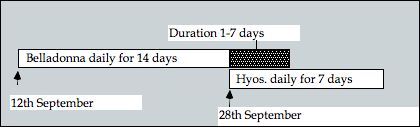
The evidence in the first case reveals that Hahnemann also used the daily dosing method with the C-scale. It further reveals in both cases the use of dual remedies.
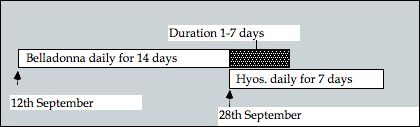
In the first case, the patient is given Belladonna 60C (for over-exposure to sun) on 12 September 1842, dissolved in seven tablespoons of water, one of these to be put in a glass of water and a teaspoonful to be taken each morning for seven days. On 20 September, she is to repeat the dose for another seven days. On the 28th she is given Hyoscyamus 30C in the same manner as the Belladonna, for seven days. This is followed by Sac lac. Here we can see an obvious overlapping (simultaneity) of action.

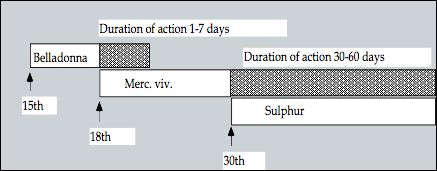
In the second case, we find the prescription of Belladonna 30C in the seven tablespoon method on the 15th of January 1843. On the 18th, this is switched to Mercurius viv. “of the lowest new dynamization” (LM1), “to be taken in the same way as Belladonna.” On the 29th, this is changed to Merc-v. LM2. Since this was an acute case, that is, a case of an acute flare-up of an underlying chronic situation (“frequently subject to sore throat, as also now for a month past”), Hahnemann started with a remedy for this flare-up and then commenced with the Sulphur (LM2) on 30th January when the sore throat returned. At the end, Hahnemann also used Nitric acidum by smelling.

Melanie Hahnemann continued to use the method they had jointly worked on after his death. However, part of her reluctance to immediately release Hahnemann’s last changes plus the casebooks to the Organon to the public, must have been due to Hahnemann’s initial experiences in trying to communicate to his followers this new world of the two sides. There was still much controversy and misunderstanding about his earlier insights into the chronic miasms, an area where Hahnemann had felt on much surer ground. To expect great understanding of this new concept of the two sides seemed almost too much. As it was, events conspired to prevent the release of the 6th Edition of the Organon until almost a century later. However, the concept of the underlying, mostly invisible side of disease as compared to the sentient side of the disease symptoms of the patient, continued to emerge within homeopathy, albeit in various disguises, because it is grounded in reality.
• 1796: Hahnemann starts with the discovery of specific medicines for constant (tonic) diseases (homogenic and pathogenic), borrowed from folk medicine, and distinguishes these from the variable, individual (pathic) specifics for variable diseases. He also discovers the dual nature of treatment (cure and healing = heilen, involving the initial action and the counter-action),as well as of disease. Concern over the repetition of dose within the initial action of the first (too strong a dose) and waiting for the full action of the first remedy to exhaust itself before giving a second remedy/dose. Establishment of the principal of a direct relationship between the length of initial action of a remedy and the dose, as well as the intensity of the disease and nature of the remedy, which insights he developed over the next decade, and beyond.
• 1816-28: Discovery of the chronic miasms (tonic side) and chronic diseases (pathic side). Growing realization of the dynamic nature of the succussed dilutions (potencies as opposed to medicines). Awareness of the length of action and importance of the counter-action with increased emphasis on waiting for the action of the single dose to exhaust itself before the repetition of dose.
• 1825-43: Use of the olfaction method and repetition of dose within shorter timeframes.
• 1830: Hahnemann uses two remedies in short intervals on himself. [1] [5] [21]
• 1831: Hahnemann uses two remedies in short intervals in the cholera epidemic.
• 1831-32: Aegidi, Boenninghausen, Stoll begin with dual remedies in mixture.
• 1833 (April): Hahnemann uses many remedies in short order to treat himself.
Hahnemann prescribes two remedies, each perfectly indicated, for Boenninghausen’s illness.
• 1833 (May): Dr. Aegidi communicates 233 cured cases using double remedies to Hahnemann.
• 1833 (June): Hahnemann writes a new paragraph sanctioning the use of double remedies for insertion in the 5th Edition of the Organon.
• 1833 (August): German homeopaths at a conference in Koethen reject the new paragraph for the 5th Edition for political reasons (fear it will weaken homeopathy as it will open the door to polypharmacy). Hahnemann resists and the “peace agreement” of 11 August 1833 as to the pillars of homeopathy makes no mention of the matter.
• 1833 (September): Hahnemann writes to Aegidi re-confirming his intention to add the new paragraph on dual remedies to the 5th edition of the Organon.
• 1833 (October): Hahnemann decides to withdraw the disputed new paragraph from the manuscript of the 5th Edition after reading an article by Hufeland seeing (falsely) the use of dual remedies in mixture as a return to polypharmacy.
• 1833 (Fall): Hahnemann, Boenninghausen, Aegidi enter into an agreement not to continue practising with dual remedies in mixture (or at least not to do it publicly).
• 1836 (September): Hahnemann writes to Boenninghausen about his surprise to learn that he, Boenninghausen was still prescribing dual remedies.
• 1836 (November) – 1843: Hahnemann’s casebooks record the continuing use of dual remedies (simultaneity of action).
• 1846: Boenninghausen’s publication of his repertory with the section on Concordances.
• 1856-57: Lutze learns of the dual remedy from Aegidi and Boenninghausen and undertakes thousands of successful cures.
• 1865: Dr. Lutze publishes his version of the 6th Edition of the Organon (after apparent fruitless attempts to have Hahnemann’s version published). It includes the disputed paragraph on the use of double remedies.
The concept of two sides seems to disappear at this point in the hue and cry elicited by Lutze’s publication of the disputed paragraph on dual remedies. However, if an idea has enough energy, it will embody itself in some form. The history of homeopathy since has seen the following, which reflect the Wesen of the idea of dual remedies:
• The use of “intercurrent” remedies, supposedly sequential, but often in fact concurrent.
• The growing use of nosodes (mostly based on clinical experience) as well as remedies chosen more on the symptomology.
• Keynote prescribing, which attempts to focus on the underlying, less changeable disease process rather than the more voluble symptoms.
• Boenninghausen’s Repertory organized around the pathic aspect of disease (grounded in the Wesen as opposed to the Geist) with the underlying sub-duality or functional pair of psychic and somatic.
• Kent’s Repertory with its emphasis on the mental image of the disease (drug picture or portrait, involving the Geist). This organizing idea, which has come out more in his followers, addresses the underlying aspect of disease because it is little based on the workings of the Wesen (which is the side that primarily produces the symptoms or pathology, i.e., suffering of the patient) and more interested in the underlying workings of the Geist.
• Boger combines the two sides (Kent and Boenninghausen) in his own person by his dual contributions to the essence of both repertories.
• Eizayaga focuses more on the pathology (suffering) of the patient, although he also emphasizes the need to treat for the chronic miasms underlying the disease expression using nosodes related specifically to the miasms. He also describes a full spectrum of disease.
• European medical doctors (Hughesian tradition) focus more on the material changes (and reject the psora theory). While miasms can be seen simply in their expression (pathology), they also introduce the concept of a latent or hidden side.
• Various homeopaths carry on the Kentian approach, developing the idea of constitutional prescribing further (Borland, Tyler, Coulter, Herscu, Vithoulkas).
• Sankaran develops the idea of participating in the suffering of the patient at the psychic (delusional) level directly, effectively de-emphasizing the symptomology [6] [22] and achieves a genuine concept of “dia-gnosis.”
[1] Hahnemann’s relationship with Boenninghausen began, according to Haehl, in 1830.
[2] Haehl does not give us the date of this letter, but Lutze tells us it was sent 15 May 1833.
[3] His almost immediate correspondence with Boenninghausen on this matter is understandable as we see later that it was Boenninghausen and Aegidi who conjointly, it appears, began the use of dual remedies and apparently kept Hahnemann apprised of what they were doing. Thus, the letter of 15 May 1833 from Aegidi was not a complete surprise. What delighted Hahnemann, no doubt, were the number of cured cases, but also that Aegidi had managed to keep the practice within some form of limit or principle (each from a different side) which corresponded to Hahnemann’s own growing consciousness of the duality of nature and disease (the two sides).
[4] Hahnemann delayed the publishing of his discovery for some time because of his fear of the negative reaction and that others would not really understand the import of the theory of chronic miasms. See the Preface to the first edition of Chronic Diseases as well as Haehl, Vol. II, p. 153-154). The reaction seems to have entirely justified his reticence (see Haehl, Vol. I, p. 137), and the theory remains controversial to this day, most followers not knowing what to do with it or think of it.
[5] The double appearance of this letter in Haehl required the translator to render it twice. Here we can see an example of how the same German words can be translated with subtle shades of different meaning. See Haehl, Vol. I, p. 256 and Vol. II, p. 282-283.
[6] Much as is the fate today of various alternative therapies, such as acupuncture and herbs, which are seen as occasionally useful adjuncts to allopathy. There are clinics today where homeopathy is seen as a useful adjunct (it certainly cannot do any harm) to chemotherapy and radiation. At the very least, these alternatives are seen as ways of strengthening the Life Force so as to withstand further assaults of drugs, which would otherwise have to be discontinued.
[7] It is still difficult for many in homeopathy to accept, because it is seen as an abstraction and reduced to simply treating it to the extent that it shows up in the symptoms with the appropriate anti-psoric or anti-syphilitic remedy, for example. There is no conception, within the vitalist pole of the material-mystical axle, called classical homeopathy, of the true nature of disease, much less the dual aspect.
[8] This concern is fully understandable, as where there was a cure, it would be ascribed by opponents to the allopathic method used, and where there was a death, it would be ascribed to the use of the homeopathic remedy, much as would be the case today!
[9] Actually, as we have seen, in keeping with the Organon.
[10] We also have Hahnemann writing to Aegidi two days later, on 30 April 1833: “The All-Highest has released me from the very dangerous illness, from which I was suffering for three weeks — but not without many remedies taken by smelling. (Haehl, Vol. I, p. 198)
[11] Boenninghausen states that he used Thuja on the 12th of May and then wrote Hahnemann a few days later. He took the Lycopodium ” a few days after sending the letter,” thus, the 17th or 18th of April, or about 4-6 days after the Thuja. He then took the Conium around the 24th of April (eight days before receiving Hahnemann’s letter), or about 5-6 days after the Lycopodium.
[12] This remarkable state of health is reflected in the powers of observation that led to the momentous discoveries of the chronic miasms and the dynamic nature of potentized medicines, as well as his appreciation of the dual remedy approach put forward by Aegidi. Shortly thereafter, his second, passionate marriage to Melanie d’Hervilly, a spirited and equally passionate woman much his junior is further evidence as to his health at all levels. As Hahnemann himself taught, clear and creative thinking is a function of health.
[13] “From this time onwards, Hahnemann became more and more biassed over the question of dose. It was no longer sufficient for him to administer a few globules of the 30th potency as a dose: he began now to restrict himself to letting the patient smell a single globule of the size of a poppy seed of the 30th potency.” (Haehl, Vol. I, p. 322)
Only a few of his students followed out Hahnemann’s instructions about inhaling. (p. 324)
Hahnemann’s final decision in favour of high potencies and his mistake in the question of inhaling… (p. 324)
[14] Did Boenninghausen play a role in encouraging Hahnemann to make this presentation? The wording here leaves open the possibility.
[15] …I shall perhaps have to take this treasure with me to the grave, and make use of it myself during my life-time…a slight advantage, which should be willingly granted me, who have so willingly communicated to the world everything previously discovered, by have received very little thanks for it even from my own pupils…and have suffered persecutions…
[16] It is more likely that the others had little deeper understanding of what was involved and trusted Hahnemann as to the consistency of the dual remedy approach with his system, or, more likely, viewed it with the same misgiving as the earlier Psora theory and high potencies, but had no grounds for attacking it, except on the simple political grounds.
[17] And here the record is not very good. Instead of Hahnemann’s multi-dimensional, hierarchical view of disease, with its two sides (tonic and pathic), we have seen the emergence of a uniformitarian mysticism that views disease purely in pathic terms, such that the patient and the disease become almost synonymous. We are told that Hahnemann condemned the naming of disease, and yet, no one sees that Hahnemann only attacked the false disease names of the allopaths, not disease itself. This failure proceeds logically from the failure to understand the profound duality of nature and disease. There is only the vital force, not the Living Power with its sustentive and generative sides. There is little appreciation of the initial and counter-actions. There is no understanding of the sensible (wissen) and supersensible (kennen) aspects of knowledge and of Hahnemann’s casetaking (unific and prolific aspects). We are left with the view that all disease is to be found by means of the symptoms, something Hahnemann never taught, but with a profound longing to determine that “hidden” side of disease that cannot be adequately discovered through the pathic approach.
[18] If it is correct, as earlier seen as possible, that Boenninghausen had previously urged Hahnemann to present the discovery of dual remedies, that he, Boenninghausen, and Aegidi had proved worked surprisingly well, then Boenninghausen may also have realized that this new discovery was not for everyone, and that to communicate the discovery formally in the Organon was tantamount to casting pearls before swine, a judgement, if made, that was to be borne out by subsequent events!
[19] The concept of necessity is tied into Aphorism 274 where Hahnemann sets out the reasons for adhering to one simple remedy at a time. These reasons are essentially practical in nature.
[20] We have no evidence of this having been continued beyond September or October of 1833.
[21] It should be noted here that there is evidence that Hahnemann used two remedies together in Chronic Diseases, although the exact date of this usage is not given:
346 The dose of antipsoric medicine must not be taken by females shortly before their menses are expected, nor during their flow; but the dose can be given, if necessary, four days, i. e., about ninety-six hours after the menses have set in. But in case the menses previously have been premature or too profuse, or dragged on too long, it is often necessary to give on this fourth day a small dose of nux vomica (one very small pellet, moistened with a high dynamization) to be smelled, and then, on the fourth or sixth day following, the antipsoric. But if the female is very sensitive and with weak nerves, she ought, until she comes near her full restoration, to smell such a pellet once almost every time seventy-two hours after the beginning of her menses, notwithstanding her continued antipsoric treatment.
[22] The real amplification of the idea of the two sides is to be found outside the confines of the homeopathic tradition. Freud’s two classes of neuroses carried on by Reich, Hubbard’s early Dianetics entailing both the Theta Being and the Genetic Entity, and even the allopathic notions of physiatry and psychiatry are all instances, among others, of this basic duality
————————————-
# # #
Rudi Verspoor is Dean and Chair Department of Philosophy, Hahnemann College for Heilkunst, Ottawa. He has written extensively on homeopathy and created the only college in the world offering a full program of study in Hahnemann’s complete medical system, Heilkunst. More details on studying Heilkunst can be obtained from www.homeopathy.com.
Rudi founded the National Association of Trained Homeopaths (NUPATH) in Canada, as well as the Canadian/International Heilkunst Association (C/IHA). He has advised the Canadian government on healthcare issues, made presentations to various federal and provincial governments on homeopathy, and has written for various journals as well as lectured around the world.
His publications include: Homeopathy Renewed, A Sequential Approach to the Treatment of Chronic Illness (with Patty Smith); A Time for Healing; Homeopathy Re-examined: Beyond the Classical Paradigm (with Steven Decker); The Dynamic Legacy: Hahnemann from Homeopathy to Heilkunst (with Steven Decker)
The website at www.heilkunst.com has more articles and resources about Heilkunst.