
Suffering and feelings
Homoeopathy is a system of medicine whereby sickness and suffering is responded to and cured through the medicinal process of giving ‘like for like’. With the homoeopathic method of treatment the focus is not one of fighting any particular sickness, rather the aim is to understand the whole state of the person and the totality of symptoms. In homoeopathy the process of cure returns the person to a state of health, which also brings about recovery from any particular form of sickness they are afflicted by.
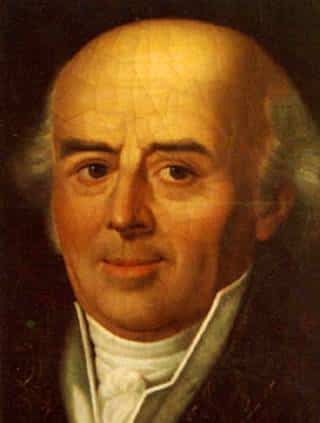
Throughout its history and development there has been a continuous stream of knowledge and new discoveries in homoeopathy which has added to an ever increasing understanding of the dynamics involved in suffering and disease. Homoeopathy was developed to a large extent by its founder Dr Samuel Hahnemann, as it has been by a great many homoeopaths since.
The initial discovery made by Dr Hahnemann is that the medicine which acts to cure any sickness and disease also has, paradoxically, the ability to bring about a similar suffering in another person during a ‘proving’ of that medicine. To find the suitable medicine is therefore based upon knowledge of the symptoms and the picture of sickness a medicinal substance is capable of producing. Dr Hahnemann and his friends began to take medicines to ‘prove’ them, to become purposely sick as to realise and record the symptoms characteristic to each. When Dr. Hahnemann discovered the method of potentisation, whereby any harmful properties of a substance at the level of toxicity are removed and the medicinal properties inherent within the substance are enhanced, he found a way to effectively apply the medicinal healing process he had discovered.
In the development of his understanding Dr Hahnemann discovered that when someone is sick it is their whole being that has changed. He realised that the symptoms of sickness we experience are only the manifestation of an all-encompassing altered state of being. Coinciding with this discovery he also became aware that medicines, especially potentised remedies do not act in a way he had previously thought they did. He discovered that a potentised remedy also creates an altered state of being and it is from the disharmony of this altered state that symptoms of distress begin to appear. With this astonishing insight Dr Hahnemann left all conception of Homoeopathy as medicine that acts on symptoms or even produces symptoms directly. It is the person who is affected by a potentised remedy as in sickness it is the person who has become affected. This awareness of the reality of disease as being a dynamic disturbance in the integrity of the whole person is clearly stated by Samuel Hahnemann throughout his writing’s. In the essay titled Spirit of the Homoeopathic Doctrine of Medicine, he describes this,
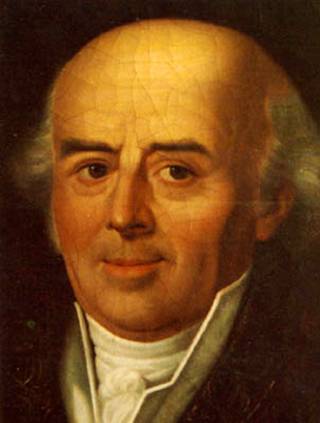
Figure: Hahnemann-Samuel
“Now as the condition of the organism and its healthy state depend solely on the state of the life which animates it, in like manner it follows that the altered state, which we term disease, consists in a condition altered originally only in its vital sensibility and functions, irrespective of all chemical or mechanical principles; in short it must consist in an altered dynamical condition, a changed mode of being, whereby a change in the properties of the material component parts of the body is afterwards effected, which is a necessary consequence of the morbidly altered condition of the living whole in every individual case…These active substances and powers (medicines) which we have at our service, effect the cure of diseases by means of the same dynamic power of altering the actual state of health, by means of the same power of deranging the vital character of our organism in respect of its sensations and functions, by which they are able to effect also the healthy individual, to produce in him dynamic changes and certain morbid symptoms, the knowledge of which, as we shall see, affords us the most trustworthy information concerning the morbid states that can be most certainly cured by each medicine.” (Lesser Writings)
In contemporary medical literature we find the emergence of a more complete understanding of what a potentised remedy is. In my understanding this is brilliantly given in the work of Dr Rajan Sankaran. As all homoeopaths true to the discoveries of Samuel Hahnemann have done, Dr Sankaran recognises the importance of the mental/emotional aspects of both the person and also the state of suffering a remedy produces in a person. It is in his work we see the idea of a remedy as being a feeling, as producing a feeling or very particular set of feelings. For him, to give a remedy that is homoeopathic is to give a remedy that produces the same feeling to that which is observed to be, in the suffering person. Therefore somehow suffering is related to feelings. Concerning this Dr Sankaran observes that in suffering, people are living the experience of feelings that seem to have little to do with their present circumstances. He calls this the delusion of the person and he very much considers delusions as being something which are experienced as feelings. To be in delusion is to have feelings about oneself, other people around, and situations, that have nothing very much to do with what is actually going on in the present.
This is described by Dr Sankaran,
“There is one large but little used portion of the “Mind” chapter in our repertory. This is the section on “Delusions”. Delusions are feelings which are not fully based on facts, but they are feelings nevertheless. The difference between delusions and feelings is that delusions are exaggerated, more fixed and often expressed in terms of images.
The idea of using delusions came to me when I found that the rubrics: “Unfortunate feeling” and Delusion, unfortunate, he is” have the same remedies listed in Kent’s Repertory. This led me to think that “Delusion, unfortunate, he is” is nothing but a feeling that he is unfortunate. I started studying the “Delusion” rubrics and tried to understand what each delusion means in terms of feelings.” (The Spirit of Homoeopathy)
“Reverting to the earlier example of one’s house being on fire: in such a situation you might experience anxiety and fear, but these emotions would be in proportion and would evoke specific and appropriate responses. They would disappear when the situation has passed. However, the case is different when a person acts from delusion; in such an instance he is unable to see what reality is. Instead he tends to view the situation in his own way, coloring and shading everything through the filter of his delusion. Thus he reacts inappropriately or disproportionately to the situation at hand. The situation evokes something in his mind, excites memories of the past, reminding him of several things that have happened to him before, of several situations, each of which appeared in the same colors and shades as the present one. Moreover, the present situation confirms and reaffirms his delusion, and it becomes more deeply etched in his memory for future time. Because of his ‘deluded way of seeing’ a part of him is unable to live in the moment, the present reality, the ‘what actually is’. This duality between ‘what is’ and ‘what is perceived’ causes deep conflict within him. Stress results. Thus it is a person’s inappropriate perception and reaction that is the basis of the stress, not the situation itself.” (The Sensation in Homoeopathy)
Rajan Sankaran’s work is full of descriptions of states of suffering and the underlying feelings, and they are the basis of everything written here.
To more fully understand what Dr Sankaran has discovered and to realise what is happening in the homoeopathic process of cure we need to understand what is taking place in suffering and disease, and what feelings have to do with this. Underlying suffering and disease are feelings, and it may be said of these feelings that they are healthy, they are part of the person’s self. What is taking place in suffering is the process of suppression and non-integration of certain feelings. In chronic suffering these feelings find their origin somewhere in the past and it is due to their being suppressed that they continue to assert their influence on the present.
The attempt to distance oneself from the feelings of self is what creates stress and is the most significant origin of all pathology. Whether someone is suffering from an acute ailment, an infectious disease or chronic illness, it is the feeling that has emerged before or with the affliction, which gives to the person the true information within themselves. Recovery and healing is the process of acceptance of our feelings and as this happens the stress and conflict within, which can manifest as illness and disease, becomes transformed into an inner integration and health. What Samuel Hahnemann calls “our Vital Force” includes the process of our very being wanting us to heal and it needs us to not resist our feelings as an enemy and rather to accept them as our friend. This is exactly what the Homoeopathic process of cure helps brings about. Homoeopathy is the giving of a minute dose of the medicinal energy of the feeling that is being suppressed by the person in suffering. The state of suffering of each remedy in the materia medica is the description of the non-integration of certain feelings, which can take a particular form of an illness.
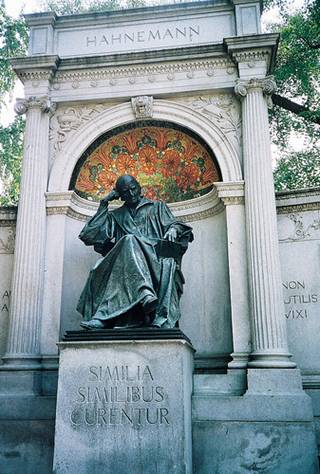
Figure: Hahnemann-Samuel-statue
Because the medicinal properties of a remedy can be realised by their ability to produce suffering upon being proved Dr Hahnemann named this medical art ‘Homoeopathy‘ which means ‘similar suffering’. It is acknowledged that Samuel Hahnemann also considered a potentised remedy to be something inherently morbid in nature. This was a natural conclusion following on from all his experiences with substances in their crude form and then what he observed during the proving of a potentised remedy. Samuel Hahnemann began experimenting with smaller and smaller sized doses because he needed to better apply the homoeopathic method. What is produced through the process of dilution and succussion is that the energy of the feeling of the original substance is translated from that substance to the water or alcohol. This energy when utilised homoeopathically brings about an integration of the feeling that is suppressed in the suffering person. The biggest obstacle to realising this has perhaps been through not understanding what is taking place when a person proves a potentised remedy. The prover rather than being effected by something that is inherently harmful is instead going through a very similar process to someone in more normal suffering. During the proving of a potentised remedy the person is not integrating the energy of the feeling that has temporarily become a part of their self, and as such they begin to suffer and exhibit symptoms just like when the feeling emerges in normal circumstances.
Throughout his writing’s Samuel Hahnemann frequently revisits the subject of what is taking place within the Homoeopathic process of cure and in his later years we find him even more wanting to know and explain what is happening. He discusses the matter in aphorism 28 to aphorism 46 of the 6th edition of the Organon of Medicine. In his preface to the 4th edition of The Chronic Diseases he writes, “It is, therefore, quite natural, that in presenting the Homoeopathic Therapeutics I did not venture to explain how the cure of diseases is effected by operating on the patient with substances possessing the power to excite very similar morbid symptoms in healthy persons. I furnished, indeed, a conjecture about it, but I did not desire to call it an explanation, i.e., a definite explanation of the modus operandi”, and further on “I write the present lines, not in order to satisfy those critics, but in order that I may present to myself and to my successors, the genuine practical Homoeopaths, another and more probable attempt of this kind toward an explanation. This I present, because the human mind feels within it the irresistible, harmless and praiseworthy impulse, to give some account to itself as to the mode in which man accomplishes good by his actions.”
For someone who is so forthright and clear in expressing his thoughts of what he knows to be right it is clear Dr Hahnemann is not satisfied with his own speculations. There was something about Homoeopathy Samuel Hahnemann knew he didn’t understand and he did not like his own explanation as to how Homoeopathy cures, this is what he is telling us.
At the same time the conception of ‘like for like’ as helping the person return to the place of self being suppressed is not in any way an original idea. We find Homoeopathy described as such throughout the literature. In his essay Spirit of the Homoeopathic Doctrine of Medicine, published in 1813 Dr Hahnemann writes,
“But as the human organism even in health is more capable of being affected by medicine than by disease, as I have shown above, so when it is diseased, it is beyond comparison more affectable by homoeopathic medicine than any other (whether allopathic or enantiopathic), and indeed it is affectable in the highest degree, since, as it is already disposed and excited by the disease to certain symptoms, it must now be more liable to be deranged to similar symptoms (the homoeopathic medicine) – just as similar mental affections render the mind much more sensitive to similar emotions” -; (Lesser Writings)
The last phrase here describes Homoeopathy as integration exactly and is perhaps the first expression of the principle underlying healing in medical literature.
Near the end of his introduction to the 6th edition of the Organon of Medicine Dr. Hahnemann discusses the nature of homoeopathy’s dynamic and curative action. In a passage on Isopathy and Homoeopathy he writes, “In like manner, a hand scalded with boiling water would not be cured isopathically by the application of boiling water, but only by a somewhat lower temperature, as, for example, by holding it in a vessel containing a fluid heated to 160 (degrees) which becomes every minute less hot, and finally descends to the temperature of the room, where-upon the scalded part is restored by Homoeopathy“. What Dr. Hahnemann is describing here is a process to do with feeling. When someone scalds their hand they experience the feeling of extreme heat which makes them pull their hand away. In applying quite hot water to the scalded hand, as hot as helpfully possible, keeps the hand close to the feeling of the injury, that of extreme heat, and in so doing keeps the person close to the feeling of the injury.
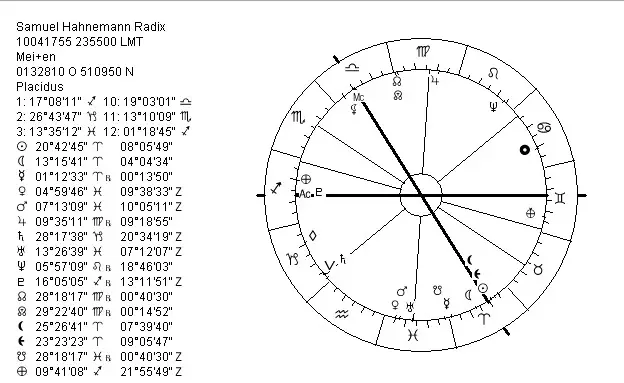
Figure: Hahnemann-Samuel-radix
In the writings of other Homoeopathic physicians there are many descriptions of this same idea. On page 268 of his Clinical Materia Medica Earnest Farrington when referring to Opium writes a sentence, finishing it in bold letters “Now gentlemen, let me ask, is it rational practice to assuage pain with a substance which paralyses and so relieves by taking away, not the disease, BUT THE ABILITY TO FEEL THE CONSCIOUSNESS OF SUFFERING?.” Dr. James Kent was always heading towards this understanding of Homoeopathy. Catherine Coulter throughout her Portraits of Homoeopathic Medicines frequently equates the action of remedies with integration. She writes in her essay on Sulphur “the Homoeopath repeatedly finds how by ‘unblocking’ one member with a constitutional remedy, the dynamism of the whole family is affected for the better.” And George Vithoulkas in the books Talks on Classical Homoeopathy sums up a passage on health and disease by saying, “I believe that if we could make all of our emotions positive, we would go away from this world immediately. At that stage we will fly to the angels.” Jan Scholten in his book Homoeopathy and Minerals describes a main characteristic of the single element remedies to be “no integration”.
In Homoeopathy sickness is cured through the application of the healing process of ‘like for like’. Dr. Hahnemann called this “Similia Similibus Curentur” or “Let likes be cured by likes”. The knowledge and awareness of this way of curing sickness goes back thousands of years. Hippocrates, the father of modern medicine, is himself thought to have written, “Through the like, disease is produced and through the application of the like, it is cured”.
I will now attempt to illustrate this idea with examples of remedies and what is written of them in the Materia Medica. If we begin with the remedy of Arnica. The feeling of Arnica is like the hurt in being injured. If we imagine someone having been in some kind of accident and is feeling just like this, like what Arnica produces. To the extent the person feels this kind of hurt they will not enter any suffering in the dynamic sense. If the person however cannot or does not take such good care of themselves and resists being hurt they could begin to develop symptoms of distress corresponding to Arnica. That is, symptoms that arise during provings of Arnica. James Kent explains the non-integration of the hurt of Arnica like this, “He is full of dreadful anguish, but finally he comes to himself, lies down and goes off into a sleep of terror, jumps up again with the fear of sudden death and says: ‘Send for a doctor at once’. This is repeated night after night in persons who are fairly well in the daytime, who have no sympathy because there seems to be no reality in their sickness, only a mental state. It is also seen in persons who have gone through a railroad accident, or through some shock, who are sore and bruised, with an expression of terror: the horrors they really went through are repeated” (Lectures on Materia Medica).
In suppressing the feeling the person becomes separated from the process of healing and the suppression becomes a suffering of its own.
Some characteristic processes of suffering
One very outstanding feature of suffering is the desire to get as far away from the feelings being suppressed as possible. With the state of Cuprum metallicum for instance the person instead of feeling insecure (the universal feeling of row 4 of the periodic table) and unvalued (the common feeing of column 11 of the periodic table) very much tends towards wanting or needing to become someone who is secure and valued. As Rajan Sankaran writes of Cuprum in his book The Substance of Homoeopathy, “At the same time we also have in Cuprum the need to perform, for example, we have the rubrics “Delusion he is an officer; Delusion he is a great person; Del he is a person of rank” and “Del he is a general”. On the other hand we have single symptoms of Cuprum like “Delusion he is selling green vegetables” “Delusion he is repairing old chairs”…Then I understood that selling green vegetables and repairing old chairs indicate very ordinary occupations and the Cuprum needs to be much more than that…”
This wanting or needing to be different to that which is suppressed leads to the process where the person alternates between two very opposite poles. These being on the one hand a distorted expression of the underlying feeling itself (distorted due to its not being accepted) and an expression of the very opposite of the feeling. With Silicea for example, in not integrating the feelings of being unconnected to another person, or others (row 3), together with feeling unsure about what to do (column 14) the person is instead needing or wanting to be someone who is connected with others and who is very sure about what they are doing. Thus in Silicea the person is yielding to be connected and obstinate to prove they are sure about what they are doing. Catherine Coulter captures the not-connectedness of Silicea (and of the whole row of Silicea) where she says ‘Patients may complain of a feeling of “disconnectedness” of being divided from, and not quite belonging to the human brotherhood…’, and in a footnote to the same discussion she quotes as a very Silicea like attitude, “Most persons whom I see in my own house, I see across a gulf! I cannot go to them nor they to me” (Portraits).
With the state of Calcarea Carbonica the suppression of feeling insecure (row 4) that they don’t belong (column 2) (Calcarea), together with feeling unseen (row 2) and unsure what to do (column 14) (Carbonate) all comes together in the proving symptom ‘she is afraid people may notice the confusion in her head’ (The Chronic Diseases). Earnest Farrington writes that Constantine Hering knew Calcarea-carbonicum to also contain Phosphorus. The feeling of the Phosphorus column which includes Nitrogen and Arsenic is like that of being treated like you are inferior, like less than no-one, hence the expression of Phosphorus recorded by Samuel Hahnemann in The Chronic Diseases, ‘Exaltation of the sense of common brotherhood’. Magnesium carbonicum in feeling unconnected, and that they don’t belong, (Magnesium), together with feeling unseen and unsure what to do (Carbonicum) comes together in the expression ‘Dazed feeling, packs and unpacks her clothes, without consciousness of having done so’ (S R Phatak). Jan Scholten very much describes one expression of feeling unseen in the Fluorine remedies where he says, ‘One could describe the world of Fluor in short as one of ‘glamour and glitter’…people who want to take part in the bright life. What is important is the shiny, glittery’ (Homoeopathy and minerals). This feeling of being ‘unseen’ by others around them, the central feeling common to all the elements of row 2 is directly related to the most outstanding expression this feeling becomes, which is the impression of being in danger. All the Carbonicums Calcarea-carbonicum, Natrum-carbonicum etc, and Argentum-nitricum, Nitric acid, Borax and Fluoric acid etc all have this sensation of being in danger.
In suffering the person is temporarily ameliorated (mentally) when they are far away from that which is now suppressed and they are aggravated (mentally) the closer they return. In describing the mineral states as being ‘performers’ Dr. Sankaran is very much observing the means through which the person attempts to be someone different externally (the exact opposite) to what is suppressed. In suffering, rather than to feel unvalued the person instead wants to become someone who is valued. Rather than to feel insecure they want to become someone who is secure. It is this overcoming externally what is denied internally that makes the suffering corresponding to the mineral states seem more considered to what we find in the plant states.
Underlying the state of Cuprum Metallicum is the feeling of insecurity and of being treated without any value. In the non-integration of this feeling is created the needing and wanting to become someone who is secure and of value. And yet there is also always present the desire for the expression and integration of what is being experienced. George Vithoulkas describes the dilemma of this in the following description of the state of Cuprum.
“In these people you will notice that an idea comes suddenly to their minds and it is so forceful. It comes right out of the blue. It is so forceful that it might create a kind of spasm in the body. A thought which is not agreeable will not be handled by the intellect. It seems that the intellect has lost its power and it cannot be processed. It will think, “Oh, I didn’t do this right!,” and nobody can understand. But in a Cuprum Patient, if that idea comes in, you will see a kind of cramping in his body and you may see spasm.
Question: Do you mean a self-critical idea?
George: Yes. Mostly self-critical. For instance, there was someone yesterday whom I did not greet, and I said, “Oh, my God.”
This “Oh my God” does not stay in the mind, but it goes through the nervous system and produces a convulsion – a jerk… This is a stimulus that instead of being processed here goes through to the spinal cord. They feel that their mind is not made to work. It is in a kind of spasm or cramping situation. They let loose, and say, “Oh, nobody minds, so forget about it.” And then the idea which they have goes through to their physical body. As long as they can process the ideas, they are forcing of the mind to process the ideas, they do not allow the stimulus to go to the nervous system. How this condition is produced? We have the preparation of a Cuprum Patient… They imagine themselves expressing what they feel. The moment they get terrified there is a cramp. You may get a child with all these vivid sentimentalities, and emotionalities who will be cramping within one day after a shock…So, with these intense emotions you can understand that there is a feeling of fright and guilt inside them. They feel that what they are thinking and feeling is bad. There is a great sense of guilt in this Cuprum.. I told you how cramped they are and they look terrible. Sometimes the look is frightening. Behind the look there is great guilt, without reason. They are nice people. They have done nothing at all. They thought that at a moment in their life that what was inside them was not right or moral. That is what is wrong. That is what they have done wrong. And they go into spasm. It is listed under anxiety of conscience as a one” (Talks on Classical Homoeopathy).
In the suffering corresponding to the indicated remedies of plants the dynamic is seemingly slightly more straightforward. Here the person wants to be someone who doesn’t have certain feelings and therefore they are very sensitive to being reminded of them. In Arnica, the person is wanting the feeling of hurt to go away, to not be there. With Stamonium the person is resisting feelings of being very alone, in a strange place and terrified. In Arnica the person alternates between feelings of frightening hurt of injury and the opposite, that of being ‘not hurt’.
The central feeling in common to all the remedies of the Liliflorae group has been worked out by Rajan Sankaran to be like being forced out, left out and excluded. This Liliflorae feeling is described by the symptoms of Sarsparilla,
Delusion of being friendless
Reserved; doesn’t make friends easily; no close friends
Or: Feels left out and neglected (Frans Vermeulen; Prisma)
However what we also see in the descriptions of these states is a person who is very friendly and loquacious. Some characteristic symptoms includes behaviour of wanting to kiss and embrace everyone, with singing and laughing. Rather than feel excluded and left out the person wants to be someone who is included.
Also, the person here can tend toward wanting the right job, the right friends etc. They have the desire to be important and this is because they maybe instinctively think to be important means you are more likely to be included. Verat-album even has the delusion of being in communication with God.
The main feeling of the Ranunculaceae family is mortification, which is also like the feeling of being humiliated. In the provings and descriptions of the remedies here we find repeated the person having the sensation of themselves being great, having the sensation of greatness. In Helleborous this has been proved ‘Delusion as if he could do great deeds’ (Dr Chawla), while Staphysagria has ‘Delusion humility of others while he is great’ (Dr Chawla). Didier Grangeorge describes one expression of this where he writes about Aconite, ‘an insufferable know it all. They must plan everything in advance, know everything there is to know’. Alfred Pulford also writes of the Aconite state ‘Thinks much of fine clothes…’ (Key to the Materia Medica). This might be like a desire to be grand. Pulsatilla has the underlined rubric ‘DELUSION Boaster squander through ostentation‘ (Dr Chawla). To be great is the opposite of humiliated, mortified.
It is interesting to note that the substances we know of as narcotics produce an effect that is the opposite alternating state to the primary state of that substance when proved as a potentised remedy. Rajan Sankaran shows this dynamic in his schema where he gives the primary sensations of Cannabis as, ‘compressed, heavy, pressing, load, limited, dragging, fixed and confined, closed, shut in’, and he gives the ‘opposite is’ as ‘lightness, flying, expanding, free, enlarged, floating’. The effect of cannabis when taken in its substance form is to take the person into the ‘opposite’ state to the actual feeling inherent within the plant, it produces the secondary opposite state. We find the same phenomenon throughout all the remedies also known for their effect as narcotics. The main feeling of the Papavaraceae family for instance, is that of shame. The suffering for which the remedies of the Papavaraceae family correspond to is the non-integration of the feeling of shame. With Opium the narcotic effects at the two levels of feeling and sensation are those of shamelessness (feeling) and painlessness (sensation), which is how the effect of Opium is described when proved as a crude substance. This also means that the remedies here are indicated for the state of shame, the state of suppressed shame and the corresponding sensations of torturous pain. Opium it seems is very much like the feeling of frightening shame.
Another remedy significant in this regard is Coffea. The primary emotional state common to all remedies of the Rubiaceae family is something close to the feeling of a debilitating apathy, a kind of not wanting to do anything. Dr. Sankaran gives the outstanding sensation of the remedies here to be that of stimulation or ‘overstimulated’. This is similar to George Vithoulkas when referring to China as a ‘nervous erethism’. This over-stimulation or nervous erethism is the opposite of apathy. Coffee of course is known for its effects as a stimulant. I think what this means is that the suppression of feelings we have leads us into an opposite state to the primary feeling, which is comparable to the artificially induced effects of taking substances for their secondary reaction, an effect that is also the opposite to the actual main feeling of the substance.
Psora and Miasmic Dispositions
In curing his patients of specific ailments Dr Samuel Hahnemann began to investigate the question arising in his mind as to fact that while he could be successful in giving homoeopathic treatment for someone, they would again at some future point come down with another form of illness. In wanting to find out more about the problem of sickness and what creates the susceptibility to becoming ill he began to look at what lay deeper, that being what he called their ‘deep seated original disease’. (The Chronic Diseases) What Dr Hahnemann began to uncover was the question of what generated sickness.
After much study and investigation he identified and named this process the chronic miasm of Psora. Interestingly, Samuel Hahnemann thought of psora as being the result of suppression. He described psora as an ‘internal itch’ almost like an internal disharmony within the person’s being. He also identified and named two other major miasms, Sycosis and Syphilis. For Dr Hahnemann, however psora is the oldest and most fundamental of the miasms and all suffering, for him, emerges from the foundation of psora.
With an awareness of suffering as being the process of non-integration of feelings of self, I think we can begin to realise what psora is. By studying the mental/emotional symptoms of the remedies in the materia medica we can perceive what is common to suffering. As Dr Hahnemann considered Sulphur to be the deepest of psoric remedies, I will list some rubrics of Sulphur trying not to emphasize that which is specific to the expression of the Sulphur state and more what is general to all suffering.
From Dr Sangeeta Chawla’s book The Indepth Materia Medica of Human Mind we have:
Spoken to, called agg. mental symptoms, being.
Starting; called by name, when.
Absent minded; unobserving, starts when spoken to.
Amusement; averse to.
Anger; himself with.
Anxiety conscience, as if guilty of a crime.
Busy.
Confidence; want of self.
Confusion of mind.
Despair.
Discontented, displeased, dissatisfied.
Doubtful; recovery of soul’s welfare, of.
Dullness, sluggishness, difficulty of thinking and comprehending, torpor.
Embittered, exasperated.
Emptiness; sensation of.
Fear, apprehension, dread.
Hurry, haste.
Idleness.
Impatience.
Inconsolable.
Indifference, apathy.
Irresolution, indecision.
Irritability.
Jesting; aversion to.
Looked at; cannot bear to be.
Mood; alternating.
Morose cross, fretful, ill-humor, peevish.
Prostration of mind, mental exhaustion, brain fag.
Restlessness.
Sadness despondency, dejection, mental depression, gloom, melancholy.
Sighing.
Starting, startled; spoken to, when.
Timidity.
Unfortunate; feels.
Will; loss of.
These symptoms illustrate the state of a person where a fundamental break has occurred with regard to them being themselves. How someone feels, when to some extent they have ceased being who they are. It appears to me this is what psora is, a state of separation from self. It is a non-acceptance of self. In the context of psora the ‘crime’ the person feels they have committed is that of not accepting themselves.
We can see that suffering becomes at least two very related processes. The first being the non-acceptance of ourselves and the second being the non-integration of the feelings that are part of our self.
Catherine Coulter in her essay on Psorinum (Portraits of Homoeopathic Medicines, vol 2, 1988, ISBN 1-55643-036-1, North Atlantic books) describes the raw state of non-acceptance of self.
Once we have, to an extent, entered this state of non-acceptance of self there is somehow an awareness of this and naturally a wanting to return to the place of integrity of self. When we enter into suffering we want more than anything else, more than wanting to become the person we want to be, more than wanting to do what we most want to do, and more than wanting to recover our health (although people want to do these), more than all these things we most desire to return to who we are. This is unmistakably what a certain study of the different miasms reveals.
Each miasm represents a different stage of psora. The most important characteristic of each miasm is the attitude the person has about their ability to return to being themselves. This ability is also characterized by perceived obstacles they have in doing this. Each different miasmic disposition perhaps creates a definite form of stress and constitutional susceptibility to the major disease of the miasm. In the descriptions of each miasm identified I will follow closely the work of Dr Sankaran.
Sycosis
The miasm of sycosis has historically had as its most horrible manifestation the venereal disease gonorrhoea.
The disposition of sycosis is of being in a strange place, and of being ‘uncertain’ of how to be yourself in this strange and unfamiliar place. This sycotic disposition of being in an unfamiliar, strange or foreign place is also just like the central feeling in common with all the remedies of the Magnoliidae grouping of plants, Camphora, Nux moschata and Asarum etc.
Here are some of the symptoms which represent this sycotic feeling of strangeness. I will list next to these symptoms some of the well known sycotic remedies, such as Pulsatilla, Thuja, Medorrinhum (the sycosis nosode), Natrum sulphuricum and Lilium tigrinum. I will also include some of the Magnoliidae remedies to show how much they are included in the same rubrics. The Magnollidae remedies listed are Camphora, Nux moschata Asarum and Cinnamomum.
AILMENTS FROM injuries, accidents mental symptoms from Natrum sulphuricum
CONFUSION identity, as to his Camphora, Medorrinhum, Thuja (19 remedies)
DELIRIUM sleepiness, with Camphora, Pulsatilla (14 remedies)
DELUSION animals are in abdomen Thuja (singular symptom)
DELUSION body is lighter than air Asarum, Thuja (5 remedies)
DELUSION dream, as if in a Medorrinhum, Nux moschata (3 remedies)
DELUSION floating in air Asarum, Nux moschata, Thuja
DELUSION pregnant, she is Crocus, Pulsatilla, Sabadilla, Thuja, Verat album (all five remedies)
DELUSION strange, familiar things seem Cannabis indica, Nux moschata, Medorrinhum, Pulsatilla, Thuja
DELUSION strangers, he sees Cannabis indica, Pulsatilla, Thuja (8 remedies)
DELUSION strangers seem to be in the room Thuja (3 remedies)
DELUSION strangers, surrounded by Nitric acid, Pulsatillla (2 remedies)
DELUSION time, exaggeration of, passes too slowly Argentum nitricum, Cannabis indica, Medorrinhum, Nux moschata (11 remedies)
DELUSION unreal, everything seems Lilium tigrinum, Medorrinhum
DREAM as if in a Cannabis indica, Medorrinhum, Nux moschata, Pulsatilla, Silicea, Thuja
FEAR dark, of the Camphora, Cannabis indica, Medorrinhum, Nux moschata, Pulsatilla
FEAR strangers, of Thuja
FORSAKEN FEELING Camphora, Lilium tigrinum, Pulsatilla
FORGETFUL name, of his own Medorrinhum (5 remedies)
HURRY everybody moves too slowly Medorrinhum (singular symptom)
HYSTERIA Asarum, Camph , Cinnm ,Lilium tigrinum, Natrum sulphuricum, Nux-moschata, Pulsatilla, Silicea, Thuja (large rubric)
HYSTERIA changing symptoms Pulsatilla (singular symptom)
MEMORY WEAKNESS of Camphora, Medorrinhum, Nux moschata, Pulsatilla, Silicea, Thuja (large rubric)
MEMORY WEAKNESS of heard, for what he has Medorrinhum, Nux moschata (14 remedies)
MEMORY WEAKNESS of names, for proper Medorrinhum, Pulsatilla
MEMORY WEAKNESS of read, for what has Medorrinhum, Nux moschata
MEMORY WEAKNESS of said, for what has been Medorrinhum, Nux moschata
SENSES vanishing of Asarum, Camph, Nux-m, Pulsatilla
STRANGERS presence of strangers agg. Thuja
THOUGHTS vanishing of Asarum, Camphora, Medorrinhum, Nux moschata, Pulsatilla
THOUGHTS vanishing of speaking, while Medorrinhum, Nux moschata, Thuja (8 remedies) (Vanishing of thoughts is a very significant symptom of the magnoliidae remedies).
UNCONSCIOUSNESS dream, does not know where he is, waking Pulsatilla (Synthetic repertory)
In the mind section S R Phatak writes about Medorrinhum,
Things seem strange (Materia Medica)
Roger Morrison gives these symptoms for Thuja,
Depression. Loneliness and sadness from sense of being separate
Desperate to “fit in”
Chills on exposure to warm air (Desktop Guide)
Related to this feeling of being in a strange unfamiliar place is the very characteristic sycotic attitude of an ‘uncertainty’ how to be oneself. This is best expressed in the singular symptom of Medorrhinum.
‘Ideas many, uncertain in execution, but persistent’ (Dr Chawla)
We see this feeling of ‘uncertainty’ expressed in the following symptoms,
AILMENTS from anticipation, foreboding, presentiment Camphora, Medorrinhum, Pulsatilla, Silicea, Thuja (large rubric)
ANSWERS slowly Medorrinhum, Nux moschata, Thuja
ANXIETY anticipation an engagement, from Argentum niticum, Gelsemium, Medorrinhum (3 remedies)
ANXIETY time is set, if a Argentum nitricum, Gelsemium, Medorrinhum (3 remedies)
ANXIETY waking, on Natrum sulphuricum, Pulsatilla, Silicea, Thuja (large rubric)
CHAOTIC confused behaviour Asarum, Pulsatilla, Thuja
CONCENTRATION difficult Asarum, Camphora, Lilium tigrinum, Medorrinhum, Nux moschata, Pulsatilla, Silicea, Thuja (large rubric)
CONFUSION OF mind Asarum, Camphora, Nux moschata, Lilium tigrinum, Medorrinhum, Pulsatilla, Silicea, Thuja (large rubric)
CONFUSION OF MIND morning Natrum sulphuricum, Silicea, Thuja
CONFUSION OF MIND morning, on waking Pulsatilla, Silicea, Thuja
CONFUSION of mind identity, duality, sense of Gelsemium, Lilium tigrinum, Nux moschata, Pulsatilla, Thuja
CONFUSION OF MIND loses his way in well known streets Nux moschata, Pulsatilla, Thuja (9 remedies)
DESIRES indefinite, this and that Pulsatilla, Thuja (7 remedies)
FEAR say something wrong, lest he should Lilium tigrinum, Medorrinhum (2 remedies)
HURRY haste Camphora, Lilium tigrinum, Medorrinhum, Pulsatilla, Silicea, Thuja (large rubric)
HURRY always, accomplishes nothing, but Medorrinhum (singular symptom)
HURRY haste everybody moves too slowly Medorrinhum (singular symptom)
Hurry haste occupation, in Camphora, Lilium tigrinum, Pulsatilla, Thuja (15 remedies)
MEMORY WEAKNESS of Forgetful words while speaking of; word hunting Lilium tigrinum, Medorrinhum, Pulsatilla, Silicea, Thuja
MEMORY WEAKNESS of say, for what is about to Lilium tigrinum, Medorrinhum, Nux moschata, Thuja
MEMORY WEAKNESS of thought, for what has just Medorrinhum
MEMORY WEAKNESS of words, of Lilium tigrinum, Medorrinhum, Pulsatilla, Silicea, Thuja
MEMORY WEAKNESS OF write, for what is about to Medorrinhum, Nux moschata (10 remedies)
MISTAKES spelling, in Medorrinhum, Nux moschata
MISTAKES speaking words, using wrong Medorrinhum, Nux moschata, Silicea, Thuja
MISTAKES time Medorrinhum, Nux moschata
MISTAKES time confounds future with the past, present with the past Medorrinhum, Nux moschata (6 remedies)
MISTAKES writing, in Lilium tigrinum, Medorrinhum, Nux moschata, Thuja
POSTPONING everything to the next day Medorrinhum, Silicea (5 remedies)
RESPONSIBILITY aversion to Medorrinhum (only remedy in Synthetic Repertory)
SPEECH CONFUSED Medorrinhum, Nux moschata, thuja (24 remedies)
SPEECH CONFUSED finish sentence, cannot Medorrinhum, Thuja (5 remedies)
WORK aversion to mental Lilium tigrinum, Medorrinhum, Pulsatilla, Thuja
WORK mental impossible, seems to drive him crazy owing to the impotency of his mind Medorrinhum (3 remedies)(Synthetic repertory)
Didier Grandgeorge writes of Medorrhinum “constantly projecting into the future, ruining the present…Medorrinhum is a constant planner”. Herbert Roberts (cited in Catherine Coulter) “does not trust himself so goes over the same matter again and again”.
And from S R Phatak’s materia medica,
Tells things over and over again
Here is some of what George Vithoulkas writes about the state of Medorrhinum,
“As Med. Progresses in pathology, he starts having a weakened memory. He will start a phrase to say something and in the middle of the sentence he will forget what he is saying…The person goes around and I will describe to you a Med. man who wakes up in the morning. He is not feeling well. He is having all kinds of pains and he is lazy and his mind does not work and he goes to the office and his mind still does not work. He tries to concentrate and he cannot…As the time goes by, and the evening comes, it seems that this man who was weak and dull during the day suddenly attains a kind of concreteness and wholeness…Now back to the pathology on the mental level: He forgets words and sentences as he talks. He stops. He does not know what he was talking about. Maybe he will make a wrong statement just because he is very frustrated and he does not know what to say. He will say something and you will feel that it is queer because he started this way and then he has switched to another way. If you attend carefully to what he says, you will understand that. There is a gap in his talking… He does not want to make himself appear as a fool and he does not want to show that his mind has become completely blank. He tries to cover it up…Then in the mind there is a kind of anxiety in the sense that he is in a hurry. He wants to finish things quickly. This hurried feeling is associated with stresses and eventually brings about a kind of state of mind which is really a turbulence, like the sea. It is a violent and wild state and distracted. They cannot concentrate. There is something wild inside which does not allow them to express their thoughts and feelings.” (Talks on Classical Homeopathy)
We read in this description the connection made between the uncertainty, the confusion of mind, and the wildness the ‘wild feeling in the head’, which we often see in the sycotic expression.
Catherine Coulter describes both the Medorrinhum feeling of strangeness and uncertainty,
“This well-known state of mental ‘confusion’ (Kent) can be observed in the physician’s office. On the most obvious level, the patient can hardly even present his case. “He starts, then forgets what he is saying and starts over again telling his symptoms…is unsure of saying the right thing.” Or he complains of a “sensation of life being unreal, like a dream”; or he fears (especially in the dark) that someone or something threatening is creeping up on him from behind: “hears whispering…and voices beckoning; sees faces peering at her; thinks someone is behind her” (Hering). Sometimes the most ordinary word sounds strange to him, or it takes on such an unreal quality or so much symbolic meaning, that he hesitates to use it, or he repeats it in a wondering way (“familiar things seem strange”; Kent). If he is writing, he “wonders how the word ‘how’ is spelled; reads a letter and thinks the words look queer; cannot read what he has written” (Hering).”
Finally, Medorrinhum should be considered for the patient whose confused mind or turbulent emotions cause a “wild feeling in his head” (Kent) or who fears he is losing his reason: “desperate feeling of incipient insanity” (Hering). (Portraits of Homoeopathic Medicines)
In the state of Medorrinhum the person can be very affectionate, and many times there is the tendency to express this towards animals and plants. They can be very enthusiastic in their appreciation and love of flowers and animals. Existing alongside this tendency we sometimes see a flip-side of nastiness. In Medorrinhum the person experiences themselves to be in a strange and foreign place. The love of particular things of nature is very ameliorating for them because it creates a nice feeling of a world that is not strange. The aim is to create a world that is beautiful and in this way, familiar. If others give them the impression that they are strange or that things are strange with them involved it is very aggravating.
In Pulsatilla this sycotic feeling of uncertainty is also apparent with,
DISCOURAGED morning, bed in Pulsatilla (singular symptom)
DISCOURAGED irresolution, with Pulsatilla (singular symptom)
EXPRESS herself, cannot Pulsatilla (singular symptom) (Dr Chawla)
For a comprehensive discussion of the irresolution, indecisiveness and ‘uncertainty’ of the sycotic Pulsatilla state see the section ‘Flexibility’ in Catherine Coulter’s Portraits of Homoeopathic Medicines.
With Thuja there is also,
MISTAKES calculating cannot calculate after birth Thuja (singular symptom)
MOROSE with hurry Thuja (singular symptom)
Hurry haste walking, while Thuja (15 remedies)
IDEAS wander Thuja (This symptom is not included in the Synthetic Repertory and it is listed with Thuja in Dr Chawla)
INCONSTANCY thoughts, of Thuja (6 remedies)
MISTAKES words, using wrong Thuja (Synthetic repertory)
When talking the last words of the sentence are mumbled. (Roger Morrison, Desktop Guide)
Natrum sulphuricum has
CONFUSION injury to head, after Natrum sulphuricum (singular symptom)
CONFUSION of mind rising, after Natrum sulphuricum
WILDNESS Medorrinhum, Natrum sulphuricum (Synthetic repertory)
Sooner or later in sycosis something can come that is very much a reaction to this burden of uncertainty. As is described in the materia medica the person begins to develop fixed notions or ‘fixed ideas’ about things to offset their discomfort. They begin to cover-up their uncertainty and we find a completely different and very opposite set of traits running through the same states.
In the repertory we see the fixed ideas of the sycosis miasm expressed in the symptoms,
Anxiety salvation, about Lilium tigrinum, Medorrinhum, Pulsatilla, Thuja (35 remedies)
IDEAS fixed Thuja (This symptom is not in the Synthetic Repertory and is listed in Dr Chawla)
MONOMANIA Pulsatilla, Silicea, Thuja (15 remedies)
RELIGIOUS AFFECTIONS Lilium tigrinum, Medorrinhum, Pulsatilla, Silicea, Thuja
RELIGIOUS FANATICISM Pulsatilla, Thuja (5 remedies)(Synthetic repertory)
James Kent describes the fixed ideas in Pulsatilla,
“Melancholia, sadness, weeping, despair, religious despair, fanatical; full of notions and whims; imaginative; extremely exciteable…fixed ideas concerning the scriptures”. (Lectures)
And we see with Thuja,
“Fixed ideas as if a strange person were at his side; as if the soul and body were separated; that the body and particularly the limbs were made of glass, and will readily break; as if a living animal were in the abdomen; tells about being under the influence of a superior power.” (Dr Nash, Leaders)
“She wants to be alone and takes upon herself fixed ideas, that she is pregnant…Now, these fixed ideas, and it is no use trying to reason them out of her. It seems to her that she is delicate, that she is made of glass and that she will break” (James Kent, Lectures)
In sycosis the person can go from being adventurous, someone very much embracing the experience of uncertainty, as Medorrinhum is described by Dr Philip Bailey, to the opposite pole of becoming fixed and rigid about things.
Catherine Coulter is perhaps describing the uncertainty/certainty dynamic of sycosis where she writes “Medorrhinum must act out a situation before it is credible or even comprehensible to him; knowledge is born of action or must first be experienced in action”.
Here is some of Catherine Coulter’s description of the ‘foreign’ strange feeling of Thuja and sycosis, and of the subsequent ‘uncertainty’ as well.
“Never feeling entirely at home in this world, suffering from that Thuja sense of “foreignness”, da Vinci spent much of his adult life wandering from town to town, unable to settle anywhere. When he did settle, he was a recluse, living remote from, and at odds with, society.”
“Thus, one is able to trace the same Thuja picture in a range of states of spiritual dis-ease. At the mildest level one sees inflexibility, unease around people, a sense of foreignness, or disconnectedness from this world…”
“The instabilities and perturbations of a young soul passing from the relative security of childhood into the great, frightening, “foreign” world of adulthood are at best considerable; and this significant transition is bound to disorient the type that responds adversely even to variations in routine. Indeed, when Thuja constitutes the underlying diathesis, the adolescent tends to experience the familiar traits of feeling wronged, misunderstood, insufficiently appreciated, restless, bored, and not belonging to an exponential degree.”
“Thuja’s rigidity is also a method of counteracting an inherent indecisiveness (“irresolution”): Kent; in the repertory, under this rubric, the remedy ought to be raised to the third degree). Pulsatilla’s indecisiveness over daily matters is a corollary of dependence, a way of bringing others into his (or her) supportive network (P1). Thuja’s irresolution stems from an uncertainty concerning his whole life.” (Portraits of Homoeopathic Medicines Vol 3)
The remedies of the Liliflorae grouping have a strong affinity for the sycosis miasm and Lilium tigrinum is a well known sycotic remedy. Rajan Sankaran places four liliflorae remedies with sycosis, these being Lililium tigrinum, Helonias, Crocus sativa and Sabadilla. I think other remedies of this grouping can also take the form of sycosis. The state of Sarsaparilla especially, which is placed in the ringworm miasm by Dr Sankaran is also well indicated in sycosis as well. As described earlier, the central feeling of these remedies is like one is being forced out, left out and excluded. And we can see straight away how being excluded may lead to the sycotic feeling of one’s surroundings becoming strange and foreign.
Here are some of the indications for sycosis with Lilium tigrinum.
“Lilium has some chest symptoms which are worthy of note. Patients experience a full crowded feeling in the chest as though there were too much blood there; they want the windows open, as fresh air gives them relief. This oppression of the chest is caused by venous stasis. With it there is a taste as of blood in the mouth, reminding us of Pulsatilla and Hamamelis, both which have this symptom.” (Earnest Farrington, Clinical Materia Medica)
Fanatical religious ideas
“Ideas not clear; they become more so if she exercises her will.” “Makes mistakes in writing, in speaking, cannot apply the mind steadily; tormented about her salvation.”
“This patient very commonly is a warm-blooded patient. She is like the Pulsatilla patient; warm-blooded, wants a cool room, likes to walk in the open air, except at times when the prolapsus is aggravated by walking. The head is generally relieved by moving about in the open air, > when walking in the open air. The headache and most of the complaints are relieved from cold, or from a cool room, and aggravated from a warm room. The dyspnoea comes on in a warm room. The patient suffocates in a crowded room, in the theatre, in church, like Apis, Iodine, Kali i., Lycopodium and Pulsatilla”
“Wild feeling in the head, as though she would go crazy, with pain in the right iliac region.” These provers seemed to like the expression, “crazy feeling in the head, as if she would go crazy”…That crazy feeling is a confusion of mind, as if the mind were quite unable to concentrate itself. That is what is interpreted by this crazy feeling the patients have. It is sometimes like a vertigo, as if things were going round, or as if she would lose her mind. Then it comes again as a terrible, tearing headache, described as a crazy headache in the forehead. Headache in which there is confusion of the mind, or as if the mind would go crazy. (James Kent; Lectures on materia medica)
DULLNESS words, with inability to find right Lilium tigrinum (singular symptom)
HURRY aimless Lilium tigrinum (singular symptom)
BUSY fruitlessly Lilium tigrinum
FANCIES confused Baptisia, Camphora, Lilium tigrinum (10 remedies)
SENSES confused Lilium tigrinum (5 remedies) (Synthetic repertory)
The feeling of Lilium tigrinum is of a tremendous mental confusion and ‘scattered’ confusion from being left out and excluded. It is in this way like Baptisia and the leguminosae remedies. We see this described by James Kent,
“The patient tries to describe an indescribable feeling by saying she has a ‘crazy feeling’ in the head, as if the ideas scattered, and the more she attempts to think rationally the more irrational she becomes. The more she attempts to think of something the less likely she is to recall it. When putting the mind upon something else it comes back again. This remedy has all kinds of symptoms from sexual excesses in overwrought and nervous women, from sexual excitement, causing confusion of mind with palpitation.” (Lectures)
We see Baptisia and Lilium tig both included in the very important symptom for Lilium tigrinum,
MIND FANCIES absorbed in, BAPTISIA, Lilium tig (10 remedies)
Lilium tigrinum has such a strong tendency towards sycosis because it is a liliflorae plant and also because of the feeling of being scattered and confused.
Here are some sycotic symptoms of Crocus sativa,
WILDNESS evening Crocus (singular symptom)
DELUSION religious Crocus, Medorrinhum, Pulsatilla (17 remedies)
DELUSION strange, familiar things seem Crocus, Medorrinhum, Pulsatilla, Thuja
HYSTERIA with sleeplessness Crocus (4 remedies)
MEMORY weakness write, for what is about to Crocus, Medorrinhum,
RELIGIOUS affections Crocus (Synthetic repertory)
Even though not strongly a sycotic remedy Paris quadrifolia has the singular symptom
DELUSION strange and solitary, finding himself in (at night on waking)
And shared with Verat album,
DELUSION strange land, as if in a Paris, Verat album (4 remedies)(Synthetic Repertory)
We note that Thuja and Pulsatilla are found more in symptoms like,
DELUSION strangers he sees Pulsatilla, Thuja
DELUSION strangers room, seem to be in the room Thuja
DELUSION strangers surrounded by Pulsatilla
With Pulsatilla and Thuja the person may have people around them yet they experience a sense of strangeness while with Paris quadrifolia and the Liliflorae states the person feels in a strange place because they are excluded.
An important aspect of the Liliflorae remedies, Verat-album, Sarsaparilla, Helonias, Sabadilla, Lilium tigrinum, Crocus sativa, Paris Quadrifolia and Colchicum etc is that many of them have the tendency to imaginary ideas concerning their physical body, and also the impression of imaginary diseases. And although this is most strongly seen with Sabadilla, it is consistent through all the remedies of the Liliflorae grouping. With this feeling there is an overly focussed attention of the person towards themselves and what might be wrong with them. When someone feels excluded by others they can begin to think that there must be something wrong and abnormal about them. This, it seems also creates a strong leaning the Liliflorae remedies have towards sycosis.
Sabadilla is the most renowned remedy for erroneous ideas concerning their body and thoughts that parts of their body are deformed etc. There is also the feeling of being very frightened. The state of Sabadilla is one in which the person is easily startled and frightened. It also has Hydrophobia like the Solanaceae remedies Belladonna, Stramonium and Hyosyamus.
The symptom,
DELUSION she is pregnant Crocus sativa, Pulsatilla, Sabadilla, Thuja, Verat album (12 remedies)
includes 3 Liliflorae remedies along with Pulsatilla and Thuja.
And the idea of strange things going on in the body, especially the abdomen is considered to be very sycotic in origin. The symptoms of Thuja are a good example of this,
DELUSION animals abdomen, are in Thuja (singular symptom)
DELUSION voices abdomen, are in his Thuja (singular symptom) (Synthetic Repertory)
And Sabadilla has so many symptoms like this, of imaginary things about themselves and their body yet doesn’t have any feeling of being in a strange place, or that they are surrounded by strangers. How can this be explained? The reason is that even though the Liliflorae remedies can tend into sycosis, the feeling itself is not primarily one of strangeness. With Sabadilla, Lilium tigrinum and the other Liliflorae remedies it is like the feeling of someone wanting to be friends with another person or a group of people and being excluded and left out by them. Because of the desire to be included he or she does not experience what is outside them to be strange at all. Rather because they are not included they feel more that there is something wrong and abnormal about them. This is the origin of the over-concern and attention towards themselves and what is abnormal about their body. With the Liliflorae remedies the person feels excluded and left out and as such they are left by themselves thinking they are abnormal.
Concerning the close similarity of the feeling of sycosis and that of the Magnollidae remedies, here is what Frans Vermeulen states about the constituents of Pulsatilla and Thuja,
Pulsatilla
“Constituents Protoaneomonin [converted into anemonin in drying], triterpenoid, saponins, tannins, volatile oil. The volatile oil was formerly known as ‘pulsatilla camphor’ or ‘anemone camphor’.” (Prisma)
Thuja
Constituents Thujone; fenchone [occurs also in fennel oil and in the essential oil of Lavandula stoechas]; thujetic acid; sabinene [also in Juniperus Sabina]; camphor; tannin; pinipicrin; acetic acid; formic acid; isovaleric and valerianic acid; calcium. (Prisma)
We see that the two most important remedies for sycosis and gonorrhoea both contain Camphor and exhibit the feeling of the state of Camphor of being in a strange place.
Syphilis Tuberculosis and Leprosy
Considered by Dr Hahnemann to be the second of the chronic miasms (next to psora) is syphilis. I think the miasm of syphilis belongs to a group of miasms which also includes tuberculosis and leprosy. These three miasms all have the feeling of being “unable” to be oneself. In each of these this disposition is experienced in a different way. With the tubercular miasm it is like “I am unable to be myself where I am because here I am restricted even suffocated, and so I must get to a different place and there I may be able to be myself”. Because this attitude eventually becomes free floating, then in getting somewhere else they will invariably experience the same thing and have the urge to move again. In this the tubercular miasm creates a hectic disposition of always being on the move, as described in the materia medica. In his book Homoeopathic Pyschology Philip Bailey gives a very perceptive and informative description of the tubercular nosode Tuberculinum.
With leprosy the person has the belief that they cannot be and accept themselves because they consider who they are to be disgusting. This might have come about because of something they have done or they may have become convinced of it by others. The strength of this attitude corresponds to the extent it effects them. The person here can be someone who would never do anything even remotely disgusting and as described in the literature they can also develop a great deal of contempt for themselves and others.
The syphilitic stage of psora of being unable to be oneself is expressed in S R Phatak’s description of Syphilinum,
“Far-away feeling: says he is not himself and he cannot feel like himself, with apathy and indifference to future…loss of memory, does not remember faces, names, events, places etc., but remembers everything previous to his disease…anti social, aversion to company.” (Materia Medica)
Rajan Sankaran describes syphilis
There is no hope.
Task is far beyond my capacity.
Have committed an unpardonable crime.
Highest and sole responsibility.
Taking it on.
Doing the utmost.
Highest position, leader, king.
Complete despair.
Homicide suicide.
Self destructive, like alcoholism.
Catatonic withdrawal, total indifference.
A captain of a sinking ship.
The task is hopeless, but let me do the best I can (Sankarans Schema).
With the syphilis miasm the person is unable to be themselves because they have begun to hate themselves. With this they are understandably very sensitive to being disliked by others around them. We see this feeling of being hated also in the following symptoms;
Enemy, considers everyone Mercurius (singular symptom)
Suspicious talking about her, people are Baryta carbonicum
Delusion laughed at, mocked being Baryta carbonicum
Fear, hanged to be Platinum (singular symptom)(Dr Chawla).
These remedies are all at least partially derived from substances of row 6 of the periodic table of elements. The main feeling common to the remedies derived from this row is also of being hated. With Platinum it is the feeling of being powerless (column 10) and hatred that is suppressed. With the suffering corresponding to Mercury it is the suppression of being treated immorally (column 12) together with the feeling of being hated. The rubric of Mercurius, “When taking a walk he felt a strong inclination to catch by the nose strangers whom he met” (Materia Medica Pura), means to treat people immorally, which is an expression of the non-integration of the feeling of oneself being treated immorally. The very important symptom of Mercurius appears to be,
MORAL criminal; disposition to become a; without remorse Dr Chawla
The difference between the feeling of row 6 and of the syphilis miasm is that in syphilis it is more having come to hate oneself while with row 6 it is the feeling of being hated. The feeling of being hated is healthy because it is real or was originally real and is therefore giving information to the person about how they are feeling. With the syphilis miasm the hate of oneself is an expression of non-acceptance of self. People in the remedy states of row 6, especially the heavy metals such as Aurum, Platinum and Mercurius etc can have a very strong sense of responsibility. If you look closely at this you see that they feel a tremendous responsibility of ridding the world of hate and destructiveness. They cannot stand to have hate and destructiveness around them, or alternatively sometimes they succumb under its weight.
The remedies of row 6 differ from the row above in that while the feeling of row 6 is of being hated with row 5 of the periodic table it is more like the feeling of being criticised.
Cancer, malaria, ringworm, typhoid and acute miasm
Another miasm between sycosis and syphilis is cancer. Cancer is a disease of excess growth like that described in sycosis, however with cancer it is more out of control. The disposition underlying the cancer miasm is that of having lost the ability to be oneself. Everything of cancer is generated from this feeling of being ‘lost’ whether it has occurred emotionally or as a consequence of being poisoned bodily. People in cancer are always trying to find something. In what they do there can be the added dimension of searching for something. Either slowly or very dramatically this disposition can change into a kind of perfectionism, a having found the right way to do something. Here they begin to replace the lostness, which is maybe more genuine, for wanting to do everything how it should be done. The ‘control’ of cancer becomes an expression of keeping up the perfectionism and this is a task in itself because doing things the ‘right’ way is no substitute for accepting oneself. If the person reaches a state of such magnitude the control breaks down and chaos ensues. The cancer stage of separation from self with the feeling of being lost is expressed in the symptom,
DREAM looking for someone Carcinosinum (singular symptom) (Synthetic repertory)
The miasm considered to have some characteristics of the acute miasm and some of sycosis is malaria. The disposition of the person in the sphere of malaria is of being intermittently hindered and obstructed from being themselves. With this the person is perceiving that something is being done to them, usually by another person or other people. They feel limited in their ability to do what they want because of this obstruction from time to time. Sometimes this is further described as feeling they are unfortunate and even persecuted. This is probably due to the tendency in suffering to perceive what is happening to us as not happening to anyone else. Also, what may have been an accurate reflection of reality becomes no longer so. In the beginning someone here can be quite persevering, slow and steady persevering through adversity, kind of like a long distance runner. Over time this needing to always persevere can take its toll and the perception of being hindered then creates a kind of irritation toward others. One form this takes is the very prominent trait of the malarial disposition of the person coming to the place where they cannot stand being told what to do. This is because they connect being told what to do with not being able to do what they want to do, which is connected to being hindered and obstructed from doing what they want to do, which has been generalized from the feeling of being hindered in the ability to be themself. The states which can become very irritable are prominently indicated for malarial and intermittent affections.
Another miasm near to malaria is ringworm. The disposition here is of being oneself perceived as a difficult thing to do. Lycopodium is a state very disposed to taking form in this miasm. Even to be around someone of this disposition you begin to think yourself that things are more difficult than they really are. This atmosphere that life is difficult pervades the miasm. I think this is the basis of the gratitude of the lycopodium state. When you make something easier, show someone who is thinking something is difficult an easier way of doing it, or you help them, they can be really grateful for it. Lycopodium is also prominently listed for herpetic eruptions.
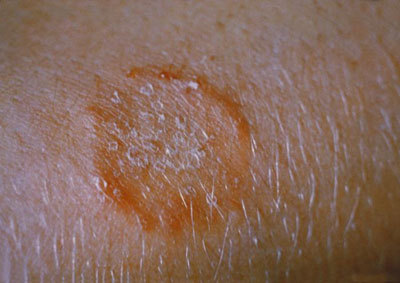
Ringworm
The Typhoid miasm
The typhoid miasm is one which refers to a quite broad classification of diseases which follow the sub-acute pace and prognosis, and which share in common a particular state of mind. Any illness accompanied with a continued type of fever, for instance that which is takes place in blood poisoning or sepsis, is characteristic of this miasmic disposition.
The state of being of the typhoid miasm is one where the person experiences a ‘sudden loss in their ability to be themselves’. This is a direct consequence of the perception that they are in a hostile environment and that they are being harmed and injured by their surroundings. Here are some symptoms which express this feeling of being harmed and injured. I will list many of the remedies known for an affinity of taking form in sub-acute affections, such as Apis, Arnica, Arsenicum, Baptisia, Bryonia, Chamomilla, Cimicifuga, Cocculus, Colchicum, Helleborus, Hyoscyamus, Ipecac, Lachesis, Muriatic acid, Nux vomica, Opium, Phosphoric acid, Rhus tox, Stramonium, Verat viride etc.
DELUSION injury, is about to receive Arsenicum, Hyoscyamus, Lachesis, Nux vomica, Opium, Stramonium (14 remedies)
DELUSION injured, is being Bryonia, Lachesis, Rhus tox, Stramonium (11 remedies)
DELUSION injured, is being injured by his surroundings Hyoscyamus, Lachesis, Naja (3 remedies)
DELUSION poisoned, he has been Cimicifuga, Hyoscyamus, Lachesis (6 remedies)
DELUSON poisoned, he is about to be Hyoscyamus, Lachesis, Rhus tox, Verat viride
FEAR hurt of being Arnica, Rhus tox (7 remedies)
FEAR poisoned of being Apis, Baptisia, Bryonia, Cimicifuga, Hyoscyamus, Lachesis, Phosphoric acid, Rhus tox, Verat viride (22 remedies)
This feeling that one is in the midst of a harmful and poisoning environment creates within the person a tremendous suspicion. An attitude of mistrust and suspicion is a very important trait of this miasm. Here is the symptom,
SUSPICIOUS, mistrustful Apis, Arnica, Arsenicum, Baptisia, Bryonia, Chamomilla, Cimicfuga, Cocculus, Helleborus, Hyoscyamus, Ipecac, Lachesis, Muriatic acid, Nux vomica, Opium, Phosphoric acid, Rhus tox, Stramonium, Verat viride (large rubric)(Synthetic repertory)
With this feeling the person can then experience a tremendous sudden loss in their ability to be themselves. A very prominent and often proved symptom of typhoid is ‘Delusion bed, someone is in bed with him’ (Synthetic repertory), which means to suddenly lose the ability to be yourself. Another expression of this feeling is ‘Delusion home, away from, is’ and ‘Delusion home, away from, must get there’. Many of the well known remedies for typhoid, Rhus tox, Bryonia, Hyoscyamus, Opium, Lachesis, Carbo veg, Baptisia, Nux-vomica and Apis, are listed in these rubrics.
Here are some of the symptoms which express this sudden loss of the freedom to be oneself,
AILMENTS from pecuniary loss Arnica, Rhus tox (6 remedies)
ASKS for nothing Arsenicum, Bryonia, Cocculus, Helleborus, Hyoscyamus, Opium (14 remedies)
DELIRIUM Arsenicum, Baptisia, Bryonia, Chamomilla, Colchicum, Helleborus, Hyoscyamus, Ipecac, Lachesis, Nux vomica, Opium, Rhus tox, Stramonium (large rubric)
DELIRIUM apathetic Phosphoric acid, Verat album (2 remedies)
DELIRIUM fever, during Apis, Arsenicum, Belladonna, Bryonia, Camphora, Chamomilla, Colchicum, Helleborus, Hyoscyamus, Lachesis, Muriatic acid, Opium, Pyrogen, Stramonium
DELIRIUM mild Apis, Baptisia, Phosphoric acid, Rhus tox, Stramonium (10 remedies)
DELIRIUM murmuring Arnica, Hyoscyamus, Phosphoric acid, Rhus tox, Stramonium (10 remedies)
DELIRIUM muttering Apis, Arnica, Arsenicum, Baptisia, Belladonna, Bryonia, Colchicum, Helleborus, Hyoscyamus, Lachesis, Muriatic acid, Nux vomica, Opium Rhus tox, Stramonium
DELIRIUM quiet Bryonia, Carbo veg, Hyoscyamus, Opium, Phosphoric acid, Rhus tox
DELIRIUM recognises no-one Hyoscyamus, Nux vomica, Opium, Stramonium (11 remedies)
DELIRIUM shy, hides himself Stramonium (singular symptom)
DELIRIUM sepsis, from Baptisia,Lachesis, Muriatic acid, Pyrogen, Rhus tox, Verat viride (13 remedies)
DELIRIUM sleepiness, with Arnica, Bryonia, Hyoscyamus, Lachesis, Opium
DELUSION bed drives him out, someone Rhus tox (singular symptom)
DELUSION bed, evening, someone gets into it and no room in it Nux vomica (singular symptom)
DELUSION bed, someone has sold it Nux vomica (singular symptom)
DELUSION bed is sinking Baptisia, Bryonia, Lachesis, Rhus tox (10 remedies)
DELUSION bed, someone is in bed with him Apis, Baptisia, Carbo veg, Nux vomica, Opium, Rhus tox, Stramonium (13 remedies)
DELUSION home away from, is Bryonia, Cimicifuga, Hyoscyamus, Lachesis, Nux vomica, Opium, Rhus tox (21 remedies)
DELUSION home away from, is must get there Bryonia, Cimicifuga, Hyoscyamus, Opium (5 remedies)
DELUSION house is full of people Arsenicum, Lachesis, Nux vomica (10 remedies)
DELUSION work, she cannot accomplish the Bryonia (singular symptom)
DULLNESS lying, while Bryonia (singular symptom)
DULLNESS motion agg. Bryonia (singular symptom)
DULLNESS motion agg. a.m. Rhus tox (singular symptom)
FEAR position, to lose his Rhus tox
FEAR poverty, of Bryonia, Nux vomica
FEAR sold, of being Hyoscyamus (singular symptom)
FEAR starving, of Bryonia
HOME desires to go Bryonia, Hyoscyamus, Lachesis, Opium, Rhus tox (15 remedies)
SIGHING Arsenicum, Bryonia, Chamomilla, Cimicifuga, Cocculus, Colchicum, Helleborus, Hyoscyamus, Ipecac, Lachesis, Muriatic acid, Nux moschata, Nux vomica, Opium, Phosphoric acid, Rhus tox, Stramonium (large rubric)
SIGHING night Bryonia (singular symptom)
SOLD being Hyoscyamus (singular symptom)
STUPEFACTION as if intoxicated Apis, Arnica, Arsenicum, Baptisia, Bryonia, Cocculus, Colchicum, Helleborus, Hyoscyamus, Lachesis, Muriatic acid, Nux moschata, Nux vomica, Opium, Phosphoric acid, Rhus tox, Stamonium (large rubric)
STUPEFACTION injury to the head, after Arnica, Helleborus, Rhus tox (6 remedies)
STUPEFACTION remains fixed to one spot Nux moschata (singular symptom)
STUPEFACTION rouses with difficulty Helleborus, Opium, (5 remedies)
STUPEFACTION sits motionless like a statue Hyoscyamus, Stramonium (2 remedies)
STUPEFACTION sleepiness, with Baptisia, Cocculus, Lachesis, Nux moschata, Nux vomica (11 remedies)
UNCONSCIOUSNESS coma, stupor Apis, Arnica, Arsenicum, Baptisia, Bryonia, Carbo veg, Chamomilla, Cocculus, Colchicum, Helleborus, Hyoscyamus, Ipecac, Lachesis, Muriatic acid, Nux moschata, Nux vomica, Opium, Phosphoric acid, Rhus tox, Stramonium (large rubric)
UNCONSCIOUSNESS answers correctly when spoken to, but delirium and unconsciousness return at once Antimony tart, Arnica, Baptisia, Helleborus, Hyoscyamus, Nux vomica, Opium, Phosphoric acid (12 remedies)
UNCONSCIOUSNESS fever, during Apis, Arnica, Arsenicum, Baptisia, Bryonia, Colchicum, Hyoscamus, Ipecac, Lachesis, Muriatic acid, Nux moschata, Nux vomica, Opium, Phosphoric acid, Stramonium
UNCONSCIOUSNESS frequent spells of unconsciousness, absences Arsenicum, Baptisia, Hyoscyamus (7 remedies)
UNCONSCIOUSNESS lies as if dead Arnica, carbo veg (2 remedies)
UNCONSCIOUSNESS muttering Cocculus, Rhus tox (4 remedies)
UNCONSCIOUSNESS remains fixed in one spot Nux moschata (singular symptom)
UNCONSCIOUSNESS motionless like a statue Hyoscyamus, Stramonium (2 remedies)
UNCONSCIOUSNESS sudden Cocculus
Alongside the slowly developing prostration and stupefaction there is also an anxiety about the feeling of being in a hostile environment and also of the slow sinking of the ability to respond to this. We see this in the symptoms,
ANXIETY bed, in Arsenicum, Bryonia, Carbo veg, Chamomilla, Cocculus, Nux vomica, Rhus tox
ANXIETY house, in Arsenicum, Bryonia, Rhus tox (15 remedies)
SADNESS house, in Rhus tox (singular symptom)
ANXIETY future, about Antimony tart, Arnica, Arsenicum, Bryonia, Chamomilla, Cocculus, Lachesis, Muriatic acid, Nux vomica, Phosphoric acid, Rhus tox, Stramonium
In An insight into Plants we see that the feeling of anxiety in your own house is a very characteristic symptom for not only Rhus tox, but also for all the remedies of the anacardiacae family. We see with these rubrics that a similar feeling of anxiety is also an expression of this miasm as well. Here it is the feeling that as you have suddenly lost the ability to be yourself you cannot be comfortable even in your own bed or own home.
However, alongside this debility and anxiety there can be the counteracting reaction of great activity. Especially the dreams of typhoid are of physical exertion, swimming, hard-work, about the business of the day etc. It is in the context of the sudden loss in the ability to be oneself that this reaction can be understood. Interestingly we find in Bryonia the sentence ‘Anxiety compelled to do something’ (Dr Chawla). The symptom ‘Bed, get out of, wants to’ (Synthetic repertory) has the remedies Baptisia, Bryonia, Camphor and Hyoscyamus. In this reaction the person becomes driven to act, and to make up for the sudden loss they feel. Here are some symptoms which illustrate this,
ANGUISH driving from place to place Arsenicum, Rhus tox (2 remedies)
ANXIETY bed, driving out of Arsenicum, Bryonia, Carbo veg, Chamomilla, Rhus tox (14 remedies)
BED gets out of, wants to Baptisia, Bryonia, Camphor, Hyoscyamus (4 remedies)
BUSINESS talks of Arsenicum, Belladonna, Bryonia, Cimicifuga, Hyoscyamus, Opium, Stramonium (13 remedies)
BUSY Apis, Arnica, Arsenicum Bryonia, Cimicifuga, Cocculus, Hyoscyamus, Lachesis, Opium, Rhus tox, Stramonium
DELIRIUM bed and escapes, springing up suddenly from Arsenicum, Belladonna, Bryonia, Helleborus, Hyoscyamus, Nux vomica, Opium, Rhus tox, Stramonium
DELIRIUM business, talks of Bryonia, Hyoscyamus, opium, rhus tox (7 remedies)
DELIRIUM busy Baptisia, Belladonna, Bryonia, Hyoscyamus, Rhus-tox, Stramonium (10 remedies)
DELIRIUM loquacious Baptisia, Belladonna, Bryonia, Camphor, Cimicifuga, Hyoscyamus, Lachesis, Opium, Rhus tox, Stramonium
DELIRIUM manical Apis, Arsenicum, Belladonna, camphor, Colchicum, Helleborus, Hyoscyamus, Lachesis, Opium, Stramonium
DELUSION bed, drives him out of, someone Rhus tox (singular symptom)
DELUSION business is doing Bryonia, Opium, Rhus tox (7 remedies)
DELUSION engaged in some occupation, is Arsenicum, Hyoscyamus, Rhus tox, Stramonium (12 remedies)
DELUSION roaming in the fields Rhus tox (singular symptom)
DELUSION swimming, he is Rhus tox (singular symptom)
DELUSION well, he is Apis, Arnica, Arsenicum, Hyoscyamus, Opium (11 remedies)
RESTLESSNESS busy Bryonia, Hyoscyamus, Ipecac, Lachesis, Nux vomica (large rubric)
SPEECH delirious business, of BRYONIA (singular symptom)
TALKING sleep, in of business Rhus tox (singular symptom)
WELL says he is well when very sick Apis, Arnica, Arsenicum, Hyoscyamus, Opium (14 remedies)
There is also another kind of reaction that takes place which is related to the desire for activity, and that is the desire to escape and get away from the harming environment. This is expressed by the symptoms,
ESCAPE attempts to Arsenicum, Baptisia, Bryonia, Chamomilla, Cocculus, Helleborus, Hyoscyamus, Lachesis, Nux vomica, Opium, Rhus tox, Stramonium
ESCAPE attempts to run away Bryonia, Nux vomica, Opium, Rhus tox (14 remedies)
ESCAPE attempts to, street into Hyoscyamus (singular symptom)
ESCAPE springs up suddenly to change bed Arsenicum, Nux vomica, Rhus tox (9 remedies)
FEAR escape, with desire to Bryonia (9 remedies)
ANXIETY pursued, as if Hyoscyamus (2 remedies)
DELUSION pursued by enemies Arsenicum, Helleborus, Hyoscyamus, Lachesis, Nux vomica, Rhus tox, Stramonium
This typhoid activity in turn can create both tiredness and bad effects from overexertion. We see this especially in Rhus tox. Here are some symptoms regarding this
AILMENTS hurry, from Arnica, Bryonia, Nux vomica, Rhus tox (9 remedies)
REST desire for Arnica, Bryonia, Colchicum, Lachesis, Nux vomica, Opium, Phosphoric acid
The typhoid miasm is also very much a state of helplessness. We could say that in typhoid the person can become helpless in their ability to regain their sense of self. The profound stupor reached in severe typhoid fever is a state of complete helplessness. Some very important remedies for typhoid fever produce the feeling of helplessness, including Bryonia, Rhus tox, Ipecac, Colchicum and Cocculus. Running through these states we see nausea, vomiting, aversion to food and to the smell of food, great debility and weakness, and in most instances a general aggravation from motion. Rhus Tox seems to be an exception to the aggravation from motion because along with the helplessness Rhus tox is also the feeling of fear (Anacardiaceae), and this creates an amelioration from motion. Another symptom very characteristic in many of the remedy states here is the bad effects from loss of sleep.
The feeling of Rhus-tox is like the feeling of fear with helplessness, and the suppressed feeling of Bryonia is like that of anger (Cucurbitaceae) with helplessness. It is the feeling of being helpless with the anger which also creates in the Bryonia state the anxiety about the future and the fear of poverty. Carroll Dunham and Rajan Sankaran both state in their descriptions of Rhus-tox the feeling of helplessness. Cocculus is a remedy belonging to the Menisperaceae family of plants which is a family within the Ranunculales order. Cocculus seems to share the mortification of the Ranunculaceae remedies, in particular. It is a state of helplessness with mortification. We see in Cocculus the sensitivity to offense and insult. It also has the bad effects from loss of sleep. James Kent observes that vexation is an important sensation present in the Cocculus debility and weakness. Colchicum on the other hand is very much the feeling of helplessness in being left out and excluded (Liliflorae). Also prominent in Colchicum is the bad effects from loss of sleep, as well as the characteristic deathly nausea from food and the smell of food. The Colchicum state can manifest as an expression of gout and rheumatism, of the fibrous tissues especially. Another expression of helplessness is rheumatism and some rheumatic and gouty conditions. The states of suppressed helplessness are very prominently indicated for rheumatic affections.
However, there are different manifestations of rheumatism throughout the different miasms.

Fever
It seems that the feeling of ‘shame’ with its suppression can also sometimes lead into typhoid. Some very important remedies for typhoid have the feeling of shame as part of the remedy and the state. Opium is a remedy indicated in some typhoid affections, and the remedies Helleborus and Hyoscyamus, also important typhoid remedies both create a picture of suffering in many ways resembling Opium. The feeling of Helleborus it seems is like that of profound mortification (Ranunculaceae) with shame. Helleborus like Opium creates a benumbing of the senses, and “Painlessness of complaints usually painful” (Frans Vermeulen). It has “Hysterical mania from self-accusation…Believes she is doing wrong” (S R Phatak). In Prisma it is written of Helleborus “HELPLESSNESS”, which I think is more a state of typhoid reached here. The feeling of Hyoscyamus is like that of being terrified (Solanaceae family) from the shock and insult of shame, (Shocks of fright, alternating with trembling and convulsions, Materia Medica Pura). Dr Banerjee writes about the Hyoscyamus state ‘The delirium is not violent and active as in Bell or Stram but is passive low, muttering growing more-so and passing from a state of coma vigil to stupor or unconsciousness (Opium)’ (Realistic Materia Medica). James Kent writes “Full of imaginations and hallucinations when asleep and when awake. Religious turn of mind, with women who have been unusually pious, they take on the delirium they have sinned away their day of grace.” Roger Morrison writes of the Hyoscyamus state ‘There is a strikingly absent moral or inhibitory ethic in many cases, which is described as “shamelessness” in our texts…Conversely we find a soft type of patient who is passive, feels unnecessarily shameful, and is depressed and hurt by disappointments. Hyoscyamus is a remedy to remember in cases of depression or mania after romantic relationships are broken” (Desktop Guide).
Typhoid has the delusion of being under superhuman control, it also has ‘automatic conduct’. Another characteristic is jealousy which is really nothing more than a person who feels unfree looking upon the free. The expression of typhoid can be a demanding of the immediate need for things to be made better, to be set to rights.
There might be another symptom related to this miasmic state of mind and that is the feeling of being watched. Both Rhus tox and Lachesis have this. James Kent gives a very striking picture of the Lachesis typhoid state becoming very much a kind of guilty paranoia. He writes,
“Many times this medicine has cured suspicion in girls, when they were simply suspicious of their girlfriends. She never sees a whispered conversation going on but they are talking about her, to her detriment. Suspects that they are contriving to injure her, and she will resort to any scheme to see if they were not talking of her to her detriment. A woman imagines that her friends, husband, and children are trying to damage her; that her friends are going to put her in an insane asylum…Thinks she is somebody else, and in the hands of a stronger power. She thinks she is under superhuman control. She is compelled to do things by spirits. She hears a command, partly in her dream that she must carry out. Sometimes it takes the form of voices in which she is commanded to steal, to murder, or to confess things she never did, and she has no peace of mind until she makes a confession of something she has never done.” (Lectures on materia medica)
Dr Luc De Schepper considers the state of Lachesis to be one where the person feels they are being injured by their surroundings. Aside from the influence of the typhoid state of mind this seems to be the feeling of Lachesis itself and it is this particular feeling of Lachesis which brings about the strong affinity it has for taking form in the typhoid miasm. In Lachesis the person needs to feel there is nothing harmful to them around them. They are especially sensitive to things and people doing anything which they experience as harming them. It is significant that the medicine Lachesis is derived from the snake’s venom, for which the very function is to be a poison.
What is also interesting is that we see this Lachesis feeling in many people who are not in Lachesis themselves. It is sometimes difficult to distinguish the real Lachesis state from many other people who are also very oversensitive to what is harmful around them. The difference is that in the Lachesis state the feeling is often quieter and takes a more subtle form. It has the quality of suppression.
The remedy Pyrogeninum (Pyrogen) is considered to be a nosode of the typhoid miasm and is described to be sometimes indicated in the remote effects of sub-acute illnesses like typhus, sepsis, puerperal peritonitis (A Lippe) etc. One interesting thing about Pyrogen is how some of the symptoms are the exact opposite to the typhoid feeling. Instead of the feeling that there is someone in your bed or that your bed has been sold there is,
DELUSION body covers the whole bed Pyrogen (singular symptom).
And related to the feeling of sudden loss, there is
DELUSION rich, as if he is Pyrogen (Dr Chawla, this symptom is not listed in the synthetic repertory)
DELUSION wealth, of Pyrogen
Pyrogen has many symptoms a lot like Baptisia, as well as Arnica.
The feeling of the acute miasm for anyone who has experienced it needs no explanation. It the sudden feeling of being in great danger. There is something threatening the person’s well-being and they have the need to either fix whatever the threat is quickly, or escape from it. It is a lot like fight or flight. It seems to me that to call this miasm the acute miasm is to group together all the components of it. For instance we can class cholera in a miasm of its own which at the same time falls within the sphere of the wider acute miasm. Cholera is the feeling of being in the midst of a disaster. A prominent symptom is ‘Aimless wandering from home’ (Verat-album). Remedies with an affinity to cholera besides the well known ones such as Camphor, Verat album and Cuprum include Jatropha, Elaterium, Podophyllum and Aethusa Cynapium. Elaterium has the cholera feeling expressed in the symptoms “Fear of disaster” and “Wander desire to, night” (Dr Chawla).
Sensations and feelings
In his recent work Rajan Sankaran discusses the phenomena of sensations and their prominence in suffering. He has discovered that the remedies derived of a particular family or sometimes even more than one family of plants share primary sensations and reactions in common. Therefore it is important to realise what sensations are and how they are related to feelings.
At the deepest point in all suffering exists a healthy feeling. Suffering emerges to the extent this feeling is buried. In the process of suppression what becomes set up is an alternating state of opposites. These are, a distorted manifestation of the feeling itself together with its very opposite. To move near the healthy feeling being suppressed is to feel aggravated and the further we can get away the more ameliorated (temporarily) we are. This is the main dualism of the state and it exists at the level of feeling. As a result of this primary suppression emerge physical and mental sensations that are part of the expression of suffering. These sensations are very connected and bear much similarity to the suppressed feelings. Sometimes by studying the sensations of a particular remedy or remedies we can work out what the feeling might be. The provings and the clinical information will somewhere indicate it as well. The sensations of suffering also become set up as dualistic opposites suggesting their close relatedness to the feeling from which they emerged.
An example of the connection between the healthy feeling and the sensations experienced is found through looking at the remedies derived from the family of Anacardiaceae. The main feeling central to all the remedies here Rhus Tox, Anacardium etc is that of fear. The Anacardiaceae remedies are indicated for suffering emanating from the suppression of fear. Rajan Sankaran gives some prominent sensations of the suffering here as ‘Caught, Stiff, Tight, Tension, Stuck, Cramps, Pressing’ (Sankaran’s Schema). In the book An Insight into Plants the sensation of the person feeling physically ‘caught’ is stressed as being very characteristic. Therefore there will be a fundamental connection between fear and the sensation of ‘being caught’. Throughout the section on the Anacardiaceae remedies in An Insight into Plants the feeling of fearfulness is very apparent in the cases given. Also attributed to these remedies is the sensation of ‘cannot move’, of being ‘unable to move’, ‘as if paralysed’. This is interesting because it is what people say ‘I was so scared I couldn’t move’ and ‘I was paralysed from fear’.
We can see the connection between the feeling and some of the sensations from what we know about fear. The main dualism here at the level of feeling is that of fear/fearlessness and some of the prominent alternating opposite sensations will include caught/let go, stuck unable to move as if paralysed/moving, motion ameliorates, restlessness. We can very much see Rhus-tox in these characteristics. What seems extraordinary is that the reaction to fear of not being able to move is expressed as a sensation even in a state of the suppression of fear. With the state of fear here the person is ‘stiff’ and ‘stuck’ with fear. The state of Rhus-tox is something like sudden fear and helplessness while Anacardium is a lot like the person is suppressing fear of being harmed. George Vithoulkas describes this fear of being harmed in Anacardium “She had fears of falling ill and dying. She imagines herself in a coffin and thinks that she is in danger. She had fears of cars in the street. She was very timid. Felt that everybody was looking at her when she would walk in the street. The illusions are that they feel someone is after them to kill them…Yes, now how is the violence expressed? I will read you this: In a quarrel, she had with her brother she wanted to do harm…Anacardium is a remedy that can lead to cruelty” (Talks on Classical Homoeopathy).
We can again see the connection between the feeling and the sensations in the remedies of the Euphorbiaceae family. Here the feeling is of being restrained. Rajan Sankaran gives the sensations here to be of being ‘tied’ and of being ‘bound’. This is also described in the Materia Medica as the feeling of being pulled back, held back. In Croton-tiglium there is ‘Drawn backward feeling’ (C Boger), and ‘Drawing pain as if drawn backward with a string (nipples: eyes) (Frans Vermeulen). Hura Brasiliensis has the expression ‘Pain in right arm, as if it were pulled violently or has been stretched for a long time’. Hura also has ‘Inability to incline forward; he can only walk bent backward; when bending forward ever so little, drawings are felt in the lumbar region compelling him to straighten up’ (Allen)(cited in Frans Vermeulen). Generally, these states have drawing pains, pains that draw to a point and the dislike of parts and affected parts being pressed, along with the tense tightness of skin, the hidebound feeling. The pains here are characteristically also of a constricting nature. An expression here is also disobedience. The person feeling restrained can be disobedient. In the suppression of feeling restrained the reactive secondary state to this is of not wanting to be restrained by anything and so the person might become or seem disobedient to the wishes of others.
An interesting connection between feelings and sensations is given in An Insight into Plants in the discussion of the Liliflorae remedies. Here the feeling is of being left out, excluded, neglected. The main alternating states will therefore be left out excluded/ being included. Dr Sankaran describes an important sensation here as ‘held in’ which exists in tandem with ‘forced out, break out, pushed out’. This ‘held in’ sensation he explains can in turn become oppressed, constrained, constricted and a reaction to this can be that of ‘must move’. To be included is like being ‘held in’. Therefore created from the feeling of being excluded and also included is the sensation of wanting to move.
Another example is the order of Magnolliadae, which includes the remedies Nux-Moschata, Camphora and Asarum. Here the main feeling is of strangeness, of being in a strange place, of things becoming very unfamiliar and foreign, of feeling strange. The main dualism is ‘strangeness/withdrawing into ones own world where things are not strange’ (Sankarans Schema). At the level of sensation the person experiences this strangeness more as a sense of being bewildered, beclouded perplexed and confused. These sensations will then exist with their opposites.
The distinctive nature of each remedy and the miasmic forms
Having discussed the connection between feelings and sensations, I wish to continue with this theme and add the phenomena of miasms and miasmic classification.
When studying the work of Rajan Sankaran and reading through the cases in his books, we see how he sometimes puts to one side many of the presenting feelings of the patient and focuses on what seems more out of place, the sensations that seem to make less sense. In discovering the importance of sensations in suffering, he also shows how this helps to better see the true state of the person. I think that in doing this Dr Sankaran has found, within the expression of everyday feelings and emotions, the way of heading into what is deeper. This is because the sensations of the person do not so much indicate our feelings as we sometimes experience them to be. They are a more accurate reflection and outward manifestation of the feelings which are suppressed and hidden. We must keep in mind that the essence of a state of suffering is what we are not allowing ourselves to feel.
Dr. Eugene Nash once wrote “We, as homoeopathists, do not yet fully appreciate the value of sensations” (Leaders in Homoeopathic Therapeutics, pg 67).
Another important aspect of Dr Sankaran’s work is the way he attributes to each remedy state a corresponding miasm it also belongs with. He further considers the main point of difference between the remedies of the same family of plants as being their different miasmic classification. However, although you can apparently attribute to remedies a strong affinity to taking a particular miasmic form it is not any definite miasmic difference that distinguishes the remedy states. In the plant families where the remedies produce feelings, sensations and generalities in common, each remedy also has its own distinctive kind of feeling which distinguishes a remedy from the others of the same family.
With the Compositae family for instance, the feeling shared by all the remedies of this family is of hurt – mental or physical hurt. Each remedy of the Compositae family has (produces) a different kind of hurt. With Arnica it is like the hurt of being injured. With Chamomilla it is more like being hurt with pains that are mortifying. The state of Cina seems like the hurt of something ‘shocking’ the person. The phrase ‘shocks from pain’ (S R Phatak) seems to be a central symptom of Cina. Abrotanum is very much a state of the suppressed hurt with helplessness.
With the Solanaceae family the universal feeling in common is of being frightened, terrified. Rajan Sankaran gives the prominent sensations of the Solanaceae remedies as being, “Sudden, violent, splitting, bursting, explosive, tearing, pulsating spasmodic, jerking, constricting, choking, shooting, sunstrokes, apoplexy, violent terror, pursued, murder, killed snakes” (An Insight into Plants Vol 2).
In Belladonna, it is a very violent shocking feeling of being terrified. In Stramonium, the person feels they are in a strange place, terrified and all alone. Dulcamara is the state of being frightened and helpless, primarily as a consequence of becoming cold. In this way each remedy of the Solanaceae family has a distinctive kind of feeling of being frightened and terrified.
All the remedies of the Ranunculaceae family have in common the central feeling of mortification. Dr Sankaran has worked out the sensations most representative of these remedies as a whole to be, “Sharp, sticking, stinging, stitching pains; Raw nerves as if there is no insulation mentally, emotionally and physically; Shock-like pains; easy excitement; Morbid sensitivity; Vexed, distressed, annoyed, harassed; Insulted; sensitive to trifles; Bursting” (An Insight into Plants Vol 2). With Aconite, it is a sudden and frightening mortification, and in the state of its being suppressed can be so overwhelming the person thinks that they are about to die. Pulsatilla is a state where the child or older person can become quite frightened. In Pulsatilla the person is mortified with the experience of feeling all alone and in a strange place. For a detailed discussion on the Pulsatilla feeling of being alone see the section ‘Dependence’ in Catherine Coulter’s Portraits of Homoeopathic Medicines. Cimicifuga (Actea racemosa) is the feeling of mortification and helplessness. This is expressed through the symptom “DELUSION encaged in wires” (Dr Chawla). The person in Staphysagria is in a state of the suppression of the feeling of being insulted and mortified.
The common feeling universal to all the proved remedies derived from the Loganiaceae family has been worked out by Rajan Sankaran to be like being ‘shocked’ by something, like the experience of something upsetting you and shocking you. This he further describes as being ‘shattered’, and also like having been let-down or disappointed. Each of the remedies of Loganiaceae has a distinctive form of this. Gelsemium very much produces a feeling of being shocked with tremendous fear. Ignatia on the other hand is the state of being shocked and mortified. It is this mortification which gives the Ignatia state a lot in common with both Pulsatilla and Cimicifuga, two remedies Ignatia is compared to. The mortification of being shocked in Ignatia is expressed as the symptoms,
TALK indisposed mortification, after
AILMENTS FROM anger vexation
AILMENTS FROM anger, indignation with
AILMENTS FROM homesickness
AILMENTS FROM honour, wounded
AILMENTS FROM love, disappointed
AILMENTS FROM mortification
DECEPTION causes grief and mortification Dr Chawla
The state of Ignatia is also the feeling of having been through something, or having done something shameful.
The state of Nux-vomica has at least three different aspects. There is the feeling of being shocked and with this the person is also very easily mortified, as seen in the symptoms,
INDIGNATION bad effects, following
MOANING honour, from wounded
SIGHING honour, from wounded
AILMENTS FROM mortification
DELUSION after mortification Dr Chawla
Another aspect of Nux-vomica is the bad effects from becoming overstimulated. In this way it is much like China, Ipecac and Coffea etc, of the Rubiaceae family. These remedies seem to alternate between apathy and the state of stimulation, heading into overstimulation. Nux-vomica is indicated in the person who is over-stressed, over-worked, wound-up, someone who ‘lies awake at night, the mind is so wrought up that he cannot sleep. Thoughts run through his mind in confusion’ (Earnest Farrington). There is the Rubiaceae indication, ‘PLANS making many’ (synthetic repertory). Related to this same idea Nux vomica can sometimes be the medicine for people over-dosed with medicines and stimulants. Together with being shocked and mortified is the extreme irritability, something we also see with China and Ipecac. This is explained by Catherine Coulter, ‘ “moodiness and ennui” (Boenninghausen) arises mainly from inability to work, with a consequent feeling of uselessness (“I have become nothing but a drone!” )’. The person in Nux-vomica is caught in the dualism of trying to get away from the shocking and mortifying effect of apathy, and mostly they attempt to do this through activity and work. Because this is an attempt at escape from their state it only works temporarily then the feeling, which is in essence a healthy one, comes upon them and is experienced in an aggravated way.
Spigelia seems to be another remedy which produces helplessness. An important sentence of Spigelia reads “Painful sensitiveness to touch of the whole body: at the slightest knock on any part there occurs pain and as it were a shivering about the part; even when treading there occurs a disagreeable shock in the body” (Materia Medica Pura). Spigelia is the state of suppressed shock and helplessness.
When we read in Rajan Sankaran’s work remedies classified as corresponding to a particular miasm we should think of this as the remedy producing a feeling which in suffering has an affinity to taking the form of that miasmic disposition. While it is most probable to find the person in Arnica, for instance, also in the Acute miasm, the Arnica state can also take form in any miasm typhoid or malaria, for example. Even though the state of Silicea has a strong affinity for taking form in sycosis, it will also be found in other miasms such as tuberculosis for example. People can change miasms and still be indicated for the same remedy.
Even someone in the state of a nosode of a particular miasm may have a different miasmic disposition to that which the remedy was derived. With a nosode, the miasmic disposition is potentised into a feeling. With Medorrhinum for instance, the miasmic disposition of ‘uncertainty’ has become the feeling itself. The uncertainty is no longer related to the non-integration of other feelings, it has become the feeling, and with it being suppressed the miasmic disposition of this non-integration could be of another miasm.
In sickness where the feeling of fright, or sudden fright is being suppressed, then the miasmic form of this suffering will frequently correspond to the acute miasm. The remedies which produce this feeling or a similar feeling of fright will be the ones most frequently indicated in the acute state. Likewise, when the feeling is of sudden loss or of helplessness, the miasmic disposition of the person may become that of typhoid and the remedies that also produce this are known to become indicated in some typhoid affections. There seems to be a connection being criticised or insulted, and the tendency of suffering coming out of this of taking the form of the cancer miasm. However, we cannot distinguish remedies by classifying them into any one particular miasmic form of suffering.
As the remedies of a synonymous grouping of plants will, in suffering, have many sensations in common with the others of the same grouping, every remedy also manifests sensations which are distinctive to that remedy alone as every remedy state is a feeling distinctive in itself.
If we consider again the remedies of the Compositae family we can see how a different feeling of hurt in each of the remedies also manifests as distinctive sets of sensations. Arnica it seems is like the feeling of hurt involved in being injured. It is like the hurt of a blow to the bodily tissue, or an injury to the tissue. With this, more prominent to Arnica are the symptoms,
Mind: Fear struck by those coming towards him (singular symptom)
Mind: Fear fall upon him, high walls and buildings (Dr Chawla)
More pronounced in Arnica is this fear of being struck, the weakness of the tissues, of the muscles and of the blood vessels. Because of this hurt which corresponds to being struck, there can develop in the Arnica state a lot of fear and anguish, especially at night.
The remedy Chamomilla is like the feeling of the hurt of mortification. The suppression of this leads the person into wanting to not be mortified in general, which generates a sensitivity to vexation, to insult and to being scorned. We also see in Chamomilla an expression of greatness, the opposite to mortified with the symptom, “Indignation” (Dr Chawla). The hurt, injured feeling of Compositae together with the mortification creates in Chamomilla tremendous sensitivity to pain. It can be a state where the pains are mortifying. The sensations individual to Chamomilla are of pains that are vexing, irritating, it is a sheer anguish from pain, there is cutting pains, jerking and twitching from pains heading towards convulsions.
The hurt of Cina maritima is more like the feeling of pains that are shocking you, like something giving you ‘shocks of pain’. We see this also in the symptom “paralysed shocks: patient will jump suddenly as though in pain” (Dr Boericke). It is a singular symptom of Cina “Mind; Jumping sudden, as if in pain” (Dr Chawla). There are many sensations in Cina of pinching pains (mostly internal pinching), the child jerks from pain. They tremble, twitch and can convulse from these shocking and irritating pains. Much like the Loganiaceae remedies the pains can become paralysing from the shocks.
The feeling of Eupatorium perfoliatum seems to be like the hurt of ‘aching’ pains, as if the bones were broken or dislocated. These pains have a great tendency of producing much irritability and therefore the affinity for the malarial disposition is compounded. The Compositae ‘bruised soreness as if beaten’ in Eupatorium is an aching soreness. Dr Nash distinguishes Eupatorium “The bruised feeling of Eupatorium is accompanied with a deep hard aching, as if in the bones” (Leaders). Like the other compositae remedies, and emphasized here, is the symptom of being sad from hurt.
Bellis perennis seems to me to be like the Lily representative of the compositae family. The feeling of Bellis is like of the hurt of being excluded. We see the impression of being friendless and disconnected, together with the friendliness, the desire for company and the friendly loquacity. Bellis also has the swelling and stasis of the Liliflorae remedies. It is used in injuries were from swelling and inflammatory swelling surrounding tissue is pressed upon and squeezed, a stasis takes place from impeded circulation. Bellis perennis is used in an inflammatory reaction where swelling cuts off circulation to tissue resulting in coldness and stiffness. Miranda Castro writes about the helpfulness of Bellis in pregnancy, “Groin pains Sudden. In Pregnancy. Legs weak. Pain, caused by a trapped nerve during the last two months of pregnancy, especially after the baby’s head engages, comes on suddenly while walking and may last only a few minutes. Groin pains are relatively common and can be severe enough to make walking impossible until after they have passed. Bellis perennis will help them pass quickly and prevent recurrence” (Homoeopathy for Mother and Baby).
Bellis perennis is also used for the effects and continued effects of having become suddenly cold when overheated. Here, the sudden cold causes a very rapid flow of blood and ‘swelling’ of the blood vessels, just like what happens in ice-cream headaches. Perhaps Bellis is indicated for the effects of hurt which takes place in this. It is interesting that characteristic of both the Bellis and Carcinosinum states is a liking of thunderstorms, and Dr Sankaran places Bellis perennis in the cancer miasm.
Another very interesting set of remedies are those belonging to the Labiatae grouping, which includes Lycopus, Collinsonia, Teucrium, Agnus castus and Scuttelaria etc. We see with the mental/emotional symptoms of these remedies the tendency towards a state of excitement and exhilaration, and there is also an aggravation with becoming too excited. For instance, there is
Lycopus
EXCITEMENT exciteable
EXCITEMENT evening (Dr Chawla)
Collinsonia
EXCITEMENT exciteable
AILMENTS FROM excitement, emotional (Dr Chawla)
Teucrinum
Excited tremulous feeling (W Boericke)
EXCITEMENT exciteable
EXCITEMENT evening
EXCITEMENT hearing, horrible things, after
EXCITEMENT nervous
EXCITEMENT perspiration during
EXCITEMENT trembling, with
EXHILARATION (Dr Chawla)
Agnus castus
EXHILARATION alternating with sadness (Dr Chawla)
Scuttelaria
AILMENTS from excitement emotional
EXCITEMENT exciteable (Dr Chawla)
Rajan Sankaran writes, “It is evident that the main sensation is excitement, which runs right through the Labiatae family. The excitement can be vivid, pleasant, tremulous excitement. Along with these symptoms there can be warmth, perspiration, trembling, feeling overwhelmed, passionate etc.” (An insight into Plants Vol 2)
Dr Sankaran also writes,
In Mentha-pip
Activity; desire for (Complete)
Passionate (Mangialavori)
The use of the word Passionate is very interesting, as I believe this to be one of the main features of this family, which combines excitement, pleasure, sexuality and activity. (An insight into Plants Vol 2)
These states all have an expression of passionate excitement and passionate exhilaration, and this expression is part of the alternating state. In contrast to this, the primary feeling being suppressed here is a feeling of ‘coldness’, an emotional coldness.
This primary state is one that Homoeopaths throughout the literature have some trouble describing. It is such a nothing kind of feeling and is mostly described to be like a sadness. However, it is not sadness so much as the opposite of passionate, which is coldness.
Some of these plants are known to us as mints and the Lamiaceae family of which many of these remedies are derived is also known as the mint family. Among these remedies there is Mentha- piperita (Peppermint), Mentha viridis (Mint) and Mentholum (Menthol). It is interesting that we sometimes associate the taste of mint with refreshing coolness and cold.
During a case of Teucrium by Dr Bert Lefevre and cited in An Insight into Plants Vol 3, the patient says at one point,
Doctor: How do you experience “adrenaline”?
Patient: I can feel it, more it becomes dangerous, more I feel cool. Zen.
Like at high seas or in a plane. All the others are panicking, but I am cool, very cool. That happens for me, to feel Zen.
And during a proving of Ocimum sanctum, it is written
“…Have become cold-blooded. Was unusually unaffected when a friend who was supposed to meet me didn’t show up…Have become cold-blooded, indifferent towards him (close friend)…Indifferent; not bothered by anything. Equally unaffected by compliments, rude behaviour or insults. Felt that I had been expecting too much, and now I don’t expect anything. Had no feelings at all, no emotions, no pleasure, was unable to enjoy things that used to be fun and thrilling for me…”, and Rajan Sankaran writes, “Unable to enjoy oneself is part of the feeling of Labiatae…” (An Insight into Plants Vol 2)
The feeling in the state of Scuttelaria is that of being emotionally cold with fright and terror. There is hydrophobia, night terrors, the person starts in their sleep and wakes with fright.
Teucrium is very much a state of feeling cold as from something shocking you. We see in Teucrium many comparisons with Cina. It is indicated for worms, and also like Cina there is the symptom of an unusually very increased appetite, (an increased appetite is a symptom of worms). There is “Jerking hiccough on eating; after nursing” (Dr Banerjee). Many of the Labiatae states mention hiccoughs. And while Dr Sankaran places Teucrium in the ringworm miasm there is also a marked affinity for sycosis.
The state of Lycopus is like an emotional coldness with apathy, alternating with an expression of passion and overstimulation. Lycopus also has the Rubiaceae feeling of China, Ipecac and Coffea etc along with the Labiatae coldness and excitement.
Meanwhile, the feeling of Agnus castus is a coldness with helplessness. And like Rhus tox, Agnus castus is indicated in overexertion, for sprains and strains, “Sprains of overlifting” (S R Phatak).
It is interesting that to describe someone as acting ‘fresh’ is to say they are being overly forward and amorous.
The process of feelings
Even though suffering and disease can be a complex process which takes so much mental and physical energy, it is amazing to realise that underlying all the suppression are simple feelings. However, what may originally have been more clear, can in the process of suppression become quite distorted.
With the remedies derived from the plants of the Ranunculaceae family, the main feeling is mortification, and this is also experienced to be like being humiliated. I think the true feeling here of both the person and of these plants is mortification. However, in suffering the person becomes very sensitive to humiliation. This may happen because in not accepting the feeling, we start to not accept ourselves, as the feeling is part of ourselves. Also, when we do not accept ourselves, our ability to process feelings and information is very much affected. In this, simple and healthy feelings will be distorted and will become something more complicated. It seems to make more sense that a plant would produce mortification and not so much humiliation. To be humiliated is a slight distortion of mortification, a more ‘suffering’ emotion.
Another example of this is of the suffering involved in the Loganiaceae remedies. While Dr Sankaran gives the deepest feeling here of being ‘shocked’, he also considers other prominent sensations as being let-down or disappointed. The person is sensitive to being let-down and disappointed while they are really suppressing being shocked by something.
The remedy Capsicum belongs to the Solanaceae family of plants and is well known for its prominent symptom of homesickness. There is also the symptom, “SECURITY, desires” (Dr Chawla). In Capsicum the person is easily offended, they want to be let alone. In the Materia Medica Pura we see this in the symptoms,
“Repugnance and crossness”
“He makes reproaches and is indignant at the faults of others: he takes trifles ill and finds fault with them”
“In the midst of joking he takes the slightest trifle in bad part” (Dr Hahnemann)
James Kent describes the same idea where he writes of the Capsicum state,
“They are oversensitive to impressions, are always looking for an offence or slight; always suspicious and looking for an insult.” (Lectures on Materia Medica)
The person in Capsicum is frightened, (Solanaceae family), “Wakes in a fright, screams: remains full of fear” (Margaret Tyler), and is mortified with the terror. We see a peculiar expression of wanting to be great in the midst of being frightened with the symptom “FEAR censured, of being” (Dr Chawla). In Prisma a similar sentiment is expressed in the sentence, ‘If she wants a certain thing, she will oppose it if is proposed by someone else’. This also sounds like Chamomilla. In the Capsicum state the person wants to be at home where it is safe and secure because they easily become frightened and mortified.
Interestingly, Capsicum shares with Clematis the symptom,
ENNUI homesickness, with (Synthetic repertory)
And when we study the Ranunculaceae remedy Clematis we see that it is also well marked for the expression of homesickness. Also, when looking up the general rubric HOMESICKNESS we find many of the known remedies of mortification. Included is, Aconite, Capsicum, Cimicifuga, Clematis, Coffea, Helleborus, Ignatia, Pulsatilla, Pulsatilla nuttalliana, and Staphysagria.
Coffea is a remedy often compared with both Chamomilla and Staphysagria. Coffea is also a state of pain, there is an extreme sensitiveness to pain. But with Coffea it isn’t so much the hurt of mortification which is aggravating to the state, it is stimulation. Dr James Kent writes, “But pain in the extremities aggravated by noise is peculiar. It seems that noise disturbs him so much that he cannot bear the pain.” (Lectures)
Coffea has the symptoms,
AILMENTS from anger, vexation
AILMENTS from love disappointed
AILMENTS from scorn, being scorned
FEAR death pain, from
SENSITIVE noise, to slightest
WEEPING mortification, after Coffea, Colocynthis, Palladium, Pulsatilla (4 remedies)(Synthetic Repertory)
The state of Coffea has stinging pains like both Clematis and Staphysagria, like the Ranunculaceae remedies in general. And while with Staphysagria it is like being insulted creates the stinging mortification, in Coffea the person is mortified by apathy.
Another example of how an internalized feeling can become experienced in a different way is seen with the remedies of Row 4 of the Periodic table. The outstanding feeling common to all the remedies here seems to be insecurity. And this understandably creates much anxiety, a symptom well marked throughout the remedies here. Another aspect that seems to run through the remedies derived from the elements of this row is guilt. Rather than being insecure the expression of this is that the person feels guilty.
For example, in his description of Bromium Jan Scholten writes, “The guilty feeling is also very strongly present in Bromium. In the repertory we find the symptoms ‘Delusion people behind her’ and ‘Delusion people looking over her shoulder’ (Homeopathy and Minerals’), and in Prisma ‘…At other times he has intense remorse and guilt feelings about having wounded the feelings of others…’ (Jansen).
There are many symptoms indicative of guilt in the state of Arsenicum, and it is included in the symptom “DELUSION crime committed a, he had”, along with Kali-bichromicum, Kali-bromatum, and Zincum metallicum. Arsenicum is well marked in the rubrics
DELUSION offended people, he has Arsenicum (3 remedies)
DELUSION wrong, he has done wrong Arsenicum (Dr Chawla)
When we look at some of the rubrics of Zincum we see included many of the other remedies of the whole row. Symptoms like,
ANXIETY conscience, as if guilty of a crime Arsenicum , Calcarea carbonica, Causticum, Cuprum, Ferrum, Ferrum-arsenicosum, Ferrum-phosphoricum, Kali-bichromicum, Zincum
DELUSION arrested, is about to be Arsenicum, Cuprum, Kali-bromatum, Zincum (8 remedies)
DELUSION pursued police, by Arsenicum, Cuprum, Kali bromatum, Zincum (10 remedies)
Jan Scholten in his book Homeopathy and Minerals describes the feeling of Zincum,
“Zincum has a very specific mental picture. They have the idea that they have to be very intellectual and achieve a lot in this area…Typical of Zincum is that they dream of taking an exam that they passed a long time ago…This situation often originates in the sort of upbringing they had at home. Here the emphasis will have been on intellectual achievement having to score high marks at school, otherwise they won’t count. It is often the father who exerts this sort of pressure and it is remarkable that these children are usually accompanied by their father when they come for a consultation…The pressure of having to achieve often leads to a feeling of guilt, particularly when they fail. It might make them feel that they have committed a crime. Hence the delusion or the dream that they are being pursued usually by the police.”
Rajan Sankaran writes of Zincum metallicum
“The remedy has the theme of attack and defence, with an accompanying feeling of having committed a crime. I have found that Zincum patients have a tremendous constant anxiety as if they would be arrested, as if they were pursued by someone…Repressed emotions can cause somnambulism and suppressed anger causes trembling and weakness.
After a period of excitability of the brain and tremendous restlessness, the Zincum patient can go to the other extreme which is tremendous dullness, fagged out feeling such that he cannot even understand a question – he repeats questions before answering them. He is muddled and suffers a brain fatigue; later he passes into a state of total collapse and coma” (The Soul of Remedies).
In the state of Zinc the feeling is that you are insecure and are being treated immorally.
When describing Niccolum Jan Scholten writes
“They suppress their emotions, particularly aggression, but also sexual and other ‘negative feeling’. Only ‘decent’ emotions like love may be shown…They think they are worthless and they don’t dare fight back. Hence they have dreams of losing their teeth…They might even develop the idea that they are guilty and being persecuted.” (Homoeopathy and Minerals)
Cobalt is described by S R Phatak, “Sense of guilt, Mental suffering. Thinks too little of himself.” (Materia Medica)
Rajan Sankaran describes Ferrum metallicum
Being compelled to do something against ones wishes. Fighting against it. Guilt of not obeying the parents. (The Soul of Remedies)
Ferrum is the feeling of being insecure and ‘unprotected’.
The presence of the feeling of guilt with all these remedies is directly related to the internalisation of insecurity. When we suppress insecurity we need to create in its place a compensatory feeling that we are secure. Everything that we do or feel must be in the interest of creating for ourselves a harmonious secure environment. The guilty feeling becomes anything that is happening or anything that we are feeling which is interpreted as interfering with this. Even the insecurity itself will be experienced as something ‘bad’. For instance, if a parent gives their child the message that for everything to be okay they need to do well at school, that child could very easily suppress that their sense of security is in actual fact, under threat, and instead they might end up feeling guilty if they don’t (or even do), achieve well at school.
When people internalise insecurity, they can end up feeling guilty about all sorts of things.
It is very helpful for the Homoeopath to have an understanding of the underlying healthy feeling of all the remedies and also, the various distortions of what they can become in the suffering person.
Many things can happen in the process of suffering and one of the most prominent is the tendency to create the exact opposite feeling to that which is being suppressed. And this opposite state is not just what we want to feel within ourselves. It can also be what we, to an extent, present ourselves as being, to others. A lot of the descriptions of the remedy states and of the behaviour that takes place are an illustration of this phenomenon. In suffering we can spend a lot of energy keeping this opposite state. And what the person is exhibiting to the world around them can be the most striking and apparent feature of their state. A very important skill of a Homoeopath is to be able to listen, and become aware of what the person is presenting themselves to be. And even though the feelings of the different states are only shades of difference, it is the exactness of seeing this that will show to you a lot about the state of the person. The healthy feeling underlying suffering can be quite hidden from ourselves, we sometimes don’t know what it is, or that it is even there. However, what we want to be, is more apparent.
It is generally the opposite feeling to what is suppressed that is very ameliorating to the person and is what is desired, in suffering. However, as the person seeks this ‘opposite state’ the awareness of what is actually happening in their life which is in conflict with this can create stress. In suffering what is most ameliorating and least stressful is when you can exist in the illusion of your opposite state and have everything in your life to be as you like it and relatively consistent with this illusion. However, say things are not like this, say, you are treated very badly by another person or by other people or say you are doing something you do not like, then this disparity can create stress and contribute to physical pathology. This is why some people can avoid bodily dysfunction, for them there is less disparity.
If we consider the state of Sulphur. The feeling of Sulphur is of being unconnected to others (row 3), and of being treated like you are no-one. It is like the feeling you are nothing, and your thoughts and opinions are nothing. Corresponding to this, the description of the Sulphur state is very much of the person wanting to be ‘someone’. This is why Sulphur is described as being close to Psora itself. Psora is the fundamental process of not accepting ourselves, and so just like Sulphur we instead want to become ‘someone’, apart from ourself.
Next to Sulphur is the element of Phophorus. The feeling of the Phosphorus column is more severe than Sulphur. It is more like being treated like you are less than no-one, like you are inferior to others. It is much easier to see this in the descriptions of both Nitric acid and Arsenicum album. Many descriptions of Arsenicum are of someone treating others like they are inferior. With Phosphorus we can see the disconnectedness from others (row 3), the Natrum, Silicea feeling of being distant, away from others. This is also brought out in the rubric “DELUSION Island, is on a distant” (Dr Chawla). And yet the Phosphorus person can also be very friendly, sympathetic and attractive in their behaviour. In this they transform the situation from one where they are treated in such a way. Dr Sankaran describes Sulphur as the attitude “I am proud to be me, and I know better than you”, and the attitude of Phosphorus as “I am certainly not you.” These descriptions are expressions when the person is feeling bad. They are a part of the opposite state. “I am better than you”, is ‘you are no-one, I am someone’, and “I am certainly not you”, is ‘I am superior to you’.
The remedy Graphites is an interesting carbon remedy and also an interesting example of a remedy state belonging to Row 2 of the Periodic table of elements. One very outstanding characteristic running through the Graphites state is the feeling of being irresolute, confused, unsure what to do. The other aspect of Graphites is the feeling of being unseen (row 2) by others around them. And while this can create in the Natrum carbonicum state the impression they are an outcast (R Sankaran), or even a ghost (G Vithoulkas), and in the state of Flouric acid the desire to be bright and glittery, Catherine Coulter shows us how in Graphites this can be like a state of the ‘unfulfilled artist’. She writes,
“Why, one may well inquire, does the Graphites individual seeking solace have no easy recourse to the philosophical disciplines and religious systems that satisfy others, but must work out his own individual understanding…The Graphites individual, indeed, possesses the soul of an artist…Coupled with the neglect of her artistic talents is a dread of being mediocre, and she grows, over the years, more critical of her abilities and increasingly afraid to stretch her wings…When Graphites does not experience pride in achievement or artistic fulfilment, he might begin to consider himself ill-used, unappreciated, unlucky, and eventually turn “peevish” – a word that Hahnemann lists no less than six times in the short “Mind” section…’Only the person who is incapable of doing anything else in this world becomes an artist’ – and how, at the time, I resented this rather demeaning definition of the artist as a social misfit…Graphites, having taken so long and worked so hard at arriving at his true calling, cherishes that much more the precious gift…the Graphites individual, shedding his inertia, self-doubts, or resignation about remaining a gray presence in the background, can become a conductor of light: the conveyor of those works and ideas that contribute so much to an “enlightened” understanding of life. The remedy may help initiate a quest or prompt the spirit of enterprise.” (Portraits of Homoeopathic Medicines)
Included in the book Twelve Jewels by Peter Tuminello is the proving of Diamond (Adamas). This gem is another form of carbon. A prominent aspect of the Diamond immersion proving is this idea of light, of ‘shining light’. Here are some sentences from the proving,
“The positive expression of diamond is as full of light as the negative is full of darkness...Then I was going down a tunnel winding its way round: a very long tunnel; and came out into darkness. From the darkness came light. That was the message that I got ‘only from the darkness can come the light”…The pressure feels so great. I cry most of the night and wonder where I will find the strength to be what I have to be. I felt as though I could break down completely. Could I survive the pressure? Can I perform? Or would I do as I have done, and emerge from this feeling and shine? I shone and brilliantly.”
The element Palladium belongs to row 5 of the periodic table. The feeling of the remedies of this row is like you are being criticised by others. Palladium is the feeling of being powerless and criticised. In the state of Palladium the person is presenting themselves to be someone who is a ‘powerful’ person, and who is beyond criticism. The person here usually reaches a position of authority, where they are in charge of organising people. In doing this they are protecting themselves against criticism while also being able to criticise others. They can subtly, and not so subtly attempt to make others feel powerless. S R Phatak describes the Palladium state “Love of approbation, seeks the good opinion of others and attaches great importance to them. Easy prey to slights, real or imaginary; wounded pride and fancied neglect, sometimes finding vent in violent expressions…Keeps up brightly in company, much exhausted afterwards.” This is brought together by Divya Chhabra, “The situation of Palladium is that of a person who wants to win an argument, for example, yet is not willing to accept that the loser thinks badly of her. Palladium wants to be on top and at the same time everybody must think them to be wonderful” (quoted in Prisma).
The feeling of being criticised by others can tend into the sphere of cancer, in which it takes the form of perfectionism, where anything that is not just right, the way it should be, is justifiably open to criticism. Argentum metallicum is another remedy of this row. In Argentum it is like needing to become a person of value, of needing to be a very good performer of something, as the only way to finally evade criticism. The aim is to be appreciated, not criticised. Likewise, to perceive someone in Aurum metallicum is to see a person spending a lot of energy being a likeable and valuable person.
Homoeopathy as a practise of medicine serves to encourage and stimulate the collective healing instinct already present in people. And I believe this is the feeling of empathy we share for ourselves and each other. Healing is to fully feel for another, as what they are going through we are going through. When describing the spirit of the Homoeopathy, James Tyler Kent wrote,
“This law of similars is seen prominently in the natural world…it is the secret of mind cure, and there are many instances of mind cure that are based on the law of similars. One example of this is seen in the young girl who has lost her mother or lover and is ill as a consequence, is depressed with grief, is constantly sobbing and has become melancholy. She sits in a corner, hears nobody, she thinks no one can pity her because no one has had such grief. Let us apply allopathic treatment to her. “Come there is nothing the matter with you; why don’t you brace yourself up; why don’t you try to arouse yourself?” But this only throws her into a deeper state of melancholy. Scolding and harsh treatment do no good. But introduce the homoeopathic treatment, employ a nurse if you will…who has gone through the same identical grief…Pretty soon the patient will say, “You seem to have the same grief that I have.” “Well you can sympathize with me,”…There is a bond of sympathy.” (Lectures on Homoeopathic Philosophy)
Another, tragic illustration of this, is given by Dr Rajan Sankaran in his introduction to An Insight into Plants,
“The patient was a woman with Borderline Leprosy with extensive skin lesions on both extremities. She gave the following history: Her husband had been paralysed. She had one son and he would quarrel with his wife. One day her daughter-in-law abruptly left the house after a quarrel and disappeared for three years. She left the patient completely alone at an hour when she needed her most. Her son became depressed and stopped looking after his shop. And so the patient was left alone to look after an invalid husband, a depressed son, his two small children and the shop, all by herself. When I asked her about her feelings she said she did not feel any anger; she did not feel anything. I could see here that there was heavy suppression of her emotions, and what was being expressed instead was an intense pathology. She used to get angry in the past but not now. Later her husband died, her daughter-in-law returned home and her son was okay handling the shop. She used to be angry but would not express it for fear that her daughter-in-law might leave once again. Then she developed leprosy…”
In his book The Substance of Homoeopathy Rajan Sankaran gives a description of the remedy Lac-caninum, and after doing so he writes “A possible situation of Lac-can could be incest. Imagine what it must be like. On the one hand the child feels dirty, contemptuous of herself and on the other hand she depends on the parent a lot and has to keep the feeling suppressed…”
It is interesting to look back and see how the remedy of Natrum muriaticum (sea salt) caused some bewilderment when first introduced. Everyone was sceptical about how a medicine derived from common salt, such a harmless substance, could have any medicinal properties. At the time the virtue of substances to act as medicines was seen to be related to their poisonous qualities. The act of potentising a substance was mostly thought of as a way to make it more harmless. In his introduction to the proving of Natrum muriaticum Samuel Hahnemann wrote about this,
“The preparation of drugs, peculiar to Homoeopathy, opens, as it were, a new world of forces, which hitherto have laid hidden by nature, this proof is surely afforded by the transformation of common salt, so indifferent in its crude state, into a heroic and mighty medicine, which, after such preparation, can only be given to patients with the greatest care. What an incredible and yet actual transformation! Apparently a new creation!” (The Chronic Diseases)
In Aphorism 3 of the Organon of the Medical Art Samuel Hahnemann declares
To be a genuine practitioner of the medical art, a physician must:
• clearly realize what is to be cured in diseases, that is, in each single case of disease (discernment of the disease, indicator),
• clearly realize what is curative in medicines, that is, in each particular medicine (knowledge of medicinal powers),
• be aware of how to adapt what is curative in medicines to what he has discerned to be undoudtedly diseased in the patient, according to clear principles. (edited by Wenda Brewster O’Reilly)
A potentised remedy is the energy of a feeling inherent within the source of the remedy. Everything else, the non-integration, the sensations, dualistic alternating opposites, generalities, non-acceptance of self, miasmic dispositions and the provings of remedies are all part of and are characteristic of suffering.
Homoeopathy is not an artificial suffering state for a natural suffering state. It is the minute medicinal energy of the feeling given to act beneficially with regard to the process of suffering having come about through the internalization and non-integration of healthy feelings. In this way Homoeopathy amplifies and gives support for the part of sickness which is healthy and there to make us better.
In his book The History of American Homoeopathy John S. Haller writes that the word ‘pathy’ in Homoeopathy comes from the Greek word ‘pathos’ which means both ‘to suffer’ and also, ‘feeling’. And the word ’empathy’ means ‘into feeling’.
While our feelings are necessary to give us information, our attempt to suppress them creates suffering. And this suffering is also protecting us because it is keeping us close to ourselves.
To define sickness and suffering as being the process of resistance to feelings of self is not to in any way to blame the person for their suffering. The situation of human civilization we find ourselves in could be described in a Homoeopathic way as a collective Psora in that most of the world has been taken over by colonisation. The suppression of feelings is so normal and also perfectly understandable considering the situation in which the feelings emerged. We will probably find that within history, the epidemics of diseases will be related to how many people came to feel collectively about something that was happening in their lives, at that time. – END
—————————————–
David Quinn, is 39 and lives in Christchurch, New Zealand. In addition to studying homeopathy he is a student of humanistic psychology, politics and economics. He discovered that the teachings of homeopathy are complementary with many other healing disciplines and consistent with what we all instinctively know to be the natural process of healing. He also enjoys music, films and furniture making. His most recent project is making homoepathic chests (in the style of the early homoeopaths) from old recycled New Zealand Kauri.