This article attempts to use a short discussion about miasms and nosodes as a launching pad into a deeper discussion of homeopathic views about disease and cure, as basically aspects of essentialism.
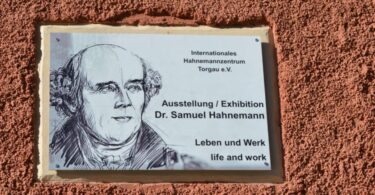
Dr Samuel HAHNEMANN (1755-1843) When Hahnemann announced his miasm theory in 1828 it was greeted with shock, disbelief, uproar and derision by the entire medical world. Even many homeopaths blushed with shame and completely ignored the idea as preposterous. It was hard to see where Hahnemann was coming from. The grand scheme of the miasms, so familiar today, seemed just like words from an alien language. If you start from symptom totality, then you can just about reach the even wider concept of a miasm as a grouped entity deriving from hundreds of cases. But if you start from the familiar allopathic terrain of a ‘disease’ affecting whole populations, then the idea of miasms as internalised and inherited dyscrasias seems very hard to grasp. The conceptual challenge is simply one of breadth of view. Each individual case, upon which homeopathy is based, was henceforth to be viewed in the light of another totality – the family legacy of Psora, Syphilis and Sycosis.
The theory of miasms originates in Hahnemann’s book The Chronic Diseases, [1] published around the same time that he also decided to fix 30c as the standard potency for all homeopaths. He declared that the theory was the result of 12 years of the most painstaking work on difficult cases of a chronic character combined with his own research into the historical diseases of man.
The three miasms given in that work are held to be responsible for all disease of a chronic nature and to form the foundation for all disease in general. This latter aspect was then to receive considerable amplification from Kent. Kent was also able to more clearly identify those remedies that relate to each miasm. Though now generally accepted by most homeopaths without question, at the time, the theory was generally greeted with disbelief and derision from all but the most devoted followers. This can be explained in part by the primitive nature of medical science at that time, which was not really very willing to accommodate any theory for the origin of disease, least of all such a grand and all-embracing one.
The word miasm means a cloud or fog in the being. Its meaning can be expanded and seen as a primary defect; a root cause; a shadow, fragment or internalised relic of an actual disease passed down the genetic line; a vaccine defect; a pre-disposition [dyscrasia] towards a predictable pattern of certain diseases and disorders within a family, race or the human race; and a defect of the vital force.
The theory suggests that if 100% of all disease is miasmatic, then 85% is due to the primary and atavistic miasm Hahnemann called Psora. The remaining 15% of all disease he held to be either syphilitic or sycotic, being derived from suppressed Syphilis or suppressed Gonorrhoea. Hahnemann, unlike Kent later, attached no moral dimension whatsoever to the sexual nature of the two latter miasms. Kent, of course, emphasised this moral aspect a great deal, which might not be that surprising in the somewhat puritanical atmosphere of nineteenth century small town America.
Taking them in reverse order, we can depict the main characteristic features of each miasm.
Sycosis
This miasm is held to be responsible for many sexual and urinary disorders, and affections of the joints and the mucous membranes. Also those conditions worsened by damp weather and by contact with the sea. Thus arthritis and rheumatism, asthma, catarrhs, bronchitis, cystitis and warts are all regarded as partly or mainly sycotic in character. The wart came to be seen as the underlying archetype of this miasm as it is also held to be responsible for all warty excrescences and growths. Chief remedies are Thuja, Lycopodium, Natrum sulph, Causticum, Kali sulph, Staphysagria, Calc and Sepia amongst many others.
Syphilis
This miasm is held to be responsible for many diseases of the nervous system, the blood and skeleton as well as a range of psychological disorders, including alcoholism, depression, suicidal impulses, insanity, loss of smell and taste, blindness, deafness and ulcerations. It is also associated with many heart conditions, some vesicular skin eruptions and diseases that have a definite nocturnal periodicity. Chief remedies are Arsenicum, Aurum, Mercury, Phosphorus, Lycopodium and Nitric acid, amongst many others.
Psora
The word Psora is probably derived from the Hebrew ‘Tsorat’ and Greek ‘Psora’ meaning a fault, groove or stigma. Hahnemann held that all non-venereal chronic diseases are Psoric. That includes most diseases of a chronic nature, all skin diseases, most mental illness, other than syphilitic ones, allergies, varicose veins, haemorrhoids, most dysfunctional diseases of organs and systems, etc. He lists among others, catarrhs, asthma, pleurisy, haemoptysis, hydrocephalus, stomach ulcers, scrotal swelling, jaundice, swollen glands, cataract, diabetes, tuberculosis, epilepsy, fevers and suppressed urine as all being typically Psoric manifestations, including, of course, the whole gamut of skin problems. Chief Psoric remedies he suggests include Sulphur, Natrum mur, Calc carb, Arsen alb, Lycopodium, Phosphorus, Mezereum, Graphite, Causticum, Hepar sulph, Petroleum, Silica, Zinc and Psorinum amongst many others.
Hahnemann also claimed that Psora was the most ancient and insidious miasm, deriving primarily from skin eruptions of various types in the past, such as scabies (Itch), leprosy and psoriasis. These had been supposedly contracted by ancestors or in one’s own early childhood. Their subsequent suppression, especially through the use of ointments, he held to be the primary cause of forcing skin conditions inwards to cause the internalised Psora miasm. Psora, he says, “is that most ancient, most universal, most destructive, and yet most misapprehended chronic miasmatic disease which for many thousands of years has disfigured and tortured mankind…and become the mother of all the thousands of incredibly various chronic diseases.” [1; 9]
Kent, in his Lectures, then greatly enlarged upon the theory, mostly in a moral sense, proposing that Psora was the foundation of all other sickness, without which mankind would be pure and healthy both in mind and body, as in the Garden of Eden. He thus regarded the acquisition of Psora as being equated with the ‘Fall of Man’ and with original sinfulness. He portrayed Psora in this highly moralistic light as also being the foundation of the sexual miasms that came later.
We can see that Hahnemann must have obtained his original idea of miasms through an extension of the very fruitful threads in his thinking about similars and poisonings, with which he was deeply immersed in the original construction of homeopathy. His mind simply must have been drawn towards seeing the wider patterns in cases. For example, Hahnemann “suggested, in 1789, that Mercury…displaced the syphilitic disease by imposing a similar illness,” [2; 3]. He “had taken his time to formulate his first intuitive deduction [similia] in fact seven years…[he] clung obstinately to the everyday world of common sense…and had no use for the theories of pathology then current…[being, in fact] dissociated from theories of physiology and pathology.” [2; 4].
The notion of Psora has many facets; for example, “seven-eighths of all the chronic maladies prevalent are ascribed by Hahnemann to Psora…” [3; 1, 142] He did not confine its meaning solely to Scabies; “Psora…was widely known in Hahnemann’s time, as the general term for a whole series of skin troubles of the most varied kinds…” [3; 1, 143] Its underlying significance was even broader: “to Hahnemann Psora is a disease or disposition to disease, hereditary from generation to generation for thousands of years and it is the fostering soil for every possible diseased condition.” [3; 1, 144] However, the miasm theory should not be viewed too literally as meaning that everyone needs to be dosed up with Psorinum, Syphilinum or Medorrhinum; rather it means that the broad outline of the miasms need to be kept in mind when observing the symptoms of a specific case or family.
For example, in a family with some evidence of alcoholism, deafness, blindness, bone disorders and insanity, one is entitled to believe a syphilitic streak is present. It should not dominate one’s view of each case, but it is useful background information. It guides one towards certain remedies, and away from others, but should never wholly dictate practice. Such would be to fall prey to medical speculation, which Hahnemann certainly regarded as “arid and obfuscating scholasticism.” [4; 62] and “the elaborate manipulation of hollow symbols.” [4; 62]. The dim view he took of medical speculation presumed that too often it is disengaged from practice, lacking efficacy and encourages harmful practices.
Homeopaths should resist the temptation to allow miasms, like some cuckoo in the nest, to exclusively dominate its conceptual base in the way ‘evolution’ has come to dogmatically dominate biology, or the way genetics and bacteria have come to totally dominate allopathy. Allowing such ‘soiling of its own nest’ might be to indulge a delusion, a monistic theory, and to allow the subject to be well and truly hijacked by one idea, or even to comprise a lamentable waste of otherwise objective talent. Kent beseeches us to resist the temptation of allowing excessive dominance to be granted to one idea or theory. Such advice applies equally to the miasm theory, which should be balanced against other homeopathic views.
Nosodes
On the point about the use of miasms in treatment, some people routinely give the corresponding nosode. For example, to a child born with fine syphilitic skin vesicles, they might wish to give Syphilinum rather than the simillimum, say Mercury. This would tend to be seen as an inappropriate use of the miasm concept, as the simillimum is what the patient needs, not the nosode. Such routine use of Psorinum, Medorrhinum and Syphilinum is therefore frowned upon. Certainly, the nosode can do good work, but it should be used more as an occasional inter-current remedy, or when it becomes the simillimum – not just routinely.
Nosodes in general have a chequered history in homeopathy. Some of the more pathological prescribers [e.g. Hughes & Dudgeon] denounced them from the start. Yet, other homeopaths have taken a far more generous view: “the indispensable curative service of the products of disease…safely administered in sickness;” [6] “for the past five years I have regularly used the bacillus virus as part of my daily practice…with great satisfaction;” [7] “I think very highly of Koch’s remedy…I use it in high potency…” [8] In particular, nosodes can be used to neutralise old internalised illness states [dyscrasias] or remove invisible ‘taints’ [blockages] that prevent ordinary remedies from working: “the nosode has removed the miasmatic block.” [9] Then “the remedy will work again after the block is removed with a nosode.” [9] This much at least is the empirical observation of many who use them in regular clinical practice: nosodes were not so well proven as “well-known polychrests…but have been so successful;” [9; 317] their use “depends more on clinical experience…[which has] accumulated for many years and has been checked by the experience of so many practitioners that it is considered trustworthy.” [9; 317]
Miasm, Holism and Essence
While the miasms require a certain conceptual ‘leap in the dark’ for the average homeopath, they are even stranger to the allopath who takes a generally less holistic view of the organism in health and disease. Comparisons of this type are very stimulating and rewarding.
The upshot of the miasms theory is very interesting as it illuminates so much about homeopathy and what distinguishes it as a unique medical system in its own right, and also so much about the subtlety of Hahnemann’s observational powers and thinking processes. As soon as you have a mode of medical thinking that regards disease cause in gross, tangible and molecular terms [germs, bacteria, molecules, dud organs, genes] then it is natural not to look much beyond such matters, but to regard “the cure” of disease, i.e. the removal of symptoms, solely in tangible and molecular terms. Such is allopathy.
There seems on this basis to be no need to look beyond the tangible and the molecular. But when you have, by contrast, a more subtle medical mentality that regards the tangible and the molecular as valid so far as they go, but that this view of disease is not a primary or fundamental one, but a secondary manifestation of a deeper and intangible, non-molecular realm of causes, then you are more likely to have modes of cure that employ similarly subtle, intangible and non-molecular concepts and techniques. This really demarcates the major dividing line between allopathy and homeopathy.
While we might term the former as an entirely ‘phenotypic’ medical attitude and therapeutic system, rooted solely in the tangible and the molecular, so the latter reaches behind and beyond the gross phenotype [secondary expression] of disease to consider the deeper, hidden ‘genotypic’ realm of primary or true causes. It is precisely in this latter sense that the great medical philosophers of homeopathy – Hahnemann, Kent, Boger and Close – have come to regard disease. Whether this appraisal flows entirely from empirical studies, from clinical experience and experiments, or whether it flows from a subtle inclination of mentality, is immaterial, and is probably a mixture of both, but the essentialist nature of this position is ultimately clear for all to see.
Like the dwellers in Plato’s caves [see Plato, The Republic], trying to make sense of shadows moving on a wall, homeopaths have been consistently reluctant to accept the molecular and tangible as the sole cause of itself, but always look deeper for non-molecular and intangible root causes of the events observed at the surface, in the tissues and cells, and in the physiology of organ systems, never accepting solely tissue events as causes of themselves, which is precisely where allopathy draws a halt in its search for causes of disease phenomena, satisfied that there is nothing beyond that. Clearly, the miasm theory follows the same line of thinking.
Further positions flow naturally from these two divergent medical philosophies. For example, the phenotypic view does not need to see or fix the whole person because a tangible and discreet portion of the whole can be hived off as “the disease” and fixed in isolation from the whole, and this has come to be regarded far too unquestioningly as a perfectly valid therapeutic approach. But to the genotypic attitude, events in the body are always seen as inextricably interconnected and as expressions of deeper events in the network of vital processes that lies behind the tangible and molecular expression of symptoms, and as a whole, and therefore it is not legitimate in such a mode of medical thinking to merely ‘fix things’ at the molecular level or to do so in a localised manner for specific groups of symptoms isolated from the whole and conveniently labelled as “the disease”.
Indeed, such an approach may conjure up an apparition of cure in the short term, but the deeper pattern of causes has not been touched or removed and must still be present and active. Therefore, one feels justified in saying that one single ‘disease event’ might be seen as the cause [or the effect] of any another ‘disease event’ all linked together in a chain, while the deeper cause has been left un-tackled. The tonsils may have been removed, but the deeper cause of the tonsillitis has not. The deodorant may have masked the smell, but the essence [cause] of the smell is still there – its deeper cause is still present and active. It is precisely in this manner that Hahnemann describes the development of diseases in the ongoing life of the person [or family, or race, or humanity] mutating through time [“the hydra-headed miasm”] and able periodically to throw to the surface very different ‘disease events’ springing forth from the same hidden root cause in the invisible and intangible realm of the non-molecular. This describes very clearly his depiction of the true nature of the miasms: a hidden realm of disease cause, and a genotype from which the expressed and visible symptoms, the phenotype of disease, periodically erupt at the surface and which we see before us as separate ‘diseases’.
With so much of their work being grounded solely in the subtle, the holistic and the non-molecular, it is only natural for homeopaths to be suspicious of and unsatisfied with the solely molecular, mechanistic and tangible explanation or technique of crude drugging for specifics [allopathy]. Being daily used to seeing into the realm of the subtle and intangible, with their more subtle form of vision, it is only natural for them to seek out deeper root causes in such a realm that lies behind and beyond the solely molecular realm, which seems so satisfying to allopaths and scientists. By employing intangible and non-molecular remedies and seeing their often spectacular effects in the clinical sphere, it is not so surprising that they have come to develop such deep respect for non-molecular theories of life, disease causation and cure.
Essentialism
Essentialism is “the belief in essences independent of the phenomena of appearance,” [11; 304-5] and which are conceived as “non-dimensional phenomena,” [11; 407]. The idea is common to Pythagoras, Plato and Aristotle and dominated philosophy for centuries, almost into the modern era. Goethe, for example, seems to have achieved a “fusion of Plato’s essentialism with aesthetic principles.” [11; 457] An appreciation of essentialism involves the belief that objects and living things each contain an underlying and immaterial essence that can only be known through a form of reflection upon the nature of the substance or organism. Natural selection, for example, seems “meaningless to an essentialist, for it can never touch the underlying essence; it can only eliminate deviations from the type,” [11; 517] that operate at the physical level of the organism.
The essentialist position of homeopathy runs through all these ideas like miasms, nosodes and vital force. It runs through the ‘potency energy’ of the drug; it runs through the idea of the nosode as containing some subtle essence of the disease it is made from; the idea runs through the whole concept of miasm as a defect resident in the life force; and it runs through the whole concept of the vital force as a coordinator of whole organism events. In all these senses it can be seen that homeopathy is riddled with essentialism, a belief in subtle essences that lie behind and beyond the visible, physical, tangible or molecular realm of ordinary life. This belief comes very close to the Platonic idea that behind each phenomenon we see lies a discreet and corresponding essence or ‘noumenon’ that exists in the ‘realm of ideas’ and from which the physical object flows and with which it corresponds or resonates. The realm of ideas is therefore also, as Kent would say, the realm of causes. It is as if each substance, species, individual, rock, mineral, insect, plant – carries within it an invisible imprint, hidden from view. This idea can also be seen to permeate the ‘doctrine of signatures’.
Dr James Tyler KENT (1849-1916) Miasms and nosodes are suggestive of the idea of disease being caused not by the “morbific particles” [12] on the material level, as allopaths contend, but by some internalised ‘subtle essence’ carried by the germ and transferred through potentisation to the nosode. Kent makes it very clear that homeopathy has a vitalistic rather than a materialistic view of disease: “the microbe is not the cause of disease. We should not be carried away by these idle allopathic dreams and vain imaginations but should correct the Vital Force.” [10; 679] And that “the Bacterium is an innocent feller, and if he carries disease he carries the Simple Substance which causes disease, just as an elephant would.” [10; 660] Such an idea clearly resonates with the medieval view of substance as equally ‘alive.’ An idea not as distant as we might think from the effect of potentisation on substance.
In Kent’s dictum of ‘the higher the deeper’ and the concept that ‘disease essence’ [= miasm] can only truly be neutralised by the highly potentised drug – what van Helmont called the ‘drug archeus’ [10] – then we can see a broad and very strong parallel between the metaphysical views of van Helmont and ‘transcendental homeopathy’ concerning a triad of ‘spirits’ – vital force, drug essence and disease archeus.[10] To which we might add that therapeutic resonance [sympathy] between these three spheres operates as ‘similia similibus curentur’ as well as ‘similia similibus causam’ – diseases being both cured and caused by similars. “There is not one law for contagion and another one for proving. They are both one;” [5] “the quality of contagion is similar in nature to the cure.” [5; 660] Such a notion then places Hahnemann’s system absolutely in a line with the previous vitalist systems of Paracelsus [1493-1541], van Helmont [1577-1644] and Stahl [1660-1734].
Dr Jean-Baptiste VAN HELMONT (1577-1644 ) Undoubtedly, many modern homeopaths point to nosodes and high potencies as providing ample confirmation of the metaphysical remarks made by figures like Hahnemann, Kent and van Helmont, regarding the inherent ‘genotype’ of matter [potency energy], of disease [disease archeus or miasm] and of living things [vital force]. They seem justified, therefore, in claiming that the corpus of homeopathic expertise of the last century and a half fully validates such concepts as potency energy, vital force and disease cause as a spiritual essence [miasm] that temporarily invades and ‘poisons’ the spirit of the person, inducing symptoms. While transcendentalists [and homeopaths] interpret the germ idea as spiritual contagion by essence, the allopaths interpret it as physical contagion by microbes. That is what divides us.
It is also clear that vital force and miasms are ‘inferred entities’ just as the electron is an inferred entity. That does not mean it exists or does not exist; it just means it sits in that borderland between what is observably true and what is inferred or suggested by the facts that are known with greater certainty: “unless our theories and observations confirm one another, they will be still little more than the most probable conjectures…while the mechanical theories give rise to certain inferences regarding the minute structures of the body, we lack any concrete verification of these inferences,” [13; 527] For it remains clear that “theory without verification is mere speculation rather than science. Theory alone cannot guarantee truth…conjecture and extrapolation, however probable, [are] not the same as concrete demonstration.” [13; 528] In that important sense it becomes possible that “crude empirical observations [might] masquerade under the cloak of theory,” [13; 538]. This genuine tendency is just as likely in “real science” as it is in homeopathy, where ‘facts’ are fitted together into a ‘bigger picture’ using the ‘glue’ of assumptions and inferred entities.
The evidence supporting such inferred entities varies in quality, but the inference in itself in each case is still strong and valid as it flows naturally from a field of data unique to the particular field of study, whether it is astronomy [e.g. black holes], physics [e.g. quarks and muons] or homeopathy. Even those inferred entities, which are mathematically provable, are not intrinsically any more real than the inferred entities of vital force, potency energy or miasms in homeopathy. In both cases, valid ideas and methods flow from belief in the inferred entities – it is as if they are real and that is usually sufficient to settle the matter in every case as a working construct or model of the way things are.
Discussion
A miasm is clearly an internalised change in the essence of the person, their vital force. Such a change is acquired as an internal relic or shadow only from certain virulent diseases that have especially strong essence or power to cause disease. Classically, these include Syphilis, Gonorrhoea and Psora [suppressed skin eruptions]. Some homeopaths would go even further than this and add Cancer, TB and Influenza to the list as sub-miasms or even recent miasms in their own right. Others would also add Diphtheria, Polio, Tetanus, Typhoid and Smallpox as minor miasms and also Birth Pill and vaccine damage as taints and blockages, which again are internalised imprints of disease that comprise changes in the vital force capable of preventing remedies working right [blockages] or acting as sources of symptoms in the person’s ill-health. Such taints and blockages can be removed with the appropriate nosode and each miasm represents a symptom-causing element acquired into the fabric of the vital force. A miasm can be seen as a hardened portion of the psychophysical network, rather like a fixated proving, a rigidified section of the life force, and an aspect of contagion that has become too solidly internalised.
The miasm is the internalised shadow of a big disease; with its own strong essence such a disease has imprinted itself upon the vital force. The shadow it leaves behind is therefore a shadow in the vital force. This concept of the miasm as merely a damaged or deranged vital force [= essence] is very clearly the view of Hahnemann, Close, Kent and Boger, who repeatedly state that contagion and cure are the same – i.e., reversible changes in the vital force – and nothing more or less than that. Therefore cure is but the reversal of the process of contagion – the reversal of a change in the vital force – by which symptoms once caused are then brought to a halt [subdued] by the neutralisation of the change in essence that first elicited the original disease. Neutralisation proceeds by similars – what causes can cure.
Much understanding can be gained about miasms from considering the nature of the vital force, disease and cure. For example, “the dynamic potentised drug is the chief factor in both proving and healing,” [14] which implies that there is a reciprocal action between disease and simillimum. As Close says, disease cause therefore also exists solely in “the realm of pure dynamics;” [15; 39] what he calls the “sphere of homeopathy is limited primarily to the functional changes from which the phenomena of disease arise,” [15; 40-41] Therefore, the removal [correction might be a better word] of the internal damage [miasm] is the removal of the cause; which is not the same as removing the symptoms: “In faithful treatment, it is sought to accomplish an end far more subtle than the mechanical removal of bacilli.” [16] Symptoms are not seen by homeopaths as the disease, but as the results, the end-products, of deeper dynamic disease processes: “tissue changes…are but the results of disease;” [10; 672] “a cure is not a cure unless it destroys the internal or dynamic cause of disease.” [10; 673]
Dr Stuart M. CLOSE (1860-1929) When Close states that the “real cure…takes place solely in the functional and dynamical sphere,” [15; 42] he means it is not the physical symptoms but views disease primarily as a “dynamic derangement of the life force,” [18] a derangement of process, which precedes any derangement of structure. Disease “is the suffering of the dynamis.” [15; 70-72] Close devotes considerable intellectual energy to clearly defining disease; an effort that repays close study. For example, he says that “homeopathy does not treat disease; it treats patients.” [15; 51] Disease, he claims, is “an abnormal vital process;” [15; 60] “a dynamic aberration of our spirit-like life;” [15; 67] “a perverted vital action;” [15; 72] it is “not a thing, but only the condition of a thing;” [15; 72] that in the last analysis disease is “primarily only an altered state of life and mind.” [15; 72]
Close lays bare its deeper nature when he says disease is “primarily a morbid disturbance or disorderly action of the vital powers and functions,” [15; 73-4] or “purely a dynamical disturbance of the vital principle.” [15; 73-4] Furthermore, he logically pronounces that because “disease is always primarily a morbid dynamical or functional disturbance of the vital principle,” [15; 88] so in turn it is clear that “functional or dynamic change always precedes tissue changes,” [15; 72] and that cure has been established only “when every perceptible sign of suffering of the dynamis has been removed.” [15; 73-4] For Close, it is precisely upon such reasons and definitions that “the entire edifice of therapeutic medication governed by the law of Similia,”[15; 71] has been conceived and constructed. All these insightful statements elaborated by Close might be said to derive from Kent, but, as he insists, they also flow naturally from Hahnemann’s own sentiments in the Organon: [17] “let it be granted now…that no disease…is caused by any material substance, but that every one is only and always a peculiar, virtual, dynamic derangement of the health.” [19]
The remedy for these sickness processes is equally dynamic and nebulous – the potentised drug – which gives rise to the comment by Kent: “lower potency…less fine and less interior than the higher,”[10; 674] meaning the higher the potency, the deeper it penetrates into the hidden realm of disease causes.
Such a mode of medical conception is most interesting when you consider that conventional medicine never even enters the realm of essence [true causes] at all and so all its so-called cures are false; they are mere rearrangements of the deck-chairs on the Titanic – superficial window-dressing that does not reach into the deeper realm of disease cause and that does not bring about [indeed, is fundamentally incapable of] the radical type of true cure that can only ensue from direct healing within the realm of essence, that is “the subtle realm of disease cause or simple substance,” [5]. Being rooted mostly in contraries and the molecular realm of symptom suppression, rather than cure, so allopathy again looks like mere window-dressing, not true cure. It is a mere tinkering with symptoms.
The remedy must be similar in essence to the patient totality and in degree of attenuation to the miasm, both to induce any change in the case at all, and to reach deep into the essence realm itself. Only intangible remedies can reach the equally rarefied, nebulous and intangible realm of essences [miasms, vital force]. Similarity between remedy and disease [= patient totality] establishes the primary resonance between the two, such that any healing action is possible at all, and potentisation establishes the secondary link between similar drug and the depth of disorder within the essence state. While similars might be seen as concerning quality and properties, potency seems more concerned with matching the energy or intensity of the drug with that of the derangement in the life force [miasm]. Such a view also echoes Kent when, regarding potency, he says that “the higher the deeper,” [5] meaning that only the higher [more intangible] potencies of the right remedy [simillimum] can reach deep enough into the intangible depths of the vital force where the true miasmic derangements lie hidden, i.e. the realm of essence. Therefore, acting only at the surface, superficially, the low potencies can only act upon acute superficial miasms.
All this flow of reasoning is concerned mostly with medical inference based around the concepts of homeopathy, which in turn flow naturally from its engagement with clinical practice and the cure of cases. It is therefore a mix of pure empiricism [raw observation] combined with inferential rationalism [inference or reasoning], for “what we cannot see directly with the corporeal eye, we may yet be able to perceive indirectly, by the eye of reason,” [20; 23] It is similarly true in homeopathy that “the distinction between observation and inference, between empiricism and rationalism, is basically artificial, since neither can exist without a substantial share of the other…in almost every statement, some observation and some inference are involved…the further we get from direct observation, the more we depend on inference and reasoning,” [20; 22-23] And to be sure the realm of essences and miasms, and vital force is a realm of inference, illuminated and visible almost solely by the “eye of reason.” Inference and reasoning act like map and compass or a lamp that lights an unseen path and by which we can probe the world and navigate through uncharted waters. Only in this way can we gain our bearings and obtain the deeper understanding we crave from the patterns in events. Only in this way can we gain understanding of raw empirical data flowing from observation and experiments.
In all subjects of study we employ a mix of both observation and inference [theoretical models] in order to make sense of our world. And as Berlin states, “the concept of fact is itself problematic…all facts embody theories…or socially conditioned, ideological attitudes;” [21] there is no fact without its adherent body of theory, or as Darwin once stated – “without speculation there can be no good and original observation.” [22] And as Galileo and Luther relied upon very different ‘rows of books’ from the Church [23], to substantiate their views – in all such notions there is a confluence of ideas about the nature of knowledge [epistemology], and they therefore make important statements about how we come to know and how we don’t. Theory and method move crab-like, shackled in harness, in a perpetual form of unison, in everything we do and study or try to understand. Vital force, essence, miasm and potentised drug – in the last analysis, these are all inferred entities visible only with the inner “eye of reason.”
Philippus Theophrastus Bombastus Von HOHENHEIM PARACELSUS (1493-1541) Hahnemann basically agrees with van Helmont and Paracelsus that the root causes of sickness are not to be found in the outer, tangible and visible aspects of disease manifestations, the phenotype, but rather in the deeper essence or genotype. Therefore, they all concur that no radical or genuine change in the tangible and visible [disease symptoms] can of itself constitute a cure, or truly remove the causes within the deeper realm of essences, which are the root causes of disease and therefore the arisal of disease is not terminated by such chemical tinkering. This can only truly be achieved by employing techniques that do delve deeper into the realm of essences, the realm of root causes where disease can be cut off at its true root. Thus, Paracelsus and van Helmont state just as clearly as Hahnemann himself that drugs must be selected that match the disease [patient totality] upon the basis of their essences and not according to outward physical and chemical properties, which of themselves are only, and at best, indicative of their deeper, essential qualities. It also follows that this means holism because it means the whole person and not just for localised symptoms or using disease labels or named conditions.
Clearly therefore, all these vitalist physicians concur that mere tinkering at the level of symptoms [being results not causes] is a futile undertaking rather like rearranging the deck-chairs on the Titanic, as it does not penetrate deep enough into the essential realm of causes where true changes can be induced. Through superficial methods, only superficial changes can be brought about. As long as the deeper cause remains present, so disease can always at any time spring forth and flow from it. Such a notion is confirmed by Kent, Close and others who chorus that remedies cure the patient in the deeper essence state of vital force and miasm only when potentised to a higher degree of similarity in essence state as that of the vital force and the miasms themselves.
Dr Cyrus Maxwell BOGER Only by such matching of drug picture and patient totality, in their deeper essence state, can the deeper realm of causes be roused into useful activity, so as to throw disease off by the organism’s own efforts. This also echoes the sentiment that cure, like contagion itself, has to be an active process on the part of the organism, engaged in by the vital force, by the whole organism, and not by any external agent, through molecular intervention or by treating localised parts. Cure is brought about by the vital force, and not by the remedy. The remedy acts merely to stimulate the vital force into renewed therapeutic activity. Any alleged therapeutic effort that fails to engage the effort of the vital force must therefore be doomed to fail and to be suppressive. Such is the whole of allopathy. It is mere tinkering with symptoms, with effects not causes, as Kent, Close and Boger all concur. And one important and deeper aspect of ‘patient totality’ has to be the added dimension provided by the theory of miasms.
Sources
[1] Samuel Hahnemann, The Chronic Diseases, 1828
[2] Frank Bodman, Lecture to Osler Society, Oxford, Brit. Homeo. Jnl 44.2, 1955, 2-8
[3] Richard Haehl, Samuel Hahnemann His Life and Works, 2 vols
[4] Isaiah Berlin The Sense of Reality – Studies in Ideas and Their History, London: Pimlico, 1996, 49
[5] J T Kent, Lesser Writings, New Remedies, Aphorisms & Precepts, Philadelphia: Erhart & Karl, 1926, 679
[6] P A Nicholls, Homeopathy & the Medical Profession, London: Croom Helm, 1988, 233
[7] James Compton Burnett, New Cure of Consumption by its Own Virus, London: Homeopathic Publishing Co, 1890, iv
[8] Burnett, vi
[9] Luc De Schepper, Hahnemann Revisited: A Textbook of Classical Homeopathy for the Professional, Santa Fe: Full of Life Publications, 1999, 321
[10] Walter Pagel, Van Helmont’s Concept of Disease, Bull Hist Med 46.5, Sept 1972, 419-454; see also Walter Pagel, The Religious and Philosophical Aspects of Van Helmont’s Science and Medicine, Bull Hist Med Supplement No 2, 1944, 44 pages
[11] Ernst Mayr, The Growth of Biological Thought, Harvard: Belknap Press, 1982
[12] K D Keele, The Sydenham-Boyle Theory of Morbific Particles, Medical History, 18, 1974, 240-248; see also Pagel, 1972, & Pagel, 1944
[13] Lester S King, George Cheyne – Mirror of 18th Century Medicine, Bull. Hist. Medorrhinum 48, 1974, 517-39
[14] Henry C Allen, Materia Medica of the Nosodes, 1909, Calcutta: Sett Day, 1942, 528
[15] Stuart Close, The Genius of Homeopathy, Lectures and Essays on Homeopathic Philosophy, New York, 1924
[16] C F Nichols, Homeopathy in Relation to the Koch Controversy, Science, 17: 429, April 24, 1891, 233-234
[17] Hahnemann, Organon, Aphorisms 11 [9, 10], 15 and 16
[18] see Close, 37-8, 74
[19] Organon, Introduction, 10
[20] Lester S King, The Growth of Medical Thought, Chicago: Univ. Chicago Press, 1963
[21] Sir Isaiah Berlin, Alleged Relativism in Eighteenth Century Thought, in The Crooked Timber of Humanity, Princeton: Princeton Univ. Press, 1999, 89
[22] anecdotal aside; no source found
[23] see Patrick A. Heelan, William Gaston Professor of Philosophy, Georgetown University, Galileo, Luther, and the Hermeneutics of Natural Science, pp.363-375 in The Question of Hermeneutics, ed. by T.J. Stapleton (Boston, Dordrecht: Kluwer 1994)
————————————————
Peter Morrell
Honorary Research Associate in the History of Medicine, Staffordshire University, UK