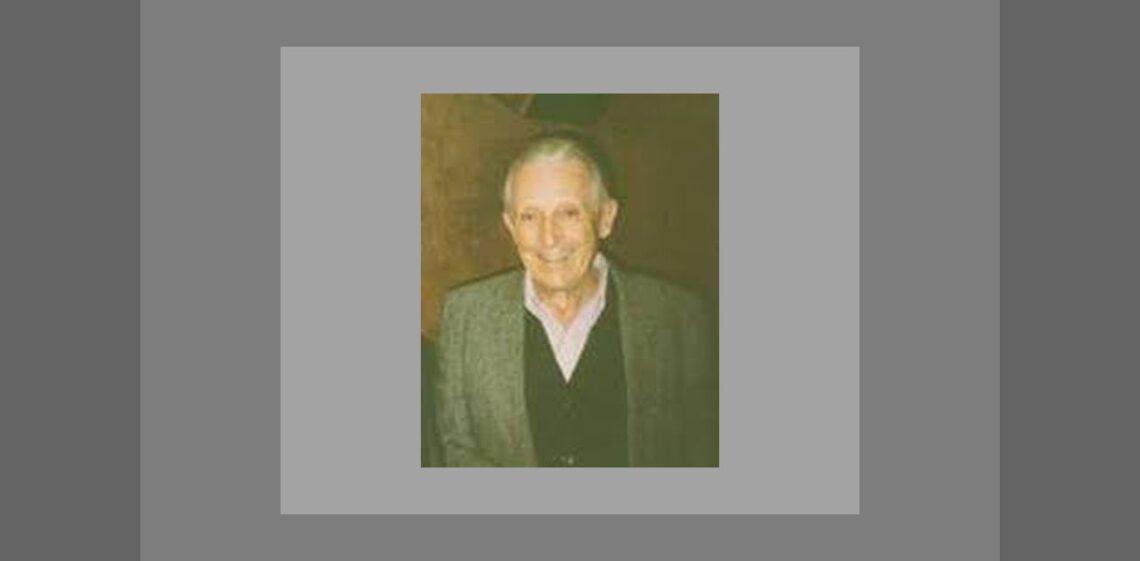
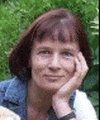
Dr. Eugenio Federico Candegabe is Argentina’s foremost exponent of Kentian Homeopathy. He was born on 28 July 1924, and qualified in medicine at the University of Buenos Aires in 1949. In 1954 he went on to study under Dr. Tomas Pablo Paschero, with whom he subsequently worked closely. He is a founding member of the Escuela Medica Homeopatica Argentina “Dr. Tomas Pablo Paschero” (E.M.H.A.), where he has been nominated for Professor Emeritus.
Welcome to Hpathy Dr. Eugenio Candegabe! It has been our wish to have you with us for a long time and we are fortunate to have you with us today. We look forward to you sharing your thoughts and wisdom with us.
KS: Could you please tell us something about yourself? When did you decide to become a homeopathic physician and which were the most important moments that influenced your decision?
EC: Ever since I was a teenager I believed that my vocation was to become an engineer. But in the last year of the secondary school, the first lesson in anatomy awakened my passion for medicine. When I graduated in medicine in 1949 my first frustration was not to find among the different practicing specializations, one which could fulfill my desire to cure the ill human being, and which did not merely relieve their pathology. Therefore I chose pediatrics which is at least a holistic specialization and humanitarian to relieve or cure an ill child.
But in 1952 happened the first event which linked me with homeopathy: the cure of a three year old child which was affected by severe constipation and which forced me to use a weekly enema, after which a cardio-respiratory stimulant had to be injected due to the fainting fits which always appeared after the enema. Then I consulted Dr. Antonio Tabanera, an outstanding pediatric homeopath, who after an exhaustive interrogation prescribed Nux vomica 30, a single dose … and within 3 days, to my surprise, a normal evacuation began and he was totally cured.
The second event happened in the same consultation. The physician was especially interested in the change of the child’s character. The anxiety of the parents was understandable. They were talking about the physical defect of an intestinal coalescence which may have needed a delicate surgical intervention! I then understood that the readings of Freud, Adler, Jung and Steckel, which had accompanied my entire career, opened the door to a different comprehension of the pathology: it is about the disease human being!
The most important point of this moment was finally, that I had a concrete answer to the question which I asked myself after three years: Is cure limited to the mere relief of acute diseases or the outbreak of chronic diseases, hoping that nature will cure the patient? Is the removal of half the stomach of the patient the only way to cure a gastro-duodenal ulcer ? To see the suffering of this child and his parents disappearing “as if by magic” answered my question. Since then I was sure about my vocation and completely devoted myself to the study of homeopathy. I took the three years course at the A.M.H.A (Asociacion Medica Homeopatica Argentina), got my diploma in 1955 and presented my thesis in 1960.
KS: Argentina has produced many famous and well known homeopaths like T.P. Paschero, J.M. Elizalde, A. Elizalde. F. Eizayaga. What do you see as their special contribution to homeopathy and which have inspired you the most?
EC: In reality, it was already Dr. Eizayaga who put me in contact with homeopathy for the first time, before the above described event. Already in 1949 I worked with him in the External Consultation Services of the Department of Urology at the Hospital de Vicente Lopez. My first specialization was in Urology and I could observe without any prejudices the benefits of homeopathy in this early time. We both were already homeopaths and I always saw in him the doctor with a passion for his profession, sure in the prescription for acute diseases. His great contribution for homeopathy was his enormous capacity for teaching, his homeopathic practice and his Repertory, the first translation of Kent into the Spanish language.
In Jorge Masi Elizalde I found the philosophical teacher, great thinker, friend of a nightly conversation with a coffee, and great expert of Homeopathic Philosophy, without any personal ambition. Unfortunately he did not leave us any written works except for what he wrote in the Journal of Homeopathy of the A.M.H. A. until his death. I think it was at the end of the 50’s when he wrote “The disease begins with a bad thought”. “The Doctrine is understood within one night, but in order to learn the Materia Medica a whole life does not suffice”, as he used to say… Knowing that he has fulfilled his mission in life he left a profound peace to us friends and students.
In Alfonso M. Elizalde I found the ideal partner for my first 20 years of homeopathy, from 1960 until 1980. From this time on our path separated, but we both had the great satisfaction to study, learn and to teach. From Alfonso I could recover his clarity in the explanation of Homeopathic Philosophy and Doctrine – his first writings are impeccable. I don’t feel an authority to judge his Thomistic point of view, but without doubt he awakened in his students a more profound holistic and transcendent view of the human being. With his premature and unexpected death at the age of 70, I was deprived of a friend with whom I fought inch by inch for the comprehension of this, possibly unfathomable science, which homeopathy is.
It is difficult for me to speak about Dr. Paschero, in whom the affection, gratitude and admiration conjoin in one person, and with whom I maintained an incomparable friendship from the time since I started as a student at the AMHA in 1953 until his death in 1986. I confess that I felt confounded when I began the study of the Materia Medica because all the remedies seemed to be similar. I could not find a description of symptoms in the classical books which allowed me to find a coherence and to distinguish them clearly.
Finally I found the solution for the problem when I read the writings of Dr. Paschero about the Materia Medica, published in the journal of the school in 1955: The symptomatology has to reflect the suffering of the human being, a certain way to pass through life, which makes the actuality coherent with his history and is presented until his future. It is about comprehending, rather than just memorizing Materia Medica. His entire work was the faithful reflection of his life as a physician, teacher and human being. On Saturday morning between 11 a.m. and 1 p.m. he gave his master classes in the first consultation with a patient, usually presented by some of the teachers of the school. I remember that I recently gave a class between 9 a.m. and 11 a.m., making comments about the clinical case of the previous week. With the repertory in hand I analyzed the symptoms and compared the chosen remedy with others which emerged from repertorization, and the reason for its choice, because sometimes all the chosen symptoms appear in several remedies. In this way I learned by teaching that the isolated symptoms are of no value, if they are not accompanied by sense, intentionality and purpose which define them. Those interested in this topic can read about it in my first book on Materia Medica published in German with the title “Candegabe/Vergleichende Arzneimittellehre”, or in English “Comparative Materia Medica”, (Beaconsfield Publishers Ltd). He was for me the teacher of my choice and lead my first 30 years of homeopathy until his death.
KS: You said of Dr. Tomas Pablo Paschero that his work is like a “fresh breeze” which has encouraged your scientific and personal development. What made this beloved homeopath so special?
EC: I said before that my desire to learn the clarity of Paschero’s concepts paved my way. In effect, facing the questions which were provoked by this difficult art to comprehend the Doctrine, the Materia Medica and their practical application, Paschero let us students look for our own answers, listening to us and respecting our opinions, which were sometimes opposite. He ensured that the discussion took course in pleasant ways and turned into a dialogue where everybody contributed a particle of his truth in search of the essential truth. His final conclusion was really always more than a mandate “of someone who knows more”, and was “like a fresh breeze”, giving us his peace and security amid all the resentment which sometimes came up in our hot and passionate discussions.
KS: You had dedicated yourself quite early in your career to the education of homeopaths. Where do you see your mission and the special contribution of the Online University Candegabe (universidadcandegabe.org)?
EC: When I graduated as physician, the lecturing professor told us before giving us our brand-new diplomas, about “the supreme compassion which the physician must have with his patient, because those who consult us are human beings which have lost the greatest treasure in their life, which is their health”. I found in homeopathy the possibility to realize this ideal, which was proposed when I got my diploma on the 11th June in 1949. That’s why I dedicated all my efforts to my patients: with each alleviated or cured patient I felt the full satisfaction of fulfilled duty, and the greater encouragement to study let me want to share my desires with my colleagues and students. To investigate and teach was a duty for me, to transmit the learning to others and to facilitate those who followed me. Not because of the “triumph” of an idea, but because of the joy and the good that it signifies, to be able to help our fellow men in the course of life. I think that my major contribution to homeopathy was the study of the Comparative Materia Medica in my first 20 years of homeopathy. In my second book “”Introducci on al estudio metodologico de la Materia Medica ” (Introduction to the methodological study of the Materia Medica) I demonstrate my applied methodology, strictly following Hahnemannian principles, so that every homeopathic physician can continue with this type of investigation, if he wants, and which gave me personally so much satisfaction.
KS: Your book on Comparative Materia Medica has made a valuable contribution to homeopathic teaching and understanding of Materia Medica. Why is it necessary to be familiar with humanity in the deepest interior, to apply the analytically memorized details of the Materia Medica ?
EC: Kent teaches us in his Philosophy that in order to understand the remedies we need first to know the diseases of the human being. For Kent the pathology is not the disease, which is but the result. According to his opinion, the disease of the patient is the peculiar and unknown way to live ones pathology. More clearly, if the pathogeneses reveals to us a particular way to get ill, how can we evaluate its significance if we do not try to understand human nature ? The patient is nothing more than a sum of symptoms, and what individualizes the patient is the interrelation of symptoms in their intentionality, sense and purpose. All this is written in my two already published books. And now I ask you a question: How can we distinguish a Mozart symphony from a Rock concert if both musical compositions utilize the same 7 notes and some sharps and flats ? Think about this a bit and you will find the answer.
KS: As a Kentian you lay special emphasis to the “mental symptoms” as the “antechamber of the clinical picture”. Why is it necessary to understand the diseased patient in order to understand the symptoms?
EC: Hahnemann tells us that the recently born is the most invalid being on the planet. Moreover, he is the only one who knows that he will die. Thenceforward the whole life is a continuous adaptation, and in this adaptation, which is always different for each person, he demonstrates his individuality. Therefore the types of his anxiety, sensitivity, fear, illusionary sensations, affectivity, aggression, intellect, work and attitude are the necessary guidelines to know the patient. If we know to choose the essential of each of these items after comprehending all the mental symptoms of the remedy, then we have the Minimum Characteristic Syndrome: I call these symptoms the leading symptoms. If we repertorize these as an ideal patient, then there emerge several remedies which cover all these, and others which cover some but not all symptoms. But if we add to each rubric those symptoms which I call determining, that means those which lent the guiding symptom an especially distinctive character, and if I repertorize these in a second step, then there begin to appear the similarities and differences. And the one or the other will let us see the individuality finally. If this happens then the remedy converts into a person. In other words, it can be that the repertorization of a case leads us to an unexpected remedy. Then I refer to Kent who writes in the preface of his monumental repertory: “If there emerge several remedies from the repertorization of a given case, then read the Materia Medica and look for the remedy which is most similar to the patient being investigated. Apparently I did not invent anything. I only followed Kent faithfully and what he wrote in the forward, which only a few read.
KS: Could you explain the significance of the “Minimum Characteristic Symptom” in the comparative analysis of remedies?
EC: The “SMVM” as I prefer to call the “Minimum characteristic Syndrome”, tries to summarize 7 to 10 rubrics, the archetype of each remedy as an ideal person. This is realized if we add to the first repertorization a second repertorization with the determining symptoms. That is, the first repertorization allows one to select those remedies for comparison which match at least half of the chosen symptoms. In this way the similarities and differences emerge and each remedy is better understood, not only regarding the symptoms which they have likewise, but also those symptoms which are missing in the first repertorization. But I repeat, this is clearly described in my two books. But in the second book I explain my applied method, the why, the reason and the obtained results.
KS: The miasmatic disposition determines the personality structure and development of the human being. What significance do you attach to the analysis of miasms in your practice?
EC: Hahnemann writes in § 5 of the Organon: “… Useful to the physician in assisting him to cure are … the most significant points in the whole history of the chronic disease, to enable him to discover its fundamental cause, which is generally due to a chronic miasm. ” The question already contains the affirmation that the miasmatic predisposition determines the personality structure and development of the human being. Here is an example: A patient has the following three evident symptoms: meticulousness, amelioration from occupation and intolerance of contradiction. We see that 4 remedies emerge clearly: Lycopodium, Sepia, SÃlica and Thuja, among others. But if we neither find any generals nor locals which help us to individualize the case then these apparently sycotic symptoms are not sufficient to identify a remedy picture clearly, even if the causa fundamentalis and its profound genesis qualifies its homeopaticity according to “its way to act”.
In this way we will see that “the emotional indifference to everything” belongs to the sycotic Sepia. Or that the tremendous disability, timidity, fear of failure and modesty, give Silica its tubercular basis. The hypertrophy of the ego, irritability, anxiety of conscience and ceremonial obsession characterize the sycotic base of Thuja. The disability, vulnerability, pride, tendency to command and desire to succeed, are always related to the tri-miasmatic mixture of Lycopodium.
From the miasmatic point of view, the idea of the vital attitude, the way to live and to work, and the sense of life which is discovered through the entire history of the human being, the intentionality, search for success, in one word, that which the patient is looking for in his life, is what gives sense and value to his symptoms in ultimate instance. Some are emphasized, others are rejected, depending on whether they coincide with the idea, sense, intention and purpose of his life. This is what gives sense to the variability, what breaks every scheme if it is not flexible, what qualifies the soul and human psyche. To complete: understand the patient. He is the ultimate source which will let us find his simillimum and not the miasmatic classification which is generic. The patient is always new, particular and individual.
KS: You mentioned the enormity of the iatrogen, chronic artificial medicinal diseases in our current era. How did this influence your 50 plus years of practice and therapeutic outcomes?
EC: If you refer to the iatrogen diseases caused by allopathic medicine, these were a relative obstacle according to my experience. The worst has been the suppression of a symptomatology, which represents a way of relief for the patient, like the elimination of polyps, warts, eczema, suppression of diarrhea, without considering the totality of the patient. Nevertheless, I experienced in the children’s hospital in Buenos Aires between 1960 and 1962, that the homeopathic treatment of epileptic children was an amazing success, although allopathic medicines were applied simultaneously. Some cases even got 15 different medicines each day !! This for sure did not ameliorate and wherefore these patients were almost incurable, according to allopathic terms. From this I have learned not to take allopathic medications away in de-compensated patients, cardiac patients or patients with severe pathologies, epilepsy, cancer… Personally I have the impression, corroborated in my practice, that the well indicated homeopathic remedy acts in the same way, and once the patient ameliorates then the allopathic medication is reduced gradually.
KS: When you left your allopathic practice to practice homeopathy, many patients were surprised about your complete turn and stopped consulting you. What motivation and encouragement can you give to homeopaths and homeopathic students so they travel the right path?
EC: Currently, medical insurance has almost finished with private medicine. The relationship of physician-patient almost does not exist. I can tell the physician who begins practicing homeopathy that it is not so drastic, and advise that he starts to treat chronic diseases; that he tries to cure the asthmatic patient and allows the use of the usual medicines in crisis. In the course of time the patient will continue with you and will use allopathy less and less.
Fifty years ago medicine was different. Already being quite secure to leave the patients, I could dare the decision and I lost 90% of my patients. But within three years I tripled my consultation from the few which stayed. My advice is the following: go slowly, prescribe if you are quite sure and you will see with surprise that the remarkable cure of chronic diseases which you obtain every now and then, will give you the strength to go on, because you will never see this with allopathy. In our school we never leave the graduated physician without our help. Every physician knows if he needs help in the beginning, he will always find a teacher in our school who assist him, give him reassurance.
We have a 3 year degree program in our school. The student employs the classical Materia Medica’s, but utilizes for his education especially the classes regularly given by the chair. In this way they receive in three years and during 300 annual hours, the guidelines given by the professors. Currently we have among the full, associate and assistant professors nearly 80 physicians with more than 15 years of experience, who teach the theory and practice in external consultations with patients. Homeopathy is sublime, the art is noble, the satisfaction to be able to help, the sensation of fulfilled duty, which should be beyond all doubts, the solitude which the rejection of the official medicine implies, and these should be the guide which motivates the physician to follow his way despite all adversities which he has to face, in the course of his education.
KS: What would you recommend to homeopathy students regarding the study of MM? How can we best grasp the vast extent of the materia medica and essence of the remedies?
EC: The teaching physician, the professor, has a sacred mission: To be at the service of the student. To understand him as a human being. As Jorge Masi-Elizalde said, the study of the Materia Medica needs a whole life, and I would say, many lives. Since each element, every substance, mineral, animal or plant can develop a pathogenesis, I ask myself: How many useful remedies will there be: 100, 1000 or 100000?
Kent already answered the question: Comprehend the human being and their diseases which are their wrong efforts of adaptation. To learn to realize a good clinical history means to take those homeopathic symptoms which Hahnemann points out in § 153 Organon, then repertorize, evaluate and think. It is impossible to know even a part of the Materia Medica, but it is possible to learn how to take the case, and as Hahnemann said, if the case is taken well then the first and most important part of our work is done. A good repertorization will bring us to the differential diagnosis of several already known remedies. “To comprehend rather than to memorize” that is the most important point – to know what you are looking for. Today we see the appearance of new methodologies in search of the desired “simillimum”. This means that we are still not satisfied with what we know. But I’m sure if we revise what we have learned in the classical works, and if we don’t discuss, but conduct a dialogue, if we summarize instead of subtract, and multiply instead of divide, and if we realize that everybody has only a particle of the truth, then we can really progress and build solid fundaments for the future.
KS: When can we expect to read your book on “The solitude of the homeopathic physician” (La soledad del medico Homeopata)? Could you give us a small glimpse of its content?
EC: Here I gave a small part of the book which will summarize my memories. For the time being it is only in my mind. I have to write it, I know, and think that it will also be useful for myself. I think God will not deprive me, to leave this dream unfulfilled. Perhaps this book will be ready this year for publication. I hope it will be useful for all those who love homeopathy.
KS: Kent said “If you love homeopathy, she will love you back”. When looking back on the past and all the difficulties, insecurities and “solitude” of a homeopath, would you travel the same path again? What meaning has homeopathy had for your life?
EC: When I qualified as a physician I conceived the human as an almost perfect machine. Homeopathy guided me in the search of the human soul and the spiritual being pre-existing in him. By means of my practice as a homeopathic physician I developed my capacity to understand humanity and myself, to respect the suffering of others, and had the ability to help them. I had the great luck to help my family, to conceive the universe as a wonderful creation, and to realize pragmatically that “the whole is in all its parts”. I’m sure I will be in peace when I finish my life as a physician, because I will have achieved my destination. This is the best legacy one can leave to future generations.
KS: Thank you very much for this fascinating interview Dr. Candegabe. I hope everyone will feel inspired to explore your books and I look forward to your next book!
Katja Schütt
Editor
Homeopathy for Everyone (Hpathy.com)
Dr. Eugenio F. Candegabe
Entrevistado por
Katja Schütt
El Dr. Eugenio F. Candegabe es el principal exponente de escuela kentiana de la Homeopatía Argentina. Nació el 28 de julio en 1924, y se graduó en Medicina en la Universidad de Buenos Aires en 1949. En 1954 comenzó a estudiar bajo la dirección del Dr. Tomás Pablo Paschero, con quien posteriormente trabajó en estrecha colaboración. Es miembro fundador de la Escuela Médica Homeopática Argentina “Dr. Tomas Pablo Paschero” (E.M.H.A.), en donde ha sido nombrado Profesor Emérito.
Dr. Eugenio Candegabe, Bienvenido a Hpathy ! Ha sido nuestro deseo, desde hace mucho tiempo, tenerlo entre nosotros y somos muy afortunados en contar con Usted en el día de hoy. ¡Nos sentimos muy alagados de que Usted quiera compartir sus pensamientos y sabiduría con nosotros!
KS: Por favor, ¿podría decirnos algo sobre Usted mismo? ¿Cuándo decidió convertirse en médico homeópata y cuáles fueron los momentos más importantes que han influido en esta decisión?
EC: De adolescente creía que mi vocación era la de ser Ingeniero. Pero en el último año de la escuela secundaria, la primera clase de Anatomía despertó mi pasión por la medicina. Al graduarme de médico en 1949, mi primer frustración fue no encontrar en las distintas especialidades que practiqué, alguna que llenara mis ansias de curar al ser humano enfermo y no simplemente aliviar su patología. Por ello elegí la pediatría porque, al menos, era una especialidad holística y tan humanitaria como aliviar o curar al niño enfermo.
Aquí, en el año 1952, ocurre el primer hecho que me conecta con la Homeopatía:La curación de un niño de tres años, afectado de un estreñimiento grave, que obligaba a la práctica de una enema semanal, después de la cual había que inyectarle un estimulante cardiorrespiratorio debido al cuadro de lipotimia que siempre aparecía luego del enema en cuestión. Consulté en ese entonces al Dr. Antonio Tabanera, distinguido homeópata pediatra, quien después de un exhaustivo interrogatorio le indica Nux Vómica 30, una sola toma…y en tres días comienza una evacuación normal que, para mi sorpresa, lo curó totalmente.
El segundo hecho, fue en la misma consulta. El Dr. se interesó sobre todo en el cambio de carácter del niño. La angustia de los padres era lógica. Se había hablado de un vicio de coalescencia del intestino que hubiera precisado una delicada intervención quirúrgica! Comprendí entonces, que la lectura de Freud, Adler, Jung, Steckel que me acompañó en toda mi carrera, me abría las puertas a una comprensión distinta de la patología: se trataba del ser humano enfermo!.
Lo más importante de ese momento fue que, por fin, tenia una respuesta concreta al interrogante que después de tres años yo me proponía: ¿Es que curar se reduce simplemente a calmar la enfermedad aguda, o los brotes de la enfermedad crónica, esperando que la naturaleza cure al paciente? ¿Es que sacarle medio estómago a un enfermo sea la única manera de curar su úlcera gastroduodena Al ver desaparecer “como por encanto” el sufrimiento de ese niño y sus padres, me daba la respuesta. Desde allí ya seguro de mi vocación me dediqué plenamentea estudiar homeopatía. Hice el curso de tres años en la A.M.H.A (Asociación Médica Homeopática Argentina), me diplomé en 1956 y presenté mi tesis en 1960.
KS: Argentina ha forjado muchos famosos y bien conocidos homeópatas, tales como los doctores T. P. Paschero, J. M. Elizalde, A. Elizalde., F. Eizayaga. ¿Cuál considera Usted que ha sido la contribución específica de cada uno de ellos a la homeopatía y cuál de ellos lo ha inspirado con mayor intensidad?
EC: En realidad, antes de ello, fue el Dr. Eizayaga quién me puso en contacto por primera vez con la Homeopatía. Ya en el año 1949, trabajé con él en el Departamento de Urología del Hospital de Vicente López, Servicio de consultorios externos. Simultáneamente mi primera especialidad fue la Urología y yo sin prejuicio alguno, pude observar los beneficios de la Homeopatía en ese `primer tiempo Cuando ya ambos éramos homeópatas siempre ví en él al médico apasionado por su profesión, seguro en la prescripción de enfermedades agudas Su gran contribución para la Homeopatía fue su enorme capacidad de enseñanza, su práctica homeopática y su Repertorio, la primera traducción de Kent al idioma español. .
En Jorge Masi Elizalde, encontré al maestro filósofo, gran pensador, amigo de una charla noctámbula con un café delante, gran conocedor de la Filosofía Homeopática, sin ninguna ambición personal Lamentablemente creo que no dejó nada escrito, salvo en la revista de Homeopatía de la A.M,H.A hasta que murió creo que a fines de los años 50, “La enfermedad comienza en un mal pensamiento”, “la Doctrina se comprende en una noche” pero para aprender Materia Médica, no basta una vida”,solía decir.. A sus amigos y alumnos nos dejó una profunda paz del que sabe que ha cumplido con su misión en la vida.
En Alfonso M. Elizalde encontré al compañero ideal en mis primeros veinte años de homeópata desde el año 1960 hasta1980. A partir de allí nuestros caminos se separaron, pero los dos tuvimos la gran satisfacción de estudiar, aprender y enseñar. De Alfonso sobre todo puedo rescatar su claridad en la explicación de la Filosofía y Doctrina Homeopática – sus primeros escritos son impecables -. No me siento autorizado, a calificar su punto de vista tomista, pero sin duda despertó en sus estudiantes una visión holística y trascendente más profunda del ser humano. Su muerte prematura e inesperada, a los 70 años, me privó del amigo con el que luchamos palmo a palmo por una profundización de esta ciencia, quizás insondable, que es la homeopatía.
Me resulta difícil para mí, cuando el afecto, el agradecimiento y la admiración se concilian en una persona, hablar del Dr. Paschero, al que me unió una amistad incomparable, desde que me inicié como alumno en la AMHA. en 1953 hasta su muerte en 1986.
Confieso que cuando inicié mis estudios de Materia Médica, me sentía confundido pues todos los medicamentos se parecían, no atinaba ante la descripción de los síntomas en los libros clásicos, encontrar una coherencia que permitiera distinguirlos claramente. Y fue por fin que al leer los escritos del Dr. Paschero sobre M .Médica publicados en la revista de la Escuela, en 1955, encontré la solución del problema: la sintomatología debía reflejar el sufrimiento del ser humano, un determinado modo de transitar por la vida, que hacía coherente su actualidad con su historia y presentir hasta su futuro. Comprender la M.Médica más que memorizarla. Toda su obra fue el fiel reflejo de su vida de médico, maestro y ser humano. Los sábados por la mañana él daba desde las 11a 13 horas su clase magistral en una primera consulta con un paciente, generalmente presentado por alguno de los profesores de la escuela. Recuerdo que previamente yo daba una clase de 9 a 11. comentando el caso clínico de la semana anterior y, Repertorio en mano, analizar los síntomas y comparar el medicamento elegido con los otros que aparecían en la Repertorización, el porqué de su elección, aún a veces, apareciendo todos los síntomas elegidos en varios medicamentos. Aprendí así. enseñando, que los síntomas aislados no tienen valor en si mismo, si no están acompañados del sentido, intencionalidad y fin, que los define. (A quien le interese el tema puede leerlo en mi primer libro de M. Médica editado en Alemania con la sigla “Candegabe/ Vergleichende Arzneimittellehre”, o en inglés (Comparative Materia Medica, editado por Beaconsfield Publishers Ltd.) Fue para mi, sin ninguna duda mi maestro por elección y que guió hasta su muerte, mis primeros 30 años de homeópata.
KS: Usted ha dicho sobre el Dr. Pablo Tomas Paschero que su trabajo fue como una “brisa fresca” que lo alentó en su desarrollo personal y científico. ¿Qué ha hecho a este querido homeópata tan especial?
EC: Dije antes, que en mi afán de aprender, la claridad de conceptos de Paschero me allanó el camino. En efecto, ante las preguntas que suscitaba este difícil arte de comprender la Doctrina, la M. Médica y su aplicación en la práctica, Paschero dejaba que nosotros los alumnos buscáramos nuestra propia respuesta, escuchándonos, respetando nuestras opiniones, a veces opuestas, dejando que la discusión transcurriera por caminos amables y se convirtiera en un diálogo donde cada uno aportaba una partícula de su verdad en búsqueda de la verdad esencial. Y fue realmente siempre, siempre, su conclusión final más que un mandato “del que sabe más” “como una brisa fresca” que nos entregaba su paz y seguridad en medio del encono que a vece surgía en nuestras acaloradas y apasionadas discusiones.
KS: Usted se ha dedicado desde muy temprano en su carrera a la educación de los homeópatas. ¿Dónde ve su misión y su especial contribución en la Universidad Candegabe de Homeopatía (Educación Universitaria Online) (www.universidadcandegabe.org)?
EC: En mi graduación como médico, el profesor disertante, antes de entregarnos nuestros flamantes diplomas nos habló de “la suprema compasión que debe tener el médico con su paciente, porque quien viene a consultarnos, es un ser humano que ha perdido el tesoro más grande de la vida que es la salud” Y yo encontré en la homeopatía el modo de poder realizar ese ideal propuesto al recibir mi diploma, el 11 de junio de 1949. Por ello dediqué todos mi esfuerzo por mis pacientes: en cada enfermo aliviado o curado sentí la plena satisfacción del deber cumplido y el mayor aliento al estudiar me lo dio el compartir mis anhelos con mis colegas y alumnos; el investigar y enseñar fue para mi un deber, transmitir a otros lo aprendido, facilitarle a quienes me siguieran, no el “triunfo” de una idea sino la alegría y el bien que significa poder ayudar a nuestros semejantes en el tránsito por la vida. Creo que mi mayor contribución a la Homeopatía ha sido el estudio de la Materia Médica Comparada en mis primeros veinte años de homeópata. Y en mi segundo libro “Introducción al estudio metodológico de la Materia Médica, mostré la metodología por mi aplicada, siguiendo estrictamente los principios de Hahnemann, para que todo médico homeópata, si quiere, pueda continuar con este tipo de investigación que a mí personalmente me ha brindado tantas satisfacciones.
KS: Su libro sobre Materia Médica Comparada ha producido una valiosa contribución en la comprensión y enseñanza homeopática de la Materia Médica. ¿Por qué es necesario estar familiarizado con la naturaleza humana para poder aplicar analíticamente la Materia Médica en la práctica?
EC: Para comprender los medicamentos, pirmero hay que conocer las enfermedades del ser humano, nos enseña Kent en su Filosofía. La enfermedad para Kent no es la patología, esto es un resultado; para él la enfermedad del paciente es el modo singular e inédito de vivir su patología, Para ser más claros, si la patogenesia nos revela un modo particular de enfermarse, ¿cómo podríamos evaluar su significado si no tratamos de entender la naturaleza humana: Es que el paciente es nada más que una suma de síntomas o lo que lo individualiza es la interrelación de los mismos en su intencionalidad, sentido y propósito?. Todo esto está escrito en mis dos libros ya publicados. Y ahora yo hago una pregunta.¿Como puedo distinguir una sinfonía de Mozart de un concierto de Rock si ambas composiciones musicales utilizan las mismas 7 notas y algunos sostenidos y bemoles? Piénselo un poco y encontrará la respuesta.
KS: Como Homeópata Kentiano, Usted presta especial atención a los “síntomas mentales” como la “antesala del cuadro clínico”. ¿Por qué esto es tan necesario para comprender la enfermedad del paciente con el fin de poder comprender claramente sus síntomas?
EC: Hahnemann nos habla de que el recién nacido es el más inválido del planeta. Y además es el único ser que sabe que morirá. De allí en más toda su vida será una continua adaptación, y en esta adaptación que es distinta siempre para cada persona nos mostrará su individualidad. Por ello los modos de su ansiedad, sensibilidad, temor, sensaciones ilusiones, afectividad, agresividad, intelecto y trabajo, actitud, sean las pautas necesarias para conocer al paciente. Si sabemos elegir, después de comprender todos los síntomas mentales del medicamento, el principal de cada uno de estos ítems, tendremos el Síndrome mínimo característico: a estos síntomas yo los llamo los síntomas guías, Si los repertorizamos, como un paciente ideal, desplegaremos varios medicamentos que todos lo poseen y otros que poseen varios pero no todos; pero cuando a cada rubro le agregamos los síntomas que yo llamo condicionantes, o sea los que confieren al síntoma guía un carácter distintivo especial y los repertorizo en un segundo paso, empiezan a aparecer las semejanzas y las diferencias; y tanto unas como otras por fin nos dejan ver la individualidad. Cuando esto ocurre, el medicamento se convierte en persona. En otras palabras, puede que la repertorización de un caso nos lleve a un medicamento impensado, entonces sígalo a Kent en el prefacio de su monumental Repertorio: “Cuando en la repertorización de un caso dado surgen varios medicamentos, lea la Materia Médica y vea el medicamento que más se parece el paciente en estudio” Por lo visto yo no inventé nada; lo único que hice es seguir fielmente a Kent, en el prólogo de su Repertorio – que muy pocos leen-
KS: Por favor, ¿podría explicarnos la importancia del “Síndrome Mínimo Característico” en el análisis comparativo de los remedios?
EC: Respuesta: El “ SMVM”. – que luego yo preferí llamar el Síndrome mínimo característico- pretende resumir en 7 a 10 rubros, el arquetipo de cada medicamento como una persona ideal, pero este cobra vida cuando agregamos a la primera repertorización, una segunda con los síntomas condicionantes: Es decir la primera permite seleccionar para comparar a los medicamentos que coincidan por lo menos en la mitad de los síntomas elegidos, respecto del medicamento en estudio. De esta manera surgen los parecidos y las diferencias y se comprende mejor cada medicamento no sólo por los síntomas que poseen igualmente, sino también por los que carecen respecto del primero. Pero repito, todo esto está muy claro en mis dos libros, pero en el segundo explico el método por m empleado el porqué, el para qué y los resultados obtenidos. Le ruego a Ud. que lee español, consiga una copia de mi segundo libro, en España con seguridad tienen, y de lo contrario, hágamelo saber y con mucho gusto le mandaré un ejemplar.
KS: La predisposición miasmática determina la estructura de la personalidad y del desarrollo del ser humano. ¿Qué importancia Usted le atribuye al análisis de los miasmas en su práctica?
EC: Hahnemann nos dice en el Organón (Par, 5):”…”los puntos más significativos a lo largo de toda la evolución de la enfermedad crónica, que lo capaciten para descubrir su causa fundamental que es generalmente debida a un miasma crónico”.
Su pregunta contiene una afirmación “La predisposición miasmática determina la estructura de la personalidad y el desarrollo en el ses humano”. Le contesto on un ejemplo: Un paciente presenta tres síntomas evidentes: Meticulosidad, mejoria por la ocupación e intolerancia a la contradicción: vemos que 4 medicamentos surgen claramente: Lycopodium, Sepia, Sílica y Thuja entre otros. Supongamos que no encontramos generales, ni locales que nos ayuden a indivualizar. Nos damos cuenta enonces, que estos síntomas aparentemente sicósicos no bastan para darnos la imagen evidente de un meicamento, si no son referidos a la causa fundamental, su génesis profunda, que cañlificará su homepaticidad,según “su modo de obrar”. Y veremos de esta manera que ” la indiferencia afectiva por todo” estará en el fondo pseudopsórico” de esta Sepia sicósica; o que la tremenda minusvalía, con timidez, miedo al fracaso, modestia, darán la base tuberculínica de de esta Sílica, o que la hipertrofia del yo, la irritabilidad, la ansiedad de conciencia con su ceremonial obsesivo será la base sicósica de Thuja y que la minusvalía, desprotección y a la vez orgullo,tendencia al mando, estarán siempre alimentando con su mezcla trimiasmática el ansia de triunfo de Lycopodium.
Desde el punto de vista miasmático entonces, la idea de una actitud vital, de un modo de vivir y obrar, el sentido de vida que se descubre a través de toda la historia del ser humano, la intencionalidad, la búsqueda de un logro, en una palabra, lo que busca el paciente en la vida es lo que en última instancia dará sentido y valor a sus síntomas resaltando algunos, deshechando otros según concurran o no a la idea, sentido, intención y fin de vida propuestos. Esto es lo que da sentido de variabilidad, que quiebra todos los esquemas si no son flexibles, que califica al alma y psique humanas. Para terminar: comprender al paciente, es en última instancia lo que nos lleva a decidir su simillimum y no una clasificación miasmática que es genérica, previa a la consulta, que siempre es nueva, particular e individual.
KS: Usted menciona la abundancia de la iatrogenia, el miasma medicinal artificial crónico, en nuestros días. ¿Cómo influyó esta en sus más de 50 años de práctica y resultados terapéuticos?
EC: Si se refiere a la iatrogenia provocada por medicación alopática, en mi experiencia ha sido un obstáculo relativo. Lo peor ha sido la supresión de una sintomatología que para el paciente representa una vía de exoneración como ser la eliminación de pólipos, verrugas, eczemas, supresdión de diarreas, sin tener en cuenta la totalidad del paciente. Sin embargo, en una experiencia en el Hospital de Niños de Buenos Aires en los años 1960 al 1962, el tratamiento de niños epilépticos con homeopatía, el éxito fue casi asombroso, a pesar de que al mismo tiempo tomaban medicación alopática, algunos casos hasta 15 comprimidos por día de distintos remedios!!. Que por cierto no los mejoraban y por ello eran pacientes casi incurables, alopáticamente hablando, Esto me ha servido, para no quitarles la medicación alopática en enfermos descompensados, cardíacos, lesionales graves, epilepsias, cáncer… Personalmente tengo la impresión, corroborada por mi `práctica, que el medicamento homeopático actúa igual cuando está bien indicado y luego que comienza la mejoría, recién entonces y poco a poco, se le va quitando la medicación alopática.
KS: Cuando Usted dejo la práctica alopática para pasar a la práctica homeopática, muchos de sus pacientes quedaron sorprendidos por su cambio de orientación y dejaron de consultarlo. ¿Qué motivación y estímulo puede darles a los homeópatas y a los estudiantes de homeopatía para que sientan que están en el camino correcto?
EC: En la actualidad, las medicinas prepagas y las mutualidades, han casi terminado con la medicina privada. La relación médico-paciente casi ya no existe, Entonces para el médico que empieza a ejercer Homeopatía le aconsejo que no sea tan drástico :que empiece a medicar la enfermedad crónica. Trate de curar al asmático y permita que en las crisis emplee la medicación usual. Con el tiempo, el paciente seguirá con Ud. Y empleará cada vez menos la alopatía. Hace 50 años, la medicina era otra cosa. Yo pude atreverme, ya estando bastante seguro en darle la decisión al paciente: perdí el 90% de los mismos. Pero a los 3 años tripliqué mi consulta a partir de los pocos que quedaron. Mi consejo es el siguiente: vaya despacio, medique cuando esté bien seguro y verá con sorpresa que las curaciones notables de la enfermedad crónica que obtenga cada tanto, le darán la fuerza de seguir adelante, porque no las verá nunca con alopatía. En nuestra Escuela, nunca dejamos al médico que se recibe sin nuestra ayuda. Al principio todo médico sabe que cuando lo necesite, siempre en nuestra Escuela encontrará el profesor que lo acompañe en un tratamiento para su tranquilidad..
En nuestra escuela tenemos un plan de estudios de 3 años. El alumno emplea las Materias Médicas clásicas, pero sobre todo utiliza para su formación las clases que se dan regularmente desde la cátedra. Así durante 3 años reciben durante 300 horas anuales las directivas que dan los profesores, Actualmente entre profesores titulares, adjuntos y auxiliares, contamos cerca de 80 médicos que con más de 15 años de experiencia, conversan enseñan, la teoría y la práctica en consultorios externos donde se ven los pacientes. La homeopatía es sublime, el arte es noble, la satisfacción de poder ayudar, la sensación del deber cumplido, debe estar por encima de todas las dudas, de la soledad que implica el rechazo de la medicina oficial, y ésta entonces debe ser la guía que impulse al médico a seguir en este camino frente a toda adversidad que se cruce en su formación.
KS: ¿Qué recomendaría Usted a los estudiantes de homeopatía en relación al estudio de la MM? ¿Cómo podemos entender mejor la vasta amplitud de la Materia Médica y la esencia de los remedios?
EC: El médico que enseña, el profesor, tiene una misión sagrada. Ponerse al servivo del estudiante. Comprenderlo como ser humano. Como dijo Jorge masi Elizalde, elestudio de la M.Médica nos lleva una vida, y yo diría muchas vidas, desde el momento ue cada elemento, cada suvstancia, mineral, animal o vegetal puede desarrollar una patogenesia y yo me pregunto: cuántos serán los medicamentos útiles :¿ 100, 1000 o 1000,000 ?.
Entonces, qué hacer. Kent ya nos dio la respuesta: Compreneder al ser humano, a sus enfermedades que son su esfuerzo equivocado de adaptación. Aprender a realizar una buena historia clínica, es tomar los síntomas homeopáticos, tal cualnos enseña Hahnermann en l parágrafo153 del Organón, luego repertorizar, evaluar y pensar. Es imposible conocer ni siquiera una parte de la M. Médica, pero si es posible aprendera tomar el caso, Y como dice Hahnemann, una vez tomado bien el caso, la primera parte y la más importante de nuestra tarea está realizada: una buena repertorización nos llevará al diagnóstico dieferencial entre los medicamentos hasta ahora conocidos¨comprender más que memorizar”, y esto es lo más importante: saber lo que se busca. Hoy día asistimos a la aparición de nuevas metodologías en la búsqueda del ansiado “simillimun”, Ello significa que aún no nos conformamos con lo que sabemos. Pero estoy seguro, que si repasamos lo aprendido en los clásicos, y en el presente no discutimos sino dialogamos, si sumamos en vez de restar, si multiplicamos en vez de dividir, si nos damos cuenta que cada cual posee sólo una partícula de la verdad, entonces podremos progresar de veras y construir cimientos sólidos para el futuro.
KS: ¿Cuándo podremos leer su libro “La soledad del Médico Homeópata”? ¿Podría darnos una pequeña idea sobre su contenido?
EC: Aquí va una pequeña página del libro que resumirá mis memorias. Por ahora el libro está en mi mente. Debo escribirlo, lo sé, por que pienso que será útil para mi mismo. Creo que Dios no me va privar de ses ideal incumplido: Quizás este año este listo para editar. Anhelo que sea útil para todos los que amamos la Homeopatía..
KS: Ya Kent había dicho “Si tu amas a la homeopatía, ella te devolverá su amor”. Al mirar hacia atrás en su vida con todas las dificultades, inseguridades y “soledades” que tuvo como homeópata, ¿Iría Usted nuevamente por el mismo camino? ¿Qué significado tuvo la homeopatía en su vida?
EC: Cuando me recibó de médico concebía al hombre como una máquina casi perfecta. La homeopatía me guió en la búsqueda del alma humana, del ser espiritual que pre-existe en ella. A través de mi práctica como médico homeópata, pude desarrollar mi capacidad d comprender a la humanidad y a mi mismo, de respetar el sufrimiento ajeno y tener la capacidad de ayudarlo. Tuve la gran felicidad de ayudar a mi familia, y concebir al universo en sí como una maravillosa cre acióny comprobar pragmáticamente que “el todo está en cada una de sus partes”. Estoy seguro que el día que concluya mi vida como médico, estaré en paz por que habré cumplido. Este es el mejor legado que puedo dejar a las generaciones futuras.
KS: Muchas Gracias, Dr. Eugenio Candegabe, por esta entrevista tan notable. Espero que todos se apasionen indagando en vuestros libros. Espero con ansias el próximo!
Katja Schütt
Editora Homeopathy for Everyone (Hpathy.com)