Homeopathy
 Homeopathy for Everyone  Homeopathy ForumForums Courses Shop Diseases Articles Journal Directory
Everything Homeopathic!

Interviews

Hpathy Ezine - February, 2009

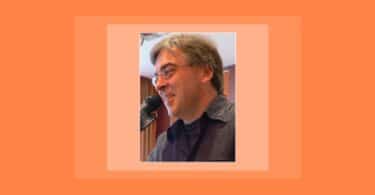
Grant Bentley

<-- Interviewed by Louise Barton


Note: The following is a transcript of a video interview. The video interview is embedded as 11 small files on the right hand side within the interview text. Please click on the play button on each file to see the video.


Q :  Can you tell us what Homśopathic Facial Analysis (HFA) is?

GB: Homśopathic Facial Analysis (HFA) started approximately eight to ten years ago.  I had been teaching homśopathy at an undergraduate level for fifteen years or just a little more than that… and it really just came from my attempt to understand what Hahnemann’s miasms are. I was teaching it theoretically out of the books and I was teaching what Hahnemann had to say about the miasms, and what Kent had to say and Roberts and Allen … and we had projects, as most undergraduate courses do.  But at the end of all of that I felt that clinically, I wasn’t using the miasms the way I should be using them.

I would do a class and talk about the miasms and go to lectures about them. But when a patient was sitting in front of me, all that I was really looking for was the totality of symptoms and nothing but that. Whether or not that person was tubercular or syphilitic really didn’t enter into my mind all that much. Really, what I was looking for was just the totality of symptoms.  I was theoretically understanding how important miasms are, but I wasn’t putting that into any practical application clinically.  The only way I would really use the miasms was when someone would say there was tuberculosis in the family, and so I would start thinking of Tuberculinum. Or there might have been cancer in the family and I would start thinking of Carcinosin.  So what a miasm was in that sense, was an immediate leap to the nosode, rather than understanding it as the basis of my prescription. 

I would sometimes close a prescription with a nosode, as many practitioners before me have suggested.  If I thought that was a syphilitic case in front of me,  I would give the remedies I believed were indicated to get me to a certain point and then to bring closure to that case, I might give Syphilinum, if that’s what I thought the miasm… or  Tuberculinum and so on. 

But really that isn’t good enough, because the miasms are meant to be the basis of the prescription, not something you do at the end, and not something that you spark up when you hear the word “tuberculosis” in a sentence.  What they are meant to be is the cornerstone, the foundation of which your chronic prescription is based. I guess I had to be honest and say clinically I wasn’t doing that.  I wasn’t basing my clinical constitutional prescriptions on any miasmatic foundation. 

To some degree what I was doing was understanding the miasms as a concept, and giving it lip service, but I wasn’t employing it.  So I wanted to understand how to employ it. It really is meant to be the basis of homśopathic constitutional prescribing, which  Hahnemann considered it to be, but I wasn’t doing that.  So essentially what Homśopathic Facial Analysis (HFA) is about, is understanding why Hahnemann believed that the miasms were the cornerstone of every chronic disease.

Q : So why the interest in the face?

GB:  The interest in the face came about by accident.  The interest in the face really came from me going back to most of the classics. When I talk about the classics of miasmatic philosophy… even though this is a little sacrilegious…. one of the major classics is not Hahnemann, is not Chronic Diseases and the reason for it is this. I find Chronic Diseases terribly difficult to understand and interpret and to put in any logical sequence.  I find that perhaps some of the latter day authors are a little bit easier to understand than Hahnemann.  Particularly, Allen and Roberts are the two major ones that I thought put the miasms into an easy to understand working perspective. Because of that my focus was essentially on those two books. 

I am not devaluing Chronic Diseases at all… it is the fundamental basis of miasms. But what I didn’t get from Chronic Diseases is clarity.  I would look at Hahnemann’s version of psora and you can see everything in it.  Whereas when you are looking at Roberts in particular, and I am talking about his book, the Art and Principles of Cure , what you  get from that is an attempt to try and systematize Hahnemann’s thinking.  Hahnemann’s thinking while intricate, is not particularly directed, in a sense that he gives you a flavour – so he understands what he is talking about, but I am not a hundred percent sure that his ability to convey what he knows, to make extrinsic what is intrinsic, is Hahnemann’s speciality.  I think some other authors have been able to do that better. 

And so what I have done is use Roberts and Allen as essentially the foundation stone.  What both of those authors have in common is that they talk about facial features…only in a very surface sort of way. They’ll talk about the shape of the head or the wide set eyes or this and that, but they don’t systematize the information into anything. Allen is the one that says it best, when he talks about the chronic miasms as an imprint onto the very essence of who you are.  And that very essence of who you are shows up in your countenance, in your facial structure, in your body language, in the way you think and feel, your desires… it is entwined to you.  I found that concept intriguing.  I started off essentially wondering, “Is there an accuracy to this”? 

I remember thinking  “Can you really figure out a person’s miasm by the facial features  they have?”  If one is represented by the other, that’s a very intriguing thing because what that means, is that we have finally, if it worked out to be true, we have a window into what we can’t see.  Because if the miasm if really formulating the facial features, then we can use those facial features to understand the dominant miasm. 

I guess it was also facial features that made me rethink a lot of the different aspects of where miasms have come from, or a development from the original.  And I will get into this later, because I know there are questions on this.  Understanding that it goes from being just an inherited disease, into something far deeper, an essence of who you are, has led to the development of this third book, Soul & Survival.  We’ll watch that unravel.

Q :  Since you wrote your first book and then your latest “Soul & Survival”, which has been over quite a few years, has there been an evolution in your thoughts on miasms?

GB: There has been a dramatic change.  One of the major things with “Appearance and Circumstance” is that I can see that I am still accepting the idea that miasms are a type of inheritance. What I mean by that, is that there is a disease base to it.  I can understand why Hahnemann came up with the disease base.  After all, that is the basis of all acute disease. 

Acute disease is essentially, an overpowering invasion of a foreign microbe which makes you sick and then you have to rebuild your forces.  So acute disease has a very definite origin.  We know that the measles virus causes measles, the chicken pox virus causes chicken pox and so on.  I think one of the problems for homśopathy has been the idea that chronic disease is exactly the same. We can tell that Hahnemann was thinking down those lines, because what we have with the Chronic Diseases is a syphilitic miasm from syphilis, we have a sycotic miasm from gonorrhoea, we have the tubercular miasm from tuberculosis and so on.  Unfortunately though, it’s not the case.  Chronic disease rarely has a microbial origin.  There is no virus for cancer, because cancer is a lifestyle, multifactorial illness. 

Chronic disease is a result, rather than an infection.  It is a result of everything that has preceded this moment in time.  This is all the stresses you have been under, all the inheritance you have been given, it’s all of the people you have come into contact with, it’s all the late nights, it’s all the things you shouldn’t have done. All of these things come together to create who you are now, and part of that, if you have a chronic disease, is because of what preceded it.  This is why when we are dealing with a chronic, a constitutional case, it is imperative that we get where the person has come from and an understanding of who that person is. 

It’s not good enough in a chronic case to just understand what you were like before you were sick, and why you’re different now.  That is only what you have to do with acute disease.  In fact those are the rules.  The rules are that you don’t confuse personality and constitutional into an acute prescription.  All you are interested in, in an acute prescription, is the aetiology and really the differentiation from a healthy state to where you are right now. The sum total of that is your acute prescription.  Your acute prescription entails both your reaction to the illness, plus the genus epidemicus of the illness itself.  So we are catering for a virus, but what we don’t do is that we don’t have to understand the stresses that went on in your life.  We don’t have to understand your family background.  We don’t have to understand any of these things the way we do when we are dealing with chronic disease. 

If we understand the process of how we get to a chronic prescription, then we can understand what it is we are looking for.  We’re not after what infection you acquired, or what environmental conditions set this off. What we are after when  dealing with chronic disease, is the sequence of events. What is the life that you have led, that has led you to this point. 

Now that means that chronic disease is a result. When you are dealing with a result, it seems to me illogical to go back into the idea of trying to find a medicine that is predominantly suited for an infection, like an antisyphilitic or an antisycotic or an antipsoric.  That doesn’t mean there aren’t anti-syphilitic, sycotic and psoric remedies, there definitely are, but the infection part is not the aetiology. Because it isn’t the aetiology, we have to revamp our whole idea of what chronic disease is, what has led the patient to this point, what a constitutional remedy actually does, and more importantly why is the miasm, which is the basis of constitutional treatment, so vital, because it hasn’t to do with a virus. 

When I wrote Appearance and Circumstance, you can still see that I am in that mode of antisyphilitic, antisycotic.  When you’re in that mode, there is the idea that the miasm is only bad, because it is an infective agent and nothing good necessarily comes from the measles.  You can turn around and say, yes it primes your immune system, but so does any acute illness really. You don’t have to have the measles to have an active immune system.  But when you are in the thick of a really bad cold, or in the thick of a really bad measles attack or whatever the acute disease is, what good comes out of it?  Not much. 

Q :   You write about miasms in Soul & Survival and you write about miasms in

Appearance and Circumstance, but you are saying there has been a development.  In what way is it different now, five years later?

GB:  The development … has been extraordinary.  The development is the understanding that every substance both organic and inorganic has what we would term a miasm.  It has to, otherwise Sulphur wouldn’t be an antipsoric and Thuja wouldn’t be an antisycotic, and so on.  So we have to accept that for these remedies to be “anti” then they have to have a similar energy to what we are trying to eradicate.  The fact is that minerals don’t get illnesses like syphilis or gonorrhoea, so what we are looking at when we are looking at an “anti” something, is different from an infection.  What we are looking at is a force. 

In Appearance and Circumstance I was still thinking along the thought process that these were a carry over infection, a legacy from the past where somebody was infected with something and generally allopathic treatment drove it deeper into the economy and it is then passed on.  So essentially what that means, is that miasms are something we need to eradicate, or we need to peel off the layers. That layers theory has had to come into effect essentially because antipsorics given to a psoric person do not guarantee the psoric person will never be sick again.  In fact they just go on their normal life and if it isn’t bronchitis that they are suffering from later on in old age, they might start getting rheumatism or arthritis or migraines or something else, but there is never anybody that doesn’t suffer from some sort of ailment. 

And so if the antipsoric had eradicated everything, the only answer to this is that we have this biological sediment…that it isn’t just passed on from one generation to the next but from one generation to another generation to another generation. And so what we have to do now, is to peel each sheet off with our remedies. But if this has been going on since Adam then it is a futile task! 

I don’t think this anymore. It is a long process that got me down this avenue, but I am going to cut a long story short and say that I don’t go by the infection theory anymore.

I don’t believe that chronic disease is a legacy of somebody in my family who acquired tuberculosis or syphilis or gonorrhoea, I don’t think that. 

What I think the miasms are, and Roberts is the first one who really alludes to this although he doesn’t take it any further, is that it is a force.  Psoric medicines project outwards.  I often used to think to myself  “How on earth did Allen and Roberts make sense of Hahnemann. and how did they get such a concept that’s almost a labyrinth in its thinking, into a cohesive model?”.  I started to understand that it actually wasn’t through the writings of Hahnemann, it was through the remedies themselves.  When you look at antisyphilitic remedies now you see a trend. When you look at antisycotic remedies now you see a trend, and the same with the psoric remedies because what you have to remember is that when Hahnemann talks about an antipsoric or an antisyphilitic he is not talking about a nosode. 

He is talking about a remedy that has an action on that chronic disease.  And that action can be divided into three… and this is really where I will stray a little bit from Hahnemann in a number of areas.  But then there are other areas where I am absolutely sure that he was right and I have kept that going.  And one of those areas is in the three basic miasms. 

And the reason that I understand there are three basic miasms, is that when you look at an antipsoric medicine it has a centrifugal action. So what it does, is that it pushes from the centre to the circumference, because that is what centrifugal means.  So something like Sulphur pushes everything onto the surface, whereas something like Thuja encapsulates, and where Mercury, it goes inward.  So what you are really looking at is not so much a disease, at a movement.  You are looking at a motion and that’s understandable because we live in a three dimensional universe.  And a three dimensional universe is either up, down, in or out, and the third, motion, is around.  So it is a motion of force that we are looking at.

Q : How did this impact on your clinical practice?

GB: The impact has been profound.  Once I understood that what we are looking at is an expression of force or of motion … I began to understand the importance of why a constitutional medicine or any medicine, must be the same as the miasm of the patient. 

We all have a degree of dominance in us.One of those forces or a combination of those forces is dominant.  Let’s just say you are dominantly a psoric person. The first thing to understand, particularly when you are dealing with chronic disease, is that this motion belongs to you, the same as it belongs to any other inorganic or organic substance.  What that means is that it is important for you to have it. 

You see the outward motion of psora at its most prevalent, when somebody is under attack.  That might be an emotional attack, an environmental attack like a virus or bacteria, but their reaction is the same. Because I am saying … well if it isn’t a disease, then what is it?  And what the ‘it’ is, that is the miasm, is you, your immune system, your own way of being able to counteract stress. 

Thuja encapsulates and people who need Thuja encapsulate stress or microbes, or viruses because it is in their best defense to do so.  Otherwise what would happen, is that it would become systemic and all hell would break loose.  So what we are essentially saying is that people who are dominantly psoric, who need psoric medicines have a stress response that is essentially based on outward motion.  That is that they will push stress to the surface or they will try and meet it head on at the periphery.  This is why so many people who are psoric for example, have a lot of asthma or we have the traditional understanding of the eczemas or the hayfevers, and all these sort of things. What you have got is an immune system that is so primed it is attacking everything.  So it is out of balance and this is why you need the medicine. 

But the clinical practice of using the miasms, or the clinical application of the miasms comes from …. I don’t want to give a medicine like Thuja that is telling the body to encapsulate, when that person’s natural response given by nature, is to push out.  Now I am going against your natural design.  And this is where I believe all of the … at least the vast majority of the aggravations have come from.  The remedy is indicated on a totality basis, but what we are not doing … what we are not taking into account is, does the patient’s stress response push things away, encapsulate it or whatever.  If you get a medicine that does it incorrectly to the patient, that’s when they don’t feel well.  This is when the homoeopathic aggravation occurs. 

I am going to differ a little bit. I don’t believe the aggravation is what we are after, and in saying that, there are two types of aggravation and that is important to understand.  There is an aggravation where you have given the right medicine but in too strong a dose, and that means the patient will over-react for a while and then things will calm down and a natural progression will take place.  But then there is a negative aggravation, and that negative aggravation is almost like a suppression in the sense that new symptoms come up or there is no return to a normalcy.  There is no improvement, there is only aggravation and continuing aggravation.  When that occurs it is always because you have got the miasm wrong.  And if it goes on for a long time it is because you have grossly overdone the potency. 

What I am doing when I give a psoric person Thuja 1M (and their natural instinct is to push this thing to the circumference) is, I am overriding that natural instinct and saying I don’t want you to do that, I want you to encapsulate that… and eventually what happens is that the person’s own stress response starts reacting negatively to the instructions that I am giving it – that’s to be avoided at all costs.  By the time a person comes to see me they are already in a state of stress. What I don’t want to do is to stress them even more.  This is aphorism one – first do no harm.  But you will do harm if you give the wrong miasmatic remedy to a patient, there is absolutely no doubt about it. 

The problem for us is that a lot of the medicines are not as unique as we think they are. You know which remedy is good for a headache, which remedy is good for constipation, which remedy has sleeplessness.  You know what I mean, they have all these aspects in them.  So when you do a repertorisation it’s no surprise then that twenty, thirty, forty remedies may come up.  How we have gone about trying to solve that problem, is by individualizing and getting the rubrics down to perhaps one, two or three highly individualized rubrics, which other remedies simply don’t have.  But that is a very hard task - a very hard task.  That’s not saying that the process is wrong, I am just saying that it is a very difficult way of doing it.  There is a much easier way of doing it.  I’ve done that before… I mean I am like everyone else, you know, every homoeopath what they want more than anything else in the world is good results.  That’s why you are in it.  I mean you are not in it for the money, let’s face it, or you are not in it for the social esteem.  You are in it because you want to contribute and the main way that you get that sense of contribution is that people come back and say, “that was great”.  But it’s so few and far between.  And so what we do is, we go on this quest to try and find … try and improve our success rate, of people coming back and saying, “That was great!”. 

And, like nearly everybody else on this planet, I have done all of the different theories, I have done the portraits, I have done everything, but I do believe I have come up with a really easy way of being able to do it, where you don’t have to understand fine distinguishing characteristics that separate one remedy from another. 

The system itself that Hahnemann … and I want to include Boenninghausen at this point too because when you are talking about the systemization of homśopathy it would be nowhere without Boeninghausen, nowhere.  He was the one who did the repertory, he was the one who really made it user friendly.  And so the idea of putting things into mentals and generals and doing broad rubrics … because you have got to remember that the whole idea of Boeninghausen was the addition of each of these broad rubrics, while they don’t mean anything in themselves, as a group single out greatly.  And so that process is actually right.  But the trouble is that the broad rubrics narrow it down to twenty, thirty, forty and then what we are meant to do is go through the materia medica and now the whole essence stuff comes back in.  Once essence and fine distinguishing qualities come in, your task becomes infinitely harder because of the fineness of what we are looking for.  We are essentially looking for that needle in a haystack. 

But if you understand that out of those twenty or thirty remedies, most of them do not have that pushing out centrifugal psoric action as their dominance, and all I have to do is take the ones that are, then all of a sudden I have narrowed that repertorisation down dramatically.  And my choice, goes from out of twenty or thirty maybe down to four or five.  Now that’s a big difference and that’s why I can say to most of my patients, “You give me four or five goes at this and we’ll be able to treat your illness significantly”.  And I can do it with that sort of confidence and that comes from that change that I was talking about in understanding the miasms as a natural universal force as compared to what I believe is the more incorrect, biological infection as a base. 

Q : Why is it important that other homśopaths understand this?

GB:  The main thing that I got out of the development of this, Homśopathic Facial Analysis (HFA), gave me much better results.  I understand that there are a number of different models out there that give good results, however for me I found this the most effective. 

Perhaps it is not even a case of which one is better, but which one suits you most as a person.  What I found with the Homśopathic Facial Analysis (HFA) it gave me a lot more confidence in what I was doing, because it had an objective element to it.  When we were talking about constitutional treatment and that chronic disease is essentially … chronic exhaustion or chronic stress, it’s the result of that.  It is the display of this…all of the trial and tribulations that one has endured. That is what a patient is saying when they come in with their ailment.  So it is absolutely vital that I get what those trials and tribulations were. 

So what I do is that I start off and go into the major complaint and I do it in a very Boenninghausen sort of way… asking what makes it better, what makes it worse?  Then, what I am after is a personal history, because that’s what got you here.  And so I want to understand … not from a perspective of what do you think at your deepest core, because … and I don’t want to knock any theories but you know, a lot of people don’t know what they think at their deepest core.  I do understand about the concepts of the unconscious and how that fuels you and so on, but I also, because I have done psychotherapy for twenty years, I also understand the complexity of consciously bringing the unconscious to the surface.  And there is a real problem as a therapist, when I start interpreting consciously what I think your unconscious is consciously trying to tell you.  This is roundabout here, this is a real labyrinth here … and it’s a minefield. 

One of the great assets I think that homśopaths of the past had going for them, that many contemporary homśopaths particularly the lay practitioners don’t have, is that we don’t have any tests.  Because they were going through … mainly looking for acute… one of the things that the homśopaths of old had that the lay practitioners of today don’t have is the pathology and the ability to test and the ability to diagnose.  When you understand for example, Hahnemann when he was treating war typhus, and he talks about it in his Chronic Diseases, how he gave every patient Rhus Tox and every patient Bryonia, or a combination of one of those two … there’s no differentiation here.  He understood the nature of the disease and that’s what we’re trying to get to when we do a genus epidemicus too.  We’re trying to understand the bulk of what this disease is going to do for the majority of the people, but then for some it will be more heat, whereas for others it will be more cold, and so we have our little differentiation at the end. 

But when you are coming into chronic disease we don’t have anything objective… we that left us trying to interpret the nuances of the patient to the finery of the remedy.  And now I like the fact that Homśopathic Facial Analysis (HFA) gives me a definitive platform.  I like the fact that I can teach a class, put up a patient on the wall as a case study and everyone comes up with the same starting point.  I can tell you as an individual homśopath, what a relief that is for me. 

I remember hearing a number of different speakers, and I remember one speaker in particular talking about how you can have a hundred homśopaths in the same room and they’ll come up with a hundred different answers… and they’ll come up with a hundred different starting points.  And nearly all the audience laughed, because I didn’t laugh at that, because to me that is a weakness, that’s not a strength.  I understand that the concept was meant to be the fluidity of homśopathy and understanding human uniqueness but a lot of the times disease is not unique.  What got you here could be unique but the disease itself is not unique.  What we need is a platform of understanding that I don’t believe conventional constitutional treatment gives us, because a lot of it resides in the ability of the practitioner to be able to find that needle in a haystack.  I was continuously told that after twenty, thirty, forty years of experience I too would be able to find that needle.  Well I found that needle, but I found that needle in an entirely different way. Now I can teach first year students how to find that needle. 

You don’t have to wait forty years. I’ve got first year graduates that have got every bit the success rate that I am doing, I’ve been doing it for fifteen or more years, they’ve been doing it for one.  And you know what, that’s the way it should be.  And that means that you’ve got a really good system.  And that can only occur when you have an objectivity in place. - and that objectivity is understanding the miasms as a force. Now how do I figure out what that force is?  Well the force is always related to the face … this is what we were talking about before.  Because you are a totality … so whatever is occurring on the inside is occurring on the outside, if we can just figure out how to read it. 

Now I have my basic platform.  Everyone in the audience can look at this patient and we teach how to take the photographs and all that.  Everyone can look at that patient and say  “That is a tubercular patient”.  Now what good does that do?  It does a world of good because if you’re tossing up ‘am I going to give this patient Thuja’, ‘am I going to give them Phosphorus’ or ‘am I going to give them Sulphur’, I give but Homśopathic Facial Analysis. HFA practitioners don’t toss up.  They know immediately that it’s Phosphorus and it can only be Phosphorus, because that patient’s face has told you that it can only be tubercular.  The repertorisation has given you the list, but their face has told you its tubercular.  Phosphorus is a tubercular remedy and that’s what you need. 

There’s confidence in knowing that you don’t have to be a combination of Hahnemann and Sigmund Freud and Jung and everything all wrapped into one, to even be mildly effective after thirty yearsbut you can be highly effective for your patients right now.  The moment that you grasp this, the moment that you understand that chronic remedy fits miasm, facial features fit miasm, put the three of those together and you’ve got it.  The only thing you must know how to do on top of that, is how to take a case, cause you’ve got to know what you are looking for, and you’ve got to know how to repertorise. 

To take a case is a lot more simple than … we have intellectualized ourselves out of case taking.  Case taking was all about the generals of the case essentially.  Remember, the rules were and still should be, essentially this.  You do the main generals of the case: Sensations, modalities, times, concomitants if they’re there.  The mentals of the case are there to distinguish one from the other.  So after we’ve got our group of generals then …

the mentals may come in and you might only add one or two distinguishing features. 

For a hundred years or more homśopaths practiced that method and for a very good reason, because that’s what homśopathy is.  Homśopathy is based on the generals.  And the generals only became irrelevant because in the end, “worse at night”, “worse for cold”, ”worse bathing”, doesn’t narrow it down.  But with this model, with the face on the end, it narrows it down - narrows it down dramatically.  So what it means is that you can go back to traditional homśopathy.  You can go back to Boenninghausen, you can go back to Hahnemann.  You don’t have to try and be Dr. Phil at the same time. 

The mentals are important … I’m not saying that they’re not important, but you’re still back into guess work.  Because if you’re looking for confirmation from the patient in front of you as to whether or not you are tapping into a rich vein of their real unconscious, you got another thing coming. Only people who have not done psyche would think that. Once you’ve done a bit, or anybody who’s practiced homśopathy … anyone who has been in practice for quite a while understands that your patient doesn’t know what is making their unconscious tick.  In fact it is really difficult to define what the unconscious is.  I mean the unconscious can be Jung, where it’s tapping into a kind of ‘higher self’.  Or it can be Freud where it’s just paddling around in goo.  Alright, whichever … but they’re both called unconscious.  But which unconscious are we tapping into?  A student of mine once got a little cross … and this is why she came to us … but she was a practicing psychologist and she got annoyed at the degree of  ‘pop psychology’ that was going on.  She thought that it was negligent and to some degree there’s a truth in that.  Not totally, but there is some truth in that. 

Essentially what we are, is that we are homśopaths.  I don’t claim to know more about you than you think you know about yourself.  What I will be able to do, I do through taking your life case, and looking for repeating patterns which is what the first book  Appearance and Circumstance was about. Appearance of your face and circumstance, because that is the sum total of the impact of the different stresses that got you to this point - of why you are seeing me now.  And that sum total, that’s where your mentals are.  They’re in the circumstances, that’s what you’re putting out, it’s what’s coming towards you.  The rest of it is the generals.  Now we have a face that can differentiate out of a group of well repertorised remedies.  And that narrows it down dramatically.  

What does it do for your average practitioner?  It gives confidence in who you are.  It gives you confidence ‘that I can practice homśopathy’….that I don’t have to be, almost a shaman.  The rules … the people that came before us … were really effective.  The people that came before us were really smart and they were dedicated, and they were homśopaths.  And they devised a system that was virtually perfect.  The only thing that was missing was the idea of miasms as a force - a force of nature rather than a disease.  Once you put that in place, everything else is already set.  You don’t have to reinvent the wheel.  There is a perfect structure already there … just use it.  And that confidence I think means that practitioners where they stand.  They know that nothing is beyond them. 

You’re not going to get every case.  No-one gets every case.  And maybe you will have to refer one every now and again, maybe there is one that no-one gets.  That’s life.  But it is understanding that whatever homśopathy is capable of doing…you can do it!  And it isn’t a needle in a haystack.  I think that is the thing that I am trying to get across. If I would like anyone to understand anything about what Homśopathic Facial Analysis (HFA) it’s what is does for a practitioner. It’s about making you understand that you don’t have to look for that needle in a haystack. 

Q : What does the new book “Soul & Survival” bring to us?  What’s new?

GB:  There is quite a bit that is new, they are all vitally important … I’ve got the three books as you know.  They are vitally important to have for different reasons and build on each other.  I don’t believe that one takes the place of any of the others.  They work in harmony with one another, so I guess that if you … well everyone here is different because they practice this method, but to anybody that was outside of this method it is important to understand that the three books are needed to fully understand the whole system. 

Appearance and Circumstance I think gives you a very clinical way of being able to case take, and understand what it is that we are doing and why we are doing it.  Homśopathic Facial Analysis, the second book is trying to sharpen the skills of facial analysis and understanding what these facial features imply and why. 

Soul & Survival has been a bit of a break and the main body of work I guess out of those first two books that I have mentioned, Homśopathic Facial Analysis is complementary to Appearance and Circumstance in the sense that, I made a little bit of a mistake with Appearance and Circumstance by using photographs in it, photographs of people to display facial features, and what I didn’t find until later is that really, you don’t get the fine detail that you need. 

Facial analysis is a skill like anything else and it takes time to become not only acquainted with it but to become really proficient at it.  So no-one is going to be able to do it right overnight in one shot, but with a bit of constant practice, people become very good, very quickly. 

The next body of philosophical work I guess is the last book which is Soul & Survival.  Now what Soul & Survival is … it’s an extension more on the themes.  Appearance and Circumstance is very good as a book clinically, in that it discusses case taking, how to do it, how to repertorise, how to select a remedy.  But there are definite themes that run through people’s lives.  When I say “themes” I am not talking about the same themes as in Tyler or Kent’s Drug Pictures. I am talking about themes of repeating events and circumstances. 

I was placed in a unique position.  When I understood about facial features, I was taking people’s photographs as well as listening to their life stories.  Now why that placed me into a unique position is this.  I could begin to see that there were trends to psoric stories, or sycotic stories.  Some people had a combination, and we know that combination miasms exist because of two equal forces.  What we did in the end is that we decided that we were going to colour code these miasms… three primary miasms, three primary colours.  So instead of psoric or outward motion we just gave each one a colour.  So psora became yellow, red became sycosis and blue became syphilis. 

I was placed in a unique position because I could see that people from a particular miasmatic group, or colour group as we like to call them, were telling us very, very similar life stories. 

That’s coincidental if its once, twice, three times, four times but when you are starting to get into one year, two years, three years, four years of people that are telling you life stories and stresses, all from the same colour group, that are very, very similar, then that’s more than coincidence.  And that’s when I started understanding that something bigger than serendipity is going on here … at that stage I didn’t know what. 

I guess that Soul & Survival is explaining why this occurs.  Why do people who belong to this yellow group attract similar people and events into their life?  Yes you can turn around and say it is because of the energy that we project and I understand all of this and I used to say it too…well it is coming from you and it is your energy your projected out and that’s what comes to you, but why do you do that?  What benefit do you get out of projecting this onto the world?  You are definitely doing it, and that means that it is purposeful.  You are deliberately … or unconsciously understand, but you are projecting that out. 

Soul & Survival explains that a miasm should be regarded more as a force or protective agent like an immune system.  But our immune system comes in a variety of ways … our immune system is kind of a micro term for a defense system, except that this time the micro term is just that … biological agents, viruses, bacterias, fungi.  But our defense is much more than that because our attackers are more than biological agents.  Our attackers come from biological agents, environment, animals and principally other people, because we live in groups.  We live in groups, we have always lived in groups, we always will live in groups, we can’t survive independently on our own. 

And so working out and defending ourselves against other people, has become … is one of the major issues that our defense system tries to do.  And what we do is that we put out needs.  We have needs of what it is that we think are important to secure our position within the group, both as a contributor and as an individual.  But we can’t all contribute in the same way.  Because the group is multi-factorial, it has multi-factorial needs.  The best way of being able to provide your own safety is to provide a group with something that they need that no-one else is providing … a niche.  These niches secure our material and personal futures.  They secure not only our physical well being, but also the longevity of human beings as a whole.

Q :   Something that the other two books don’t have is an understanding that the miasms are actually a force, and talking about them being a defense system built into us. I think that understanding is not in any of the other books.

GB:  No … alright.  What Soul & Survival highlights that the other two books don’t highlight, is the complexity that individuals have when it comes to surviving and living in groups.

We have to live in a group, we can’t survive as individuals, but that means we have to be necessary.  We have to be needed, desired or important, otherwise eventually what happens is the environmental stress coming in, because the environment has always been a boom or bust environment, it changes completely. 

It was ok when times were good, and the land was fertile and hunting was fine, this is back in tribal times.  People had more of an ability to be able to be whoever they wanted to be, and if you didn’t like it that’s bad luck.  But when times get hard and food gets scarce or water starts drying up, you don’t have that luxury, because that group has to start culling, and that means that every one of us is in a precarious position.  And we all have to come up with strategies, that make us a little better than our competitors….and there’s no way that evolution is going to discard any sort of competitive edge.  We know it doesn’t do it physically, but human beings don’t rely on their physical prowess to see them through, they rely on their mental prowess to see them through. 

And the idea that nature is going to give up your mental or emotional competitive edge, something that has worked for you is just nonsense.  It doesn’t, it hangs onto it and in fact that can be one of the major health and personal problems.  It’s a fact that our unconscious hangs onto these reactions and hangs onto these thoughts processes, and the more stressed that we become the more we hang on to them.  And we will repeat these same events and circumstances, or draw the environment or people toward us, that is going to repeat them, because that is where we survive best. 

And nature almost demands that we go down that path, because inside every one of us is that difference, and that difference is how we contribute and what we can do better than anybody else.  Now when I am talking about doing something better it doesn’t necessarily have to be a skill, such as building or sport or anything.  It can be attractiveness, it can be personality, it could be a yielding personality.  A person that is really yielding is less likely to be kicked out than one that could be domineering.  And so there’s a whole range of different personalities, looks and skills, that nature hangs onto and that’s what I believe your unconscious to be. 

Yes there are repressed memories and so on, but the real unconscious, the real driving force of health and illness is in the memories that you have inherited.  And those memories that you have inherited are instinctive reactions to stress.  And those instinctive reactions to stress come about in stressful situations.  So when people are up against the wall, or something happens out of the blue and they are taken by surprise, what happens is that you instinctively react and later on you consciously decide to either pull back or, I’m going to change, or I’m going to do whatever, but that instinct, that non-thinking reaction, is what you have inherited.  And I have seen that run through colour groups.  They are predictable and they are understandable.  And that’s what Soul & Survival is about, that’s what I have written about. 

The fifteen years of experience have come together, of hearing all these stories and piecing it together; that there is a uniformity of groups … understanding that, that uniformity gives that group the competitive edge.  And understanding it in that mode, that that’s what you are going to go back to.  That’s what your instincts are, that’s what your base needs are.  Your base needs are set about.  For example, if a person has survived well by being really friendly, by making friends wherever they go so, they don’t make any enemies. That instinct to be friendly and co-operative, even to the point of being yielding, resurfaces in that person as instinctive behaviour every time they are under insurmountable stress.  That is their instant reaction.  They may turn around later and say, ‘I wish I wouldn’t do that’.  They may get therapy to make sure that they don’t do it, but they still do it.  A person who is really volatile, because that is the way her instinct has learned to get what it wants, to secure herself, may go to anger management, do all these sorts of things, but she’s still going to have to consciously rearrange her life to try and match her instinct. 

Soul & Survival is about understanding the instincts that you have inherited….why they are there…what purpose they serve and I guess what’s really important is to understand that they have a purpose. They are really beneficial, but where they’re not beneficial is where they are out of context.  When they are out of context and you are being yielding all the time or aggressive all the time, now you have a problem.  You show me somebody who is out of balance and who is in their survival instinct, and I will show you someone with chronic disease - because that chronic disease only comes about from stress.  And that means …. and stress is volatile, and that means that they are burning up energy like crazy. 

And when your energy goes down to a certain level … to some degree what happens is that you are borrowing on the future.  You have a pool of energy and the more energy you burn up now, the less you have for later on.  And your strengths and weaknesses … well especially your weaknesses, they require an excess of energy to keep them going.  For example with liver function … if you have only got 60%, it requires 40% more energy to make it optimum.  But if you don’t have that because it is all going into a fight or flight or stress response, now your liver begins to play up over time.  And that’s when they start coming to see me for liver complaints.  But our story shows us that what we are really looking at when we are looking at chronic disease, is a state of chronic exhaustion or chronic stress and we have to switch that survival instinct off.  Because when you’re in instinct you are not consciously in control of your life. 

This is why people in the background are always saying to themselves, I wish I wouldn’t do this.  They will get angry at themselves, they will go to therapy, they will try all sorts of things, I wish I didn’t, but they do - everytime they do.  After homśopathic treatment however, that starts to calm down … because what we are doing is that we are replacing the energy.  And when a person has more energy, then they are under less stress and so that stress response or that instinctive response starts to ease and they become more conscious in their life.

Q : Recently I heard you talking about evidence based medicine and homśopathy and I know this is a very controversial topic, and you have some interesting opinions and I was wondering if you could share those opinions.

GB:  I have no problem with evidence based medicine, in the sense that I think that if it’s valid it should be able to prove itself.  If it can’t prove itself, then it is not valid to begin with. 

Homśopathy can prove itself continuously. Providing that the set-up was homśopathic, then I can prove to you beyond all measure of a doubt that Homśopathic Facial Analysis (HFA) is just brilliant for treating chronic disease. I am not saying that other contemporary forms of homśopathy aren’t, but I am just talking about us.  And I can prove that homśopathy under the right conditions, providing that you allow me to dictate … if you are just going to come to me and say well alright, I want to see whether homśopathy works and I am just giving Rhus Tox and I want you to give Rhus Tox to 200 people with arthritis, then you are wasting everybody’s time, because that is ignoring the concepts of what homśopathy is about.

 If however you want to sit there and say, I will do evidence based on how people feel before they come to your clinic, how they feel twelve months after being in your clinic, both in themselves and in their aches and pains, I will be able to say to you that that is entirely measurable and I will put myself up to any rigorous testing that you want.  Providing that’s all that you do.  You leave the process of that to me.

So I have no problem with evidence medicine in that sense.  The problem that I have, which I was talking to you about, was the fact that I have a real problem with orthodox medicine saying to us, that we need to be evidence based, when what it is that they are saying, is that you need to be evidence based on our terms.  That’s a different thing entirely.

Homśopaths ever since Hahnemann, have been trying to convince the “regulars” as Kent used to call them, and they have been unsuccessful.  Many are still trying to do that and are equally unsuccessful.  That doesn’t mean to say that the results are unsuccessful, but their task has been unsuccessful. 

And there is a fundamental reason why it has never occurred and why it never will occur.  And the reason is this; because the evidence base that we are talking about with orthodox medicine is a material based evidence.  Show me the substance and show me the physical reaction to that substance.  But homśopathy has a non-material essence.  There is a difference between evidence base and material base, and I think what we’re being conned into a little bit, is that your validity as homśopaths rests on your ability to be able to show some sort of material evidence. .. not only in the outcome, but in the product itself.  Now that is impossible to do because we actually don’t have a product. 

What we are trying to do is convince materialists, that non-material medicine is worthwhile.  But if you are not going to take a starting point that there is a vital force, a chi, a prana, whatever, …. if you are not going to take that as a basis, then the rest of it is a waste of time.  Because even if you show that it does work, they’re going to look for some other reason as to why it worked! Because a non-material answer to a material mind is nonsense.  They are always going to look for a material answer. 

This might be an urban myth, but I heard a story where Aconite was given as a random test as a part of a pre-op, and they found that people were much calmer in the group that was on the Aconite.  So what is the first thing they do? They try to look for the active ingredient in the Aconite, except that it’s Aconite 30.  Now you are never going to find the active ingredient, there never was an active ingredient (laughs), not an ingredient per se.  And so I think the idea that, if we can just convince the doctors, if we can just convince science … I don’t think you are ever going to convince them.  Because I think that what they are looking for is different.  What we are presenting to them is not what they want to hear. 

Double blind trials are there to eliminate bias, but the real bias is in here (points to head).  The real bias is whether or not you are going to accept the double blind trial.  You can just sit there … you can spend hundreds of millions of dollars on a double blind trial but if the person doesn’t think that you’re credible, then they are not going to accept what the trial’s findings were anyway!  That’s the bias and you will never get over that, never.  We have tried to do this for two hundred years.  And we are no closer now … in fact we are further away now than we were two hundred years ago.  You would think we would start to get it. 

Two hundred years down the track we’re the ones who should be saying, don’t worry about it … just don’t worry about it.  Just get on with what it is that we have to do.  Don’t worry about the trials … don’t try and prove non-material to materialists.  This is Venus and Mars stuff.  Except that we are talking about Mercury and Pluto, but that doesn’t necessarily mean that they are right.  Just because you don’t believe in a non-material world, that’s your right, this is a free country, if you want to believe that, that’s fine but that doesn’t mean that you’re right. 

People have mystical experiences all the time.  You’re saying every homśopath is deluded?  Every TCM practitioner or acupuncturist is deluded?  Energy medicine comes in a variety of forms.  Energy medicine doesn’t have to be homśopathy.  Energy medicine doesn’t have to be acupuncture.  Energy medicine can be prayer, talk, belief, change of fortune, it can be anything.  Are you saying these things don’t count?  Well if you say that they don’t count, then we have nothing to talk about. 

I’m not trying to prove the immaterial to materialists.  If everything has to be touched, quantified, weighed, measured, seen, and if you can’t do that it doesn’t exist, then you also deny every connection that human beings make on a mental or emotional level.  You deny every act of faith that people make, you deny every belief that people have, and are sure that they have.  Every dream is invalid, music becomes invalid; everything is invalid.  It’s nonsense. 

It’s not us that needs to grow up … this is juvenile stuff and I just think that we’re better than that.  And we should be able to sit down there with the self confidence and say well, “I’m getting the results.  I know you don’t agree with the way I’m getting the results but I am getting them and I am happy with that and you know what, I don’t have to prove this to you.  If you want proof then you go search for it … you do your Hering”!  If you’re a medico and you really want to know how homśopathy works, then you go out and look for it.  You have the clean slate, you have the open mind and you say I’m prepared to accept whatever it is that they say.  But that is not what is happening.  What is happening is that they are saying, “You will fit our standards, and you come up with some explanation that I will be prepared to accept”.  Really! Well what explanation is that exactly? 

Because all that I can tell you is that people have a soul, the universe has a force, but if you are going to turn around and say, no they don’t, then there is nothing I can do.  There is nothing I can say, we are at an impasse.  So you go your way, I’ll go mine.  All that I brought up the other day was … why I brought it up is that I just think that it’s nonsense.  I think that we are wasting far too much time trying to prove to people who will never believe, because the standing point, the basis, the foundation point, is entirely different.  And we’ll never prove it.  It’s like trying to prove a faith.  How do you prove a faith?  You either have it or you don’t, but the person that has it doesn’t mean that, ‘no you don’t’ … of course you do. 

And if you believe in a vital force, if you believe in a survival instinct, if you believe that nature knows what it’s doing, you read Soul & Survival and it will make sense to you.  If you think that there is no God, if you think that life is just chemicals and chemical reactions, and a whole heap of luck, then don’t buy the book.  You’re wasting your time.  But don’t expect me to answer to you.  I’ve stated where my philosophical base is, what my foundation is.  Just because yours is different, I don’t go chasing you.  So I just think that homśopaths after two hundred years need to understand that they are never going to get anywhere going down that avenue, and to stop. 

#  #  #


Discuss This Article
Send Feedback About This Article
Tell a Friend About This Article
Printer Friendly Version
Copyright Notice


Every month get homeopathic info & articles. Subscribe Hpathy ezine. It's Free!
Subscribe Homeopathy 4 Everyone
Your Email:

  Professional
 

Organon and Philosophy
Homeopathic Pharmacy
Homeopathy Repertory
Read Materia Medica
Book Reviews
Clinical Cases
Case Archives
Recent Papers
Drug Provings
e-Book Library
Historical Papers
Scientific Research
Hot-Seat Interviews
Homeopathy Software
Veterinary Homeopathy

   
  Services
 

Homeopathy Forums
Homeopathy Course
Disease Prognosis
Homeopathic Mall
Ask Doctor B
Hpathy eZine
Health Tools
Virtual Clinics
Homeopathic Jobs
Resource Directory
Dir. of Homeopaths
Homeopathy Seminars
Homeopathic Websites

   
  Basics
 

Benefits of Homeopathy
Homeopathy Principles
Homeopathy Myths
Homeopathic FAQ
Current Status
Future of Homeopathy
Homeopathic Dictionary
Homeopathic Biographies

 
  Add-on
 

Biochemic Tissue Salts
Bach Flower Remedies
Tautopathy
Health & Fitness
Complex Homeopathy
Homeopathy HomeCures

   
  Essentia
  Advertise with us
Make a Donation
Search Hpathy
Guest Book
Contact us
Link to us
Site Map
Disclaimer
Privacy policy
Copyright Notice
The Hpathy Team
About Hpathy.com


Page Last Updated 2/18/2009 10:33:54 PM


© Hpathy.com


435 Active Users at Hpathy