
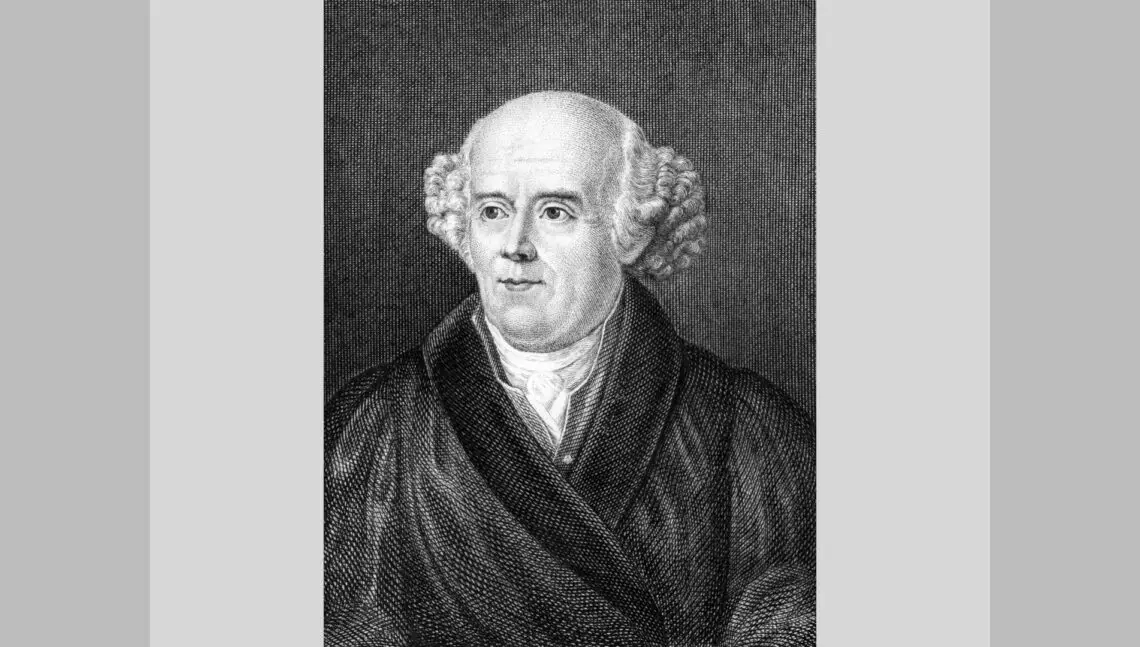

A Search for a Rapid, Gentle and Permanent Cure
I was originally taught the American tradition of Classical Homeopathy and was familiar with the writing of luminaries like James Kent, T.F. Allen, H.C. Allen, J.H. Allen, S. Close, C.M. Boger et al. I had heard of the Founder, Samuel Hahnemann, and the Organon but mostly from quotes from sources like the above practitioners. For the most part, I used the single dose wait and watch method as was elucidated by great masters of the past. The first time I read the Organon it was the Boericke 6th Edition. I immediately resonated with the statements about likes cure likes, the single remedy, the minimal dose and the potentized medicine. The passages on the vital force were inspiring and immediately useful for clinical observation. Nevertheless, much of the text was too deep for limited understanding and the posology sections were very hard for me to truly understand.
At that time, I followed the Kentian theory that the size of the dose and delivery system by which the medicine was given made no difference to the action of the remedy. I normally administered a random number of dry pills sublingually, and if there was any improvement whatsoever, I did not repeat the remedy until there was a clear relapse of symptoms. In the Organon I was reading Hahnemann spoke of the use of the mysterious 50 millesimal potencies, the medicinal solution in divided doses and repeating the remedy to speed the cure, when necessary. This was all new to me and most of the material just flew right over my head. I decided to put the Organon aside for the time being and continued to practice in the manner with which I was most familiar.
The next time I took up the Organon, I came to understand that there were six editions that spanned the years 1810 to 1842-3. Each of these serial editions built on the preceding publications as Hahnemann developed his new healing art over a period of 33 years. When I reread the Organon I began to see that these paragraphs were presenting a sophisticated system that I did not really understand. How come I was never taught about these strange methods I was reviewing? Why were we giving all our doses in random numbers of dry pills when Hahnemann wrote passage after passage on the importance of the delivery system, the size of the dose, and subtle adjustments of the potency factor by succussions? Kent viewed remedial powers as a “simple substance” that had quality but no quantity, so the size of the dose did not matter. Hahnemann, however, viewed remedial powers as quantum energies in which both the potency (degrees of dilution and succussions) and the amounts (number of pills, drops or teaspoons) were all important. Such issues troubled me day and night. Nevertheless, I could not find one single homeopath that knew of these methods let alone practiced them.
Around this time I decided it was time to carry my education into the field and I left on a trip around the world. I knew that there were a number of experienced homeopaths in India and I wanted to see firsthand how they practiced in Third World conditions. While in India I decided to read the Organon for a third time. This time I came across a copy of The Organon of Medicine 5th & 6th Editions, which is based on Dudgeon’s translation of the 5th edition and Boericke’s translation of the 6th edition. After comparing the passages of the 5th and 6th editions I finally got a grasp of the differences between the administration of the centesimal and the 50 millesimal potencies. This work also possesses some important aphorisms taken from the 1st, 2nd, 3rd and 4th editions of the Organon. I was simply flabbergasted by my lack of understanding of the evolution of Homeopathy and a “fever-like state” came over me where I could not eat, sleep or wake without thinking about the subject.
I came to realize that the Organon is not written in an A to Z fashion like a modern textbook. It is the last of the medical classics and the 6th Organon is written in the form of 291 aphorisms. Each aphorism builds on the understanding of the previous maxims as Hahnemann develops the cardinal themes. The key points are introduced in a specific order and then reintroduced on a deeper level as the themes unfold. For this reason, one needs to contemplate the meaning of each aphorism carefully before proceeding to the next passage. It became obvious to me that the Organon was not a user friendly manual that one read once and then put it away. One has to study the maxims and then put them into practice stage by stage to gather experience in the methods. It is in the clinic that the Organon comes to life when one applies the principles and praxis carefully. I knew I had to try but I did not know where to start.
In time I discovered that the 6th Organon was not published in Hahnemann’s lifetime and only appeared in public in 1921 in German and English. This is the reason why there were no references to the 6th Organon methods and the LM potency in the writings of Hering, Kent and other 19th century homeopaths. Nevertheless I still wondered why contemporary homeopaths showed so little interest in any of these “new methods”. I decided that I should study the posology and case management methods of the 5th and 6th editions of the Organon side by side. To my greater surprise I found that the way I was taught to practice was not in the 5th Organon either! I finally came to comprehend that the Homeopathy I was using was more similar to the 3rd and 4th Organon than the 5th and 6th editions. Why were we practicing the Homeopathy of the 1820s when Hahnemann lived through the 1830s and into the 1840s and published two more editions of the Organon? Why were the techniques that he used in his last ten years virtually unknown? I decided it was time for me to get to the root of the matter so I began a new series of clinical experiments.
My plan was to begin with a clinical trial using the methods of the 4th, 5th and 6th editions of the Organon and compare the results over a longer period of time. This meant I would evaluate the results of using the centesimal potency in a dry dose as suggested in the first edition of The Chronic Diseases (1828) and the 4th Organon (1829) with the results using the medicinal solution and split-doses of the 5th Organon (1833) and the preface of the Chronic Diseases (1837). This trial was conducted during a period of over one year when I was treating hundreds of patients in free clinics During this process I began to investigate the mysterious 50 millesimal potencies of the 6th Organon (c. 1842-43) and compare their actions with the C potencies.
The Case Management Procedures of the 4th Organon
In the 4th Organon of the Healing Art the Founder gave careful rules regarding the repetition of the remedy and perfected what may be called “the single dose wait and watch method”. This approach is clearly explained in aphorisms 242, 243, 244 and 245. By this time, Hahnemann moved away from the use of the drop dose of the pharmaceutical liquid and taught that the size of the dose should be kept as small as possible yet still large enough to be effective. For this purpose he suggested that one drop of pharmaceutical liquid be placed on a great number of tiny poppy-seed size pellets. Then the patient could be given 1 or 2 of these tiny pellets dry. The Founder begins his discourse in aphorism 242 by explaining that the remedy should not be repeated until the action of the previous dose had ceased.
“So long, then, as the progressive amendment resulting from the dose continues, it must at least be admitted that, in this case, the action of the remedy has not yet ceased, and consequently no other medicine should be prescribed.”
The Homeopathic Medical Doctrine or The Organon of the Healing Art; S. Hahnemann (Translation of the 4th Organon by Charles H. Devriant, 1833), Aphorism 242.
In this passage Hahnemann clearly explains that as long as there is a progressive improvement one must assume that the duration of the remedy still continues. As long as the patient is getting better in any way the repetition of any medicine whatsoever is forbidden. Hahnemann continues by explaining that the improvement produced by a well-selected remedy may continue for an intermediate period after the duration of the remedy ceases. He notes that the symptoms of the diseases that have been truly cured will not return, and an increase in health will be observable for some time even without additional medicine. At some point, however, all this improvement will come to a standstill and then there may be a relapse of the symptoms. This is a clear sign that the remedy duration has ceased and the time has come to repeat the remedy.
The Middle Path
During Hahnemann’s time, as today, there was great disagreement in the homeopathic world between the “conservatives” who used the single dose, wait and watch method exclusively and the “liberals” that tended to repeat remedies by preconceived schedules on most patients. The first group will not repeat the remedy until they are sure that the duration of the previous dose has completely ceased and the second repeat the remedy without considering the action of any particular dose whatsoever. Although these two groups are practicing in opposite modes they both claim success, and to be truthful certain difficulties are apparent with both techniques. Those using the single dose wait and watch method often proceed so slowly that the patient becomes disappointed and leaves, while those using mechanical repetition move so fast they produce aggravations and accessory symptoms that drive people away. Hahnemann was well aware of the debate being carried on around him and in secret he was working to overcome the problems associated with both methods.
The Chronic Diseases (1828) and the 4th Organon (1829) present Hahnemann’s final views on the single unit dose and the wait and watch method. The only exceptions to the single dose wait and watch method was presented in The Chronic Diseases where Hahnemann suggests administering the remedy in divided doses in aqueous solution over a three day period, rather than the single dose of globules.
“In cases where the physician is certain as to the homeopathic specific to be used, the first attenuated doses may also be dissolved in about 4 oz. of water by stirring it, and one third may be drunk at once, and the second and third portions on the following days; but it should each time be again stirred so as to increase the potency and thus to change it. Thereby the remedy seems to take a deeper hold on the organism and hasten the restoration in patients who are vigorous and not too sensitive.”
The Chronic Diseases Their Peculiar Nature and Their Homeopathic Cure; S. Hahnemann (Theoretical Part), Psora, footnote, page 217.
In this method one or two pellets of the remedy are placed in four ounces of water and stirred well to slightly raise the potency just prior to administration. This slight change of the potency level alters the remedy so that the organism never receives the exact same dose twice in succession. In this passage Hahnemann is already pointing toward a future where the single dose and split doses will be united in a grander vision of a unified posology strategy.
On the Repetition of the Remedy and the 5th Organon
In the second edition of Boenninghausen’s A Systematic Alphabetic Repertory of Homeopathic Remedies, Part First, Embracing the Antipsoric, Antisyphilitic, and Antisycotic Remedies (1833), Hahnemann wrote an introduction for this work entitled On the Repetition of the Homeopathic Remedy. After reviewing the pros and cons of various methods of posology, the Founder suggests for the first time that the dose may be repeated before the cessation of the duration of a remedy if it was done in the proper manner. For this purpose he suggested the best delivery system was the olfaction of the remedy rather than the dry dose.
The German Casebook D38, which covers 1833 to 1835, shows that between November 1833 and March 1834 Hahnemann used olfaction almost exclusively. For example, on December 23rd, 1833 Hahnemann gave Charlotte Reupsch (D38, p. 14) “14§ Graph R.”, which means the patient was given an olfaction of Graphites and 14 placebos. It recorded in the casebook that the patient returned to see Hahnemann 14 days later on January 7th, 1834. It is estimated that around 80% of the prescriptions in D38 were delivered through the respiratory route. For this reason, the 5th Organon (1833) contains his most detailed explanation of the inhalation of homeopathic remedies.
Following the publication of On the Repetition of the Homeopathic Remedy, Hahnemann introduced new posology and case management procedures in aphorisms 245, 246 and 247 of the 5th Organon (1833). He begins his discourse on case management with aphorism 245, which clarifies the proper view of the single dose and when it is applicable in treatment.
“Every perceptibly progressive and strikingly increasing amelioration in a transient (acute) or persistent (chronic) disease, is a condition which, as long as it lasts, completely precludes every repetition of the administration of any medicine whatsoever, because all the good the medicine taken continues to effect is now hastening toward its completion. Every new dose of any medicine whatsoever, even of the one last administered, that has hitherto shown itself to be salutary would in this case disturb the work of amelioration.”
Organon of Medicine, 5th & 6th Edition; S. Hahnemann (Dudgeon & Boericke Translation), 5th Organon, Aphorism 245.
Whenever there is a noticeably vigorous and ever-increasing amelioration this is a sign that the dose should not be repeated as long as this extraordinary state lasts. This is because the remedy is speeding toward cure at the fastest possible rate and any untimely dose runs the risk of causing aggravations, accessory symptoms and a relapse of the symptoms. This statement is reminiscent of the method of the 4th Organon but it is qualified by the terms “perceptibly progressive and strikingly increasing improvement”.
Perceptibly progressive means that the action of the remedy is visibly making progress. Strikingly increasing amelioration means that this positive action is building day by day and week by week. This is the best case scenario and one that should be allowed to continue without any interference whatsoever. Unfortunately, such a dramatic response is not witnessed in a great number of cases. In most cases one only witnesses a slow to moderate improvement, which by the rules of the 4th Organon, still precludes the repetition of the remedy until there is a clear standstill or a relapse of symptoms. To address this situation, Hahnemann made the following suggestions in aphorism 246.
“On the other hand, the slowly progressive amelioration consequent on a very minute dose, whose selection has been accurately homeopathic, when it has met with no hindrance to the duration of its action, sometimes accomplishes all the good the remedy in question is capable from its nature of performing in a given case, in periods of forty, fifty or a hundred days. This is, however, but rarely the case; and besides, it must be a matter of great importance to the physician as well as to the patient that were it possible, this period should be diminished to one-half, one-quarter, and even still less, so that a much more rapid cure might be obtained. And this may be very happily affected, as recent and oft-repeated observations have shown, under three conditions: firstly, if the medicine selected with the utmost care was perfectly homeopathic; secondly, if it was given in the minutest dose, so as to produce the least possible excitation of the vital force, and yet sufficient to effect the necessary change in it; thirdly, if this minutest yet powerful dose of the best selected medicine be repeated at suitable intervals, which experience shall have pronounced to be the best adapted for accelerating the cure to the utmost extent, yet without the vital force, which it is sought to influence to the production of a similar medicinal disease, being able to feel itself excited and roused to adverse reactions.”
Organon of Medicine, 5th & 6th Edition; S. Hahnemann (Dudgeon & Boericke Translation), 5th Organon, Aphorism 246.
A progressive and strikingly increasing amelioration is a wonderful occurrence but a great many cases respond only with a slow progressive advance. Under these conditions it may take 40, 50 to 100 days to see any significant improvement. These slow moving cases frustrated Hahnemann, because by the rules of the 4th Organon he could not repeat the remedy until there was a standstill of improvement or a relapse of symptoms. Samuel was not satisfied with waiting and watching while the patient was barely improving, so he performed new experiments in an effort to accelerate the time of recovery. In aphorism 246 Hahnemann stated that his new management strategy could speed the cure of slowly progressing cases to one half, one quarter or less the time possible, with the methods of the 4th Organon. This is because the Founder’s new protocol teaches the practitioner when it is appropriate to wait and watch and when it is better to act and observe the action of timely repetition.
In the footnote to aphorism 246 Hahnemann spoke of the “middle path” that forms a balance between the mandatory single dose and the routine repetition of remedies. Here the Founder explains the information one must take into account to assess suitable intervals for repetition and offers various options.
“I perceived that, in order to discover this true middle path, we must be guided as well by the nature of the different medicinal substances as also by the corporeal constitution of the patient and the magnitude of his disease, so that – to give an example from the use of Sulphur in chronic (psoric) disease – the smallest dose of it (tinct. sulph X [30C [DL]]) can seldom be repeated with advantage, even in robust patients and in fully developed psora, oftener than every seven days, a period of time which must be proportionally lengthened when we have to treat weaker and more excitable patients of this kind; in such cases we would do well to give such a dose only every nine, twelve, or fourteen days, and continue to repeat the medicine until it ceases to be of service.”
Organon of Medicine, 5th & 6th Edition; S. Hahnemann (Dudgeon & Boericke Translation), 5th Organon, footnote, Aphorism 246.
In this footnote Hahnemann points out the reason for the difficulty of repeating the dry dose until the cessation of the duration of the remedy. Hahnemann wrote that “a number of the smallest doses given for the same object in quick succession accumulate in the organism into a kind of excessively large dose, with (a few rare cases excepted) similar bad results”. Too many dry doses given before the relapse of symptoms accumulate in the vital force until they act as one excessively large dose producing all the difficulties associated with over medication. Knowing this was the situation Hahnemann was searching for a better method of administering his remedies. This was the primary reason why he began to use olfaction and the medical solution in divided doses rather than the dry pellets.
Hahnemann’s new case management strategy offers insights into when to allow the single dose to act alone and when to repeat the remedy at suitable intervals to speed the cure. In order to assess the periods for appropriate repetition the homeopath must understand three essential factors. The first is the nature of the medicinal substance, which includes the size of the dose, the selection of the delivery system and the choice of the potency. The second is the condition of the patient’s constitution including its predispositions, sensitivity and stores of vitality. The third is the nature and stage of the disease state as well as its magnitude. Understanding these three vital points help guide the homeopath in the selection of the remedy, dose and potency as well as case management. In aphorism 247 Hahnemann offers examples of the intervals used when repeating remedies in acute and chronic diseases as well as in acute-like flare-up of chronic conditions.
“Under these conditions, the smallest dose of the best selected homeopathic medicine may be repeated with the best, often with incredible results, at intervals of fourteen, twelve, ten, eight, seven days, and where rapidity is requisite, in chronic disease resembling cases of acute disease, at still shorter intervals, but in acute diseases of very much shorter periods – every twenty-four, twelve, eight, four hours, in the very acutest every hour, up to as often as every five minutes – in every case in proportion to the more or less rapid course of the diseases and of the action of the medicine employed, as is more distinctly explained in the last note.”
Organon of Medicine, 5th & 6th Edition; S. Hahnemann (Dudgeon & Boericke Translation), 5th Organon, Aphorism 247.
The directions found in the footnote to aphorism 246 and aphorism 247 is based predominantly on the 30C. These recommendations must be adjusted to suit the deeper actions of higher potencies like the 200C, 1M, 10M, etc. If the 30C can be repeated every 7 to 14 days, then all things being equal, the 200C might be repeated every 14 to 30 days or more. The 1M might only need repetition every 30 days or more. The 10M may act for months. In some cases these periods may be shorter or longer depending on the symptoms and circumstances. Sometimes a remedy might need to be repeated more frequently, especially when chronic disease states take on a more acute-like pattern. These suggestions are only guidelines that must be adjusted according to the patient’s individual reaction to the remedy.
The single dry dose is considered sacrosanct by many modern homeopaths. Nevertheless, Hahnemann found this method too limited, in difficult to cure acute and chronic cases. In the 5th Organon he suggests that remedies may be repeated at definite intervals, if necessary, and makes clear his preference for olfaction and liquid solutions. In the final German casebook D38 (1833-1835), Hahnemann only occasionally uses the oral dry dose and preferred to give remedies in olfaction. At the same time he was experimenting with various liquid solutions. At first he placed 1 pill in ½ spoonful of water and gave the entire amount to the patient. Later in the casebook he put 1 or more pills in a glass of water and gave various liquid portions such as ¼ and ½ a glass. The earliest recovered Paris casebook, DF-2, shows that by 1835 and 1836 Hahnemann was using the medicinal solution in a bottle with the addition of a dilution glass from which he was giving divided doses in spoonfuls. In 1837 Hahnemann made public his view that the well preserved medicinal solution used in split doses was the most effective delivery system. With this method in mind the Founder gave new instructions on how to treat acute, half-acute and chronic diseases. Vide the 1837 edition of The Chronic Diseases.
“Experience has shown me, as it has no doubt also shown to most of my followers, that it is most useful in diseases of any magnitude (not excepting even the most acute, and still more so in the half-acute, in the tedious and most tedious) to give to the patient the powerful homeopathic pellet or pellets only in solution, and this solution in divided doses.”
The Chronic Diseases Their Peculiar Nature and Their Homeopathic Cure; S. Hahnemann (Theoretical Part), Preface, Concerning the Technical Part of Homeopathy, page 262.
In the same article Hahnemann wrote that the dry dose laid on the tongue was the “the weakest dose with the shortest period of duration in its effects”. He found that dry pellets were too static of a delivery system because there are few ways to adjust the dose other than give more or less pills. It was his experience that a medicinal solution acted more deeply yet more gently on the organism. Furthermore, he noted that a remedy bottle succussed just prior to ingestion slightly raises the degree of potency so that the vital force never receives the exact same dose twice in succession. This subtle change makes it possible for the homeopath to repeat a remedy as needed to speed the cure in slower moving cases without waiting for a relapse of symptoms. Some practitioners state that the medicinal solution was developed only for the 50 millesimal potencies. This, however, is not the case as the medicinal solution was originally developed for the C potencies during the 1830s.
Aphorism 246 of the 6th Organon
Aphorism 246 of the 6th Organon is based on a synthesis of the ideas introduced in the 5th Organon in §245 on the single dose, and §246 on the repetition of the remedy, along with new conditions needed to speed the cure. This rendition is based on the use of the 50 millesimal potencies and the medicinal solution in split-doses taken from a dilution glass. The first topic taken up is when a single dose of a remedy produces an obviously progressive and strikingly increasing amelioration of the patient’s symptoms. This discussion is similar to §245 of the 5th edition. The second part of the aphorism deals with those cases in which a single dose can only produce a slow, continuous improvement where the remedy takes 40, 60 or 100 days to produce a substantial improvement. This aphorism is similar to §246 in the 5th edition but the techniques are modified to suit the 50 millesimal potencies. Vide Organon.
“During treatment, every noticeably progressing and conspicuously increasing improvement is a state which, as long as it persists, generally excludes any repetition of the medicine being used because all the good being produced by the medicine is still hastening towards completion. This is not seldom the case in acute diseases. On the other hand, with somewhat chronic diseases, there are, to be sure, some cases that have slow, continuous improvement based on one dose of an aptly selected homeopathic medicine (taking 40, 50, 60, 100 days to complete the cure, depending on the nature of the medicine) but this is very seldom the case. Also, it must be a matter of great importance, to the physician as well as to the patient, to foreshorten this period, if possible, by half, three-quarters, indeed even more, in order that a far more rapid cure might be attained. The most recent and frequently repeated experiences have taught me that such rapid cures can be favorably carried out under the following conditions:
1. Select with all circumspection, the aptly homeopathic medicine.
2. Use a highly potentized [fifty-millesimal] dose, dissolved in water.
3. Administer a properly small dose of this to the patient.
4. Give a dose of the solution at intervals that experience has shown to be the most distinctly appropriate for the best possible acceleration of the treatment.
5. Prior to each administration of a dose of the solution, alter the degree of potency of the dose. It is very important that the degree of potency of each dose deviate somewhat from the previous and subsequent ones. This is so that the life principle, whose tunement is to be altered to that of the similar medicinal disease, may never feel itself agitated to adverse counter-actions and enraged, as happens when repeated, unmodified doses are given, especially when such doses are rapidly repeated one after another.”
Organon of the Medical Art; S. Hahnemann (O’Reilly 6th Edition), Aphorism 246.
Many individuals read the above paragraph but fail to note that Hahnemann makes a clear differentiation between two fundamentally different types of remedy reactions. Hahnemann clearly stated that anytime “during treatment” there is a noticeably progressive and strikingly increasing amelioration the remedy should not be given as long as this state lasts. This means that whenever a single dose or a series of doses creates an extraordinary increasing amelioration the repetition should cease as long as this state lasts. The repetition of the remedy at this time is counterproductive because it only slows down the cure or produces medicinal symptoms. Excessive repetition runs the risk of producing adverse secondary actions of the vital force which are counterproductive. This is true with both the C and LM potency in medicinal solution even when given in the smallest liquid doses.
Hahnemann’s close colleague, Dr. Croserio, noted in his letter to Boenninghausen (Hahnemann’s Doses of Medicine, The Lesser Writings, Boenninghausen) that Hahnemann “frequently” gave single doses by olfaction followed by placebo for at least one week. This statement finds ample confirmation in the Paris casebooks. For example, a patient named Mr. Fontaine (DF-12, p. 546-548) was suffering from a kidney disease that caused him to take a long time to void urine. On July 31st, 1841 Hahnemann prescribed a light olfaction of Pulsatilla and a placebo made in a 7½ tablespoon aqueous solution. The patient returned to see the doctor 13 days later. On August 13th Melanie noted in the follow-up appointment that the “Pulsatilla Resp. did him great good”.
Hahnemann sometimes gave single doses of the oral medicinal solution followed by placebos. In the case of Adele Sanson (DF-11, p. 155, January 25th, 1841) Hahnemann prescribed number 1, Phosphorus stirred into a glass with 1 coffeespoon to be given to the patient “one time” and prescription number 2 was 2 placebos. The patient returned 6 days later. In my personal practice I have seen a single dose of the 50 millesimal potencies cure cases, even those of very chronic duration. Many times, I find that all that is needed is an infrequent repetition of the LM potency to complete a cure. I use this method with those who demonstrate a strikingly increasing amelioration on a single dose or short series of doses, which makes more rapid repetitions completely unnecessary and in this case counter indicated.
In the second section of aphorism 246 the Founder states there are many cases where a single dose only causes a “slow, continuous improvement” that may take 50, 60, or 100 days to produce a cure but this is rarely the case. It is much more common for the slowly improving patient to experience a relapse of symptoms that calls for the repetition of the remedy much earlier. Days, weeks and months may pass while the individual only experiences the slightest amelioration. It is very important to the healing artist as well as to the patient that this period be reduced by half, three-quarters or more so that much more rapid cure is attained. There is a great difference between a noticeably progressive, strikingly increasing amelioration where the patient feels better and better and slow improvement where the patient barely notices any changes. Each of these scenarios must be handled in a completely different manner.
When Necessary!
All of the statements about repeating the dose to speed the cure only pertain to protracted cases in which a single dose can only cause, at best, a slowly progressive amelioration. This circumstance conditions all the following statements by Hahnemann about the use of daily and alternate day doses in the footnote to aphorism 246 and aphorism 248. If the patient will do very well on a single dose, or infrequent repetition, suggestions about rapid repetitions do not apply. There are homeopaths who mechanically administer the LM potency daily for weeks and months to every patient. They have not yet understood the fine print in the footnote to aphorism 246. In this footnote the Founder explains why he made changes in the 6th Organon and when the daily dose is applicable.
“What I said in a long footnote to this paragraph in the fifth edition of The Organon of the Medical Art was all that my experience allowed me to say at the time. It was written with the purpose of preventing these adverse reactions of the life principle. However, during the last four to five years, all such difficulties have been fully lifted through the modifications I have made since then, resulting in my new, perfected procedure [for fifty-millesimal potency medicines]. The same well-chosen medicine can now be given daily, even for months when necessary. In the treatment of chronic diseases, after the lowest degree of potency has been used up (in one or two weeks) one proceeds in the same way to higher degrees of potency (for in the new [fifty-millesimal] manner of dynamization, use begins with the lowest degrees, as is taught in the following paragraphs).”
Organon of the Medical Art; S. Hahnemann (O’Reilly 6th Edition), footnote, Aphorism 246.
In the footnote to aphorism 246 Hahnemann suggests that a perfect simillimum (not a poorly chosen remedy) may be given daily when necessary. The daily repetition of the LM potency is only necessary in the slower moving cases and for hyposensitive patients who do not respond to treatment any other way. Repetition of the LM potency daily when it is not necessary causes aggravations, unproductive accessory symptoms, and adverse counter-actions of the vital force. Some patients may only need to take the remedy every 2, 3, 4, 5 or 6 days. Others may only need the medicine every 7 to 14 days or at longer intervals. Unneeded repetition may make the patient’s vital force non-reactive to the remedy or ultra hypersensitive to the medicine due to overexposure. This can make it difficult to use even the correct remedy again on the patient. For all these reasons it is very important to avoid overmedication caused by excessive repetition of the medicine when it is not needed.
In my review of the microfiches of Hahnemann’s Paris casebooks I found that in most cases where the Founder gave the daily or alternative day dose he often stopped his medicines and gave placebos for periods like 1, 2, even 3 or more weeks, etc. A perfect example of Hahnemann’s final methods can be found in the case of Robert Everest taken from the Paris casebooks (DF-14, p. 257). This casebook contains records from October 1841 to Hahnemann’s passing on July 2nd, 1843. This case history includes single doses by olfaction, a short series of doses of the medical solutions and a good amount of placebos. In the Everest case, Hahnemann administered 8 remedies between October 5th, 1842 and May 2nd 1843 in 17 remedial prescriptions and 16 prescriptions containing placebos. The dates of the remedy prescriptions and placebos are listed below for easy reference
October 5th, 1842; Sulphur 0/1 in 7 tablespoons medicinal solution.
October 12th; Sulphur 0/2 in 7 tablespoons medicinal solution.
October 14th; Placebo.
October 26th, Sulphur 0/3 in 7 tablespoons medicinal solution.
November 4th; Placebo.
December 3rd; Sulphur 0/4 in 7 tablespoons medicinal solution.
December 14th; Sulphur 0/5 in 7 tablespoons medicinal solution.
December 21st; Placebo.
December 28th; Cannabis 30C in 7 tablespoons medicinal solution.
January 4th, 1843; Placebo.
January 7th; Placebo.
January 11th; Single dose olfaction of Thuja and placebos.
January 14th; Placebos.
January 18th; Single dose olfaction of Cannabis and placebos.
January 21st; Single dose olfaction of Mercury and four placebos.
January 25th; Thuja 0/1 in 7 tablespoons medicinal solution.
February 3rd; Thuja 0/2 in 7 tablespoons medicinal solution.
February 10th; Placebo.
February 17th; Placebo.
February 24th; Placebo.
February 25th; Mercury Vivus 0/1 in 7 tablespoons medicinal solution.
March 7th; Placebo.
March 15th; Ambra Grisea 0/1 in 7 tablespoons medicinal solution.
March 20th; Placebo.
March 25th; Cinnabaris 0/21 in a 7 tablespoons medicinal solution.
March 31st; Placebo.
April 3rd; Placebo cont.
April 8th, Sulphur 0/6 in 7 tablespoons medicinal solution.
April 21st, Aurum 30C in 7 tablespoons medicinal solution.
April 24th, Placebo.
April 28th; Nux Vomica 0/2 in 7 tablespoons medicinal solution.
May 2nd; Nux Vomica 0/3 in 7 tablespoons medicinal solution, for the West Indies.
The Everest case is a perfect example of how Hahnemann used single doses as well as a series of liquid doses in an “on again – off again” fashion. In many cases he gave almost as much placebo as medicine! This was true with both the C and LM potency in medicinal solution in the 1840s. In this way, the posology method can be tailored to a great variety of patients and their conditions. Hahnemann’s final posology method spans the single dose and infrequent repetition in striking responses and the repetition of remedies at suitable intervals to speed the cure in slow moving cases if necessary. Hahnemann makes it clear in the 6th Organon that as the patient moves toward cure the intervals between the doses should be lengthened and then ceased to see if the cure is complete. The idea that the Founder mechanically gave the 50 millesimal potencies daily for days, weeks, months and years on end is a complete myth!
Some persons try to make the 6th Organon an issue of the LM potencies versus the C potencies. The Paris casebooks from 1840 to 1843 make it very clear that Hahnemann used both the centesimal and 50 millesimal potencies side by side up until his death. The Founder never intended practitioners to learn how to use the 50 millesimal potencies or the medicinal solution from the text of the 6th Organon alone. Hahnemann was grooming Baron von Boenninghausen to carry the banner of the new methods and pass them to the next generation. He was expecting the Baron to fill out the details that were missing in the text of the 6th Organon. For example, Hahnemann never mentioned his extensive use of placebos in the text, but in the letter cases the Founder sent to Boenninghausen, all this was very clear. Unfortunately, Samuel passed away before the process was completed and the 6th Organon was published.
It seems that other than Melanie Hahnemann, only the Baron knew exactly how the LM potency was being made and administered to patients. Melanie requested Boenninghausen not to speak about the new methods until she could publish the text so he put the project aside. Regrettably, the 6th Organon was not published during the Baron’s lifetime and the essential moment was lost. It appears that Melanie did not train anyone in the method so when she passed away the living lineage of practitioners that had experience with the 50 millesimal potencies was broken.
The 7th Organon
Hahnemann used his most advanced methods with the C and 50 millesimal potencies for around a 3 year period spanning 1840 to 1843. This was the time that he was writing the 6th Organon. I have used these C and LM potencies in the medicinal solution for over 25 years. Although I am not qualified to write a “7th Organon”, I do have many years of experience with bringing Hahnemann’s final methods up to date for practice in our times. With this in mind, I do my best to share with students and colleagues the fruits of my endeavors in the fields of research and clinical practice. First of all, I would like to say that the medicinal powers of the C and LM potency are complementary opposites that greatly expand the therapeutic horizons of Homoeopathy. For this reason, there are cases that do better on the centesimal potencies and cases that do better on the 50 millesimal potencies as well as cases that need both the C and LM potency during the process of cure. If the homeopath can gain experience in the characteristic actions of these two potency systems they will be able to customize their treatments to suit the circumstances in a manner that is just not possible by the older 4th Organon methods alone.
The centesimal potencies are aggressive in their onset, promote rapid aggravation and produce a long curative secondary action. The Kentian system is based on seven major degrees of the potency degrees from 30C to 200C to 1M to 10M to 50M to CM to MM. These very large jumps of potency produce a rapid vertical arc in degrees of power. The aggressive nature of the centesimal potencies is similar to strong exciting causes, accidents, trauma, strong acute diseases, virulent acute miasms, chronic diseases that begin with an intense crisis and progress quickly and acute-like flare-ups of chronic states and miasms. The prolonged aggravations caused by using the higher potencies at the start of treatment can be counterproductive in cases of organic pathology and lack of vitality.
The 50 millesimal potencies are gentle in their onset, reach aggravation slowly and produce a deep enduring curative action in stages. This scale utilizes 30 microtonal degrees of potency that reach their full remedial power in gradually increasing increments. The arc of potency is similar to a gentle ascending plane that moves upward in a gradual manner. The ever-increasing nature of this scale is similar to conditions produced by prolonged maintaining causes, long-term degenerative diseases, old one-sided states, pathological conditions and protracted chronic miasms. The LM potency tends to produce aggravations at the end of the treatment when the pathology is healed and the vitality is restored. This quality can be very useful in cases where organic pathology and weakened vitality makes the centesimal potencies difficult to use without complications. The Paris casebooks show that Hahnemann tended to use the C potency for acute conditions and crisis and the LM potency for chronic diseases and miasms although not exclusively.
The methods of the 4th, 5th and 6th Organon represent the evolution of a similar technique rather than a contradictory change in methods as they are sometimes portrayed. If the practitioner has not really understood the wait and watch method of the 4th level of Homoeopathy they do not really understand how to judge the action of single doses over time. Nevertheless, those that have not evolved to the 5th and 6th level of Homeopathy imagine that the single dose is suitable for all cases. In aphorism 245 of the 5th and 246 of the 6th Organon Hahnemann makes it clear that the hallmark of the single and infrequent dose cures are an observably progressive and strikingly increasing amelioration. Many do not understand that cases that respond to single or infrequent doses with a slow improvement are perfect candidates for the repetition of the remedy to speed the cure. These more rapid intervals must be selected in accordance with the nature of the remedy, the size of the dose and the degree of the potency; the patient’s constitutional sensitivity and vitality, and the nature and magnitude of the disease state. If these factors are understood the time of cure of these slow moving cases can be reduced tremendously.
On the other hand, there are those that imagine that using Hahnemann’s “new method” means that one should repeat the remedy at rapid intervals all of the time for long periods. They have a tendency to administer too many doses too quickly, which produces aggravations and accessory symptoms of the remedy. Some of these individuals make it a standard practice to give the remedy daily for up to a month without reassessing the action of the remedy on the patient. They tell others that this is how Hahnemann practiced in Paris but nothing could be further from the truth. They do not realize that Samuel still used the single doses (usually by olfaction) when using the C or LM potency and often gave a short series of medicinal doses followed by placebos while he waited and watched. They do not understand that the daily dose should only be used “when necessary” and only as long as it is truly required. For this reason, they cause medicinal symptoms that have given split-doses of the medicinal solution of the C and LM potency a bad reputation in certain circles. All of these problems are caused by using a mechanistic approach that more often than not leads to overmedication in the long run.
The six editions of the Organon embody the evolution of a method over a 33 year period in which Hahnemann sought to perfect the homeopathic healing art. The last 10 years of Samuel’s life (1833-1843) represent an epoch in which the Founder introduced his most advanced techniques. In the final Middle Path approach the dichotomy between the single dose wait and watch method and the repetition of the remedy at specific intervals is removed. What appears to some as a conflict of interests is replaced with a system of flexible response that offers maximum individualization according to the time and circumstances. Hahnemann stated that by using these techniques he sped the cure of protracted cases by ½, ¾ or even less the time it took with the methods of the 1820s. This is especially true for those who have mastered the complementary opposite actions of the C and LM potency. Shouldn’t this extraordinary statement by the Founder be tested by a new generation? Should we just continue to use the same old methods year after year without testing Hahnemann’s hypothesis in the clinic? What is needed to carry out this experiment is a “beginners mind tempered with the wisdom of experience”.
During the period of the 5th and 6th Organon, Hahnemann introduced his most sophisticated delivery system for dynamic potencies, i.e. the medicinal solution and the methods of adjusting the dose. Nevertheless, we often hear that the size of the dose and the nature of the delivery system make “no difference” in Homeopathy. Should we just continue to mechanically repeat the same old concepts rather than study the final experiments of the Founder for ourselves? Shouldn’t we test the methods of the medicinal solution with both the C and LM potencies as Hahnemann did in his final years? Is clinging to past methods really the way forward to the medicine of the future? I think not! I call on all those with an open mind to carefully read the aphorisms of the 5th and 6th Organon and test the Founder’s final methods in a clinical trial as I did all those years ago. Since that time, I have guided hundreds of people through a similar process and they have found that the Founder’s observations are most certainly true. I have seen that those who take the time to truly investigate Hahnemann’s advanced methods never regret the experience.
Similia Minimus
Sincerely, David Little
David Little has studied Hahnemann’s Paris casebooks intensively and is considered a leading authority on the way in which the Founder used the C and LM potencies in his final years. He is currently at work on The Homoeopathic Compendium, which is a six volume 4000 page textbook spanning the history, theory and practice of the homeopathic healing art.


Thanks Dr David Little for such a valuable article !! There are several misconceptions among homeopaths for the dosage schedule . Most of the Indian homeopaths use wait & watch method & no doubt they get the good results but at the same time those using the plus method are confident of better results than wait & watch . Thus a fair trial should be done in OPDs’ of different homeopathic medical colleges eventually it raises confidence among students regarding plus method.
I have read your writings on Organon so many times, yet I find every new piece and every reread revealing. Great work! Kudos.
Manish Bhatia
i think there is no need to read any other books to understand Organon, sixth edition is sufficient enough to know the depth of Organon.
As usual for David Little, it is very well written and highly informative article by him.