
During my time in homeopathy school, while trying my best to remember Latin names of different remedies, our class was introduced to the use of mineral salts. Grounded in the indications learned through provings and clinical experience, we saw how a mineral compound of two elements could be further understood through the synergism of the individual elements. In other words, if a history seemed to fit a common compound such as natrum muriaticum, we’d explore the patient’s history to see if certain nuances fit more closely with natrum phos, natrum carb, natrum sulph, etc. Similarly, if a calcarea carbonica theme was evident throughout the history, and yet other facets of the history pointed to sulphur, phosphorus or silica, then the salts of calcarea (eg., calcarea sulph, calcarea phos, etc.) could be considered. At the time this approach was thought to be stretching the bounds of classical practice, yet our results were improved by ‘fine-tuning’ remedy choices in this manner. Michael Quinn at Hahnemann Labs in California remarked that another consequence was an immediate scramble in the homeopathic pharmacies to keep up with the new demands!
Jan Scholten’s book “Homeopathy and Minerals” is often considered to be the first exploration of these mineral salts, yet these same ideas were debated over a century ago (see: https://hpathy.com/homeopathy-papers/synthetic-remedies-%E2%80%93true-homeopathy-or-heresy/)
In Scholten’s book he outlines themes of well-known elements, and is able to describe some potential dynamics when two elements are combined. For instance, if natrum tendencies include reserve and closed grief, and phosphorus themes include sociability, the dynamic theme might fall along the lines of “To what extent shall I interact with others and to what extent shall I retreat?” My experience has been that Scholten’s themes for each mineral compound are just a starting point, as there are many potential facets of interaction between any two elements. But the attempt to further understand how two elements interact should not result in poorly conceived prescriptions, so how can one learn to accurately recognize these salts?
Many homeopaths have noted a particular language of structure and performance found in the histories of those needing remedies from the mineral kingdom. Order, sequence, logic, goal-setting, and “refined performance” are all representative of what can be found in a “mineral history”. After it’s clear that a client is using mineral “language”, one “side” of the mineral salt (eg., cation or anion) usually reveals itself more easily, and a more subtle presentation of the other element (anion or cation) eventually makes itself known. For example, a client could give a history which includes fears of dark, ghosts, disease, insanity, and others seeing witnessing their lack of competence or confusion, and it sounds very much like calcarea carbonica. Yet as the client continues, they may gradually reveal fears of doing something wrong (or being perceived as doing something wrong), being accused, blamed, persecuted and punished. In this case, one could consider prescribing Calcarea bromatum.
Below are selected examples of basic themes of the more commonly known elements:
Left side of table (eg., cations):
Natrum = reserve, closed, private; holding on to unprocessed hurt or grief; averse to consolation; holding on to relationship vs. broken relationship; desires strong 1:1 relationship or otherwise needs time alone.
Magnesium = averse to conflict including conflict between others, when it occurs in the immediate environment — prompting mediation and peacemaking; forsaken feeling and fear of abandonment; search for identity: ‘I please others but in the process lose myself and a sense of my needs and boundaries’.
Kali = relationship to rules, order, family, community, right and wrong, “black and white” (concrete and somewhat inflexible) beliefs and solutions to life’s challenges.
Calcarea = fear of vulnerability; horrible stories affect profoundly; protection within a structure; fear of being observed or others seeing their confusion.
Right side of table (eg., anions):
Sulphur = desire to be acknowledged and appreciated; tendency to run warm; tendency towards disorder; censorious; theorizing
Phosphorus = fear of thunderstorms, ghosts, darkness; vivid imagination which may also include imaginary fears; lack of boundaries: social, intuitive, clairvoyant; sympathetic, affectionate; bleeding problems; love for animals.
Nitrogen = desire for freedom vs. fear of losing control; fear of narrow places vs. one’s impulses; fear of heights, running late; may like or dislike surprises; themes of crisis, urgency, sudden, emergency, out of control; obstinate (dislike of control by others)
Carbon = issues of self-worth and value; energy and “value” increasing and decreasing; productivity (eg., work, metabolism) with associated expenditure and depletion.”
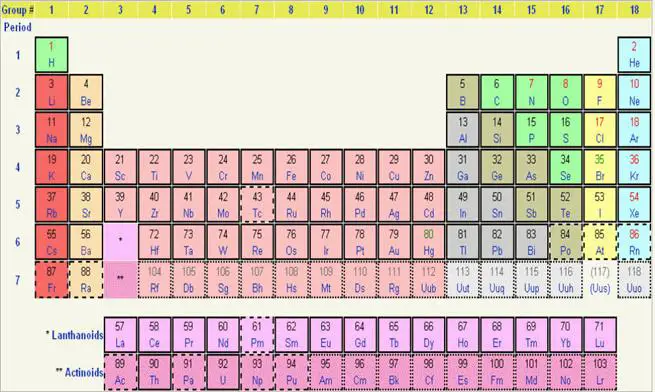
Because our instructors had employed mineral compounds for many years in practice, it wasn’t difficult for us to accept that they were valid and useful. However, Scholten’s ideas took an even bigger step when he described the possibility of themes of life running across and down the periodic table. For example, in the 4th, 5th and 6th horizontal rows of the periodic table–which include copper, silver and gold, respectively–each of these rows or series was described in terms of specific performance themes: “task” in the 4th row (copper series), “creative expression” in the 5th row (silver series), and “heavy responsibility and influence” in the 6th row (gold series). Similarly, the vertical columns from the left towards the middle of the table were progressive states of aspiring to peak performance (peak performance represented by the elements nickel and copper in the 4th, palladium and silver in the 5th, and platinum and gold in the 6th) followed by progressively declining performance represented by remedies towards the right side of the table.
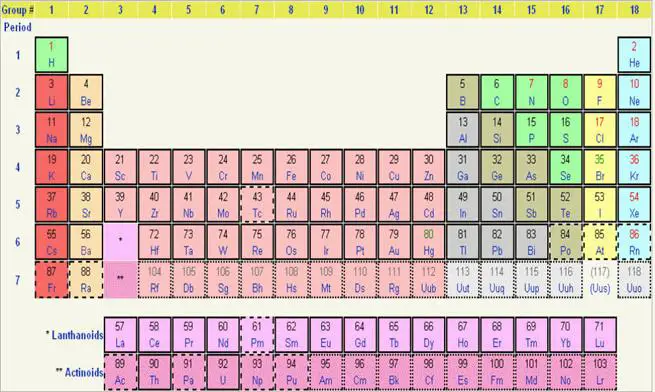
These concepts were outlined in Scholten’s book “Homeopathy and the Elements”, and each element was characterized in a metaphorical sort of way. In spite of the good results I’d had with the use of mineral salts, I wasn’t comfortable implementing Scholten’s newer ideas in practice, as the descriptions were more general and still evolving. But after attending seminars by Lou Klein and Jayesh Shah, and witnessing before and after videos demonstrating clearly positive results with these remedies, I felt confident enough to attempt using these remedies in practice. More recently, other books have been published which further describe these themes, including Sankaran’s “Structure”.
Because the stages of beginning, aspiring, peaking, declining and starting over again are themes experienced throughout our lives, when do these stages become pathological? My experience has been that it’s not the desire for a good performance itself, but rather when there’s some conflict related to a particular stage in life, as for example when a person applies further meaning or significance to his performance. In other words, the performance may be linked with self-worth, security, being noticed or appreciated, avoiding persecution, etc. In such cases high performance standards are no longer freely expressed, but rather they reflect limiting beliefs, eg., ‘In order to feel appreciated, I need to do well in my performance’; ‘In order to feel valued, I need to perform perfectly’; ‘In order to feel nurtured, I need to be recognized for my good performance’.
The presenting physical complaint often “speaks the language” of the greater state of distress: ‘When my headaches increase, they interfere with my ability to work’. If the person doesn’t expand on this, a further question might be, ‘And how does the inability to work affect you?’ ‘Well, I’d love to do my art, and to maybe someday make a living that way, but every time I get a headache I feel like I’m starting over. Then I start feeling worthless, like this dream will never happen for me.’
Once I had recognized a structured, mineral “personality” speaking throughout the history, then the second consideration was whether or not the mineral theme was related to performance. In other words, if the person also says, “I can’t stand disorder because then I can’t think, and if I can’t think then I’m not effective in my work”, then I may be seeing the emergence of a performance theme. If in fact performance is the main emphasis of the person’s distress, then the next step is to understand the theme of the performance. Is the performance a largely task-oriented type of work (copper series)? Does the performance include creative elements—new ideas, reflecting well, shining in the eyes of others (silver series)? Or might the performance be related to heavy responsibility, influence, and power (gold series)?”
Expanding on the above themes, the copper series relates to more mundane tasks, and being competent and responsible in the completion of one’s task. Cuprum feels the delusion they’re “selling green vegetables”. The silver series relates to creative performance, with concern about others’ approval of the performance. “Silver tongue, silver pen, and silver screen” refer to the gift of speech, the gift of writing, and creative expression in general. Finally, the gold series relates to a “gold standard, golden girl, golden boy, good as gold, golden rule”—in other words, perfection, influence and power affecting others’ lives. The person who benefits from a gold series remedy isn’t fully satisfied with others’ positive feedback—they ultimately decide whether their performance has met the gold standard.
It’s also important to consider the physical complaints. A general rule, although certainly not rigid, is ‘lighter problems with lighter elements, heavier problems with heavier elements’. So where we may note a tendency towards musculoskeletal problems in the copper row, we’ll see more neurological complaints in the silver row, and more syphilitic complaints in the gold row.
To summarize up to this point, “mineral histories” tend to be more structured. After recognizing a structured history, I patiently wait to see if the theme of the history is one of performance. If so, then I need to determine the theme of the described performance. I’ve learned (the hard way!) that there’s a temptation to quickly “figure out” what mineral remedy a person might need, but the distinctions between the copper, silver and gold series remedies are subtle and will usually emerge of their own accord without a lot of probing. After determining the series—copper, silver or gold—then comes the next challenge—where does the person perceive their performance in relation to “peak”?
Subtle distinctions exist between personal perceptions of performance, and correspondingly, how those same gradations exist in the progressive columns of remedies in the periodic table. Because many of the remedies in the first two columns are well known, we’ll start by focusing on the remedies in the 3rd through 11th columns in the copper, silver and gold series.
3rd column: Scandium (task row) Yttrium (creative expression) and Lanthanum (gold standard)
The 3rd column represents a shift from behavior largely influenced by external structure and relationships (in the 1st and 2nd columns) to that of self-direction. Understandably, if one’s locus of direction has shifted from external to internal barometers, then judgment is more independent, and one is likely to experience irresolution and confusion. ‘Which way do I go? How do I start? Do I try this, this or this? I can’t rely on external structure to help answer these questions—I have to figure this out for myself. It’s so confusing!’
(Note: These feelings are similar to alumina, which in some periodic charts is located above scandium).
The 4th column: titanium, zirconium, hafnium
In the 4th column, one begins to sense a direction on the mental plane, but it’s not sustained. ‘Okay, I’ve chosen to head in this particular direction. This seems to be a good route for me to go. Yes, in fact, I’ve pretty much decided this is the route I’m going to take. Hmmm . . . it’s a little daunting to have decided on this one direction—maybe it’s wrong? Just to be sure, I’ll check my decision against the other choices to be sure I’ve chosen correctly’.
(Note: The 4th column remedies can be understood through their position between the 3rd and 5th columns.)
The 5th column: vanadium, niobium, tantalum
The 5th column reflects initial progress and attainment of preliminary goals, but there’s a feeling that one needs to be so much more. Because of a lack of confidence, the sense of one’s attainment is that it’s very incomplete and one needs to continue striving. Yet the frustration with this stage is that any further progress never feels stable or steady, and one experiences a sort of “two steps forward, two steps back”. Unfortunately, the never-ending sense of effort is undermined by circumstance, or the person’s own lack of confidence–or both!
Vanadium: Dreams: unsuccessful efforts to: do various things.
The 6th column: chromium, molybdenum, tungsten
In the 6th column, one experiences repeated circumstances of being thrust into circumstances without having complete preparation.’I had no choice but to perform, even though I wasn’t fully trained or experienced’. Naturally, a person is not feeling very confident if they’re feeling incompletely prepared. However, an interesting point of distinction between this column and the previous one is that if challenged, the 5th column person will likely acquiesce and feel “they’re probably right, I can’t do it”, whereas the 6th column says (at least to themselves) “Oh yeah? I’ll show you!”
Tungsten: Audacity; Delusion he is taller; Doubtful; Dreams of banquet; Dreams of battles; Dreams of climbing; Dreams he would be crushed; Dreams: people, of influential persons to whom he occupies position of servant or subordinate; Dreams of threats; Fight, wants to; Haughty, clothing, likes to wear his best; Obstinate, headstrong.
The 7th column: manganum, technetium, rhenium
The 7th column individual is on the brink of exerting his or her own power, but there’s just enough sense of inexperience or incapacity that they rely on what others have said or written, particularly experts in the field. They’ll also turn to peers or even team members in a subordinate position to get ideas about what is best. The 7th column individuals have been characterized as control freaks, but it’s important to note their need to control is the over-compensation of less-than confident individuals to avert potential failure.
Manganum: Anxiety as if something bad is going to happen; Dreams of misfortune; Fear of misfortune; Cautious; Dreams bad luck
The 8th column: ferrum, ruthenium, osmium
The 8th column is the first full exertion of one’s power—’I’ll take on the challenge to test my fiber, to see what I’m capable of. I’ll take on the challenge to see what I can learn’. They’re aware of the potential for failure, but ‘it’s more important to have tried and failed rather than to never have tried at all’.
Ferrum: Disposition to contradict; Quarrelsome; Dictatorial; Disputatious; Dogmatic; Dreams war; Obstinate; Pertinacity; Positiveness
Osmium: Dreams of important events – Continued next page
The 9th column: cobaltum, rhodium, iridium
The individuals in the 9th column have no doubts about their capacity to perform, and are no longer taking on a challenge for the purpose of testing themselves. Rather, they’ll persevere to the end, confident that through the sheer force of their will they’ll eventually arrive at completion of their task.
Cobaltum: Discontented, displeased, dissatisfied with himself
Iridium: Dreams of being at a banquet; Dreams important person; Dreams she is noble; Dreams about palaces; Dreams about processions; Dreams rainbows spanning the sky; Dreams spiritual wedding
The 10th column: niccolum, palladium, and platina
The 10th column marks an arrival at the peak, but that also includes never-ending finishing touches. ‘People don’t appreciate, recognize or acknowledge how amazingly difficult a task it is for me to”polish” every last detail.’ (Note: palladium and platina—delusion not appreciated; palladium—keeps up brightly in company, exhausted afterwards).
Niccolum: Disposition to contradict; Intolerant of contradiction; Contrary; Dreams of falling from high places; Dreams quarrelsome strife; Dreams of bruising himself
Palladium: Ambitious; Contemptuous; Intolerant of contradiction; Delusion criticized; Delusion not appreciated; Dictatorial; Egotism, self-esteem; Flattery, desires; Haughty, wounded, wishes to be flattered; Ideas exaggerated; Longing for the good opinion of others; Obstinate, headstrong, tries to appear amiable; Social position, concerned about; Talk, inclination to talk forcibly, Talk, indisposed to, desire to be silent, taciturn; foreign language which at other times he speaks fluently
Platina: Affectation: words and expressions, in; Ambition: much, ambitious: means, employed- every possible; Boaster, braggart: squanders through ostentation; Casting off people against her will; Contemptuous: hard on subordinates and agreeable or pleasant to superiors or people he has to fear; Delusions, imaginations: appreciated, that she is not; Delusions, imaginations, diminished, everything in room is, while she is tall and elevated; Delusion, imaginations she is disgraced; Delusions, imaginations disgraced: family, she disgraced her; Delusions, imaginations, humility and lowness of others, while he is great. Delusions, imaginations of superiority; Dictatorial, domineering, dogmatic, despotic; Haughty, intelligent, but very; Importance, feels his pompous; Offended easily; Religious affections, general, penance, desires to do, wishes to live in order to mitigate her eternal punishment, in sadness; Religious affections, general, taciturnity, haughtiness, with voluptuousness and cruelty; Social: position, concerned about; Unworthy: life, for, feels; Vanity.
The 11th column: copper, silver, gold
There’s no longer any question of one’s standing, it’s only a matter of maintaining one’s position—’how long can I hold out at the top’? There’s no further doubt: one has established oneself as a leader, as fully competent, and others have recognized that truth. It’s just that the performance standard is so high there’s no room for error, no allowance for slipping.
Cuprum: Compulsive disorders; Conscientious about trifles; Disposition to contradict; Delusion he is a general, a great person, an officer; Dictatorial; Fear failure; Fear falling; Monomania; Prostration of mind from over-study or night-watching; Seriousness; Quarrelsome.
Argentum: Conscientious about trifles; Handle things anymore, cannot, overwhelmed by stress, when events are happening fast; Ideas abundant, clearness of mind; Loquacity; Seriousness, earnestness; Starting, startled as from electric shock.
Aurum: Delusion neglected his duty; Dreams falling from high places; Egotism; Fear to neglect her duty; Haughty; Strong responsibility to others.
The 12th column: zincum, cadmium, mercury
The hold at the top now faces a threat: there’s a crack in the foundation, and one must work overtime to avoid further breakdown. The restlessness of zinc and the compulsiveness of mercury demonstrate the feeling of losing one’s grip. It’s as if one’s a hamster on the wheel, that one could avoid further loss by running harder, or that one might maintain one’s hold by “gilding the lily”—furiously polishing what’s already polished.
Zincum: Answers, Question, repeats, over and over, in a singing tone until interrupted by another, which he repeats like the first; Anxiety, driving him from place to place; Delusions, imaginations: falling: he is; Dreams: falling: high places, from; Dreams: persistent. Fear falling headlong with vertigo, as if he would have apoplexy; Gestures, makes, grasping or reaching at something, picks at nose or lips or one spot until they bleed; Prostration of mind; mental exhaustion, brain fag: over-study or night watching, from; Talk, talking, talks: sufferings, troubles, constantly of his; Torments everyone with his complaints.
Cadmium: Dreams: looking for someone and failing to find him; Mistakes, makes talking
Fear: cancer, of.
Mercury: Anxiety about future
The 13th column: gallium, indium, thallium
The individual clearly recognizes they’ve lost some of their previous standing, yet “what was”—ie., peak performance–seems so recent they make attempts to return. There’s a sense of alternating between fighting to return and some doubt as to whether “what was” may ever be experienced again. There are similarities between the 13th column and 5th columns, except that each experiences their state from a different starting point. In other words, if the aspiring 5th column experiences 2 steps forward, 2 steps back, then the declining 13th could be characterized as attempting 2 steps to return to peak, and 2 steps back into decline.
Indium: Dreams of fruitless efforts of escaping from danger; Work seems to drive him crazy due to the impotency of his mind
The 14th column: germanium, stannum, plumbum
Here the person is functioning in form only. Germanium has a sense of “going through the motions”, and stannum experiences emptiness in the chest. These are metaphors for the sense that one participates in title or position only, and that any previous influence has been lost. Nevertheless, the person hangs on as if their title or position translates into influence, when in fact they have little or none.
Germanium: Repetition of thoughts; Talks, repetition of same phrases
Stannum: Emptiness of the mind
Plumbum: Dreams of distant loved one; Weary of life; Memory loss of, for expressing oneself
The 15th column: arsenicum, antimony, bismuth
Arsenicum has been described by Vermeulen as having the twin themes of “preservation” and “distintegration”. Arsenicum, antimonium and bismuth are known for “clinging”, and antimonium and arsenicum are also listed in the rubric “sentimental”. Here one experiences the loss of hope for any return, including title or position, and yet one clings to the pieces reminiscent of one’s glory. One polishes the plaque they received from the company, while their severance package is dwindling to nothing. One holds onto the pictures of partners or spouses who have moved on, with fewer and fewer reasons for any further interaction.
Arsenicum: Anguish with restlessness, driving from place to place; Anxiety about health, despair of getting well; Anxiety about his salvation, excessive religious scruples; Delusion cannot be helped; Despair with restlessness; Gestures, grasping or reaching at something; Lamenting, bemoaning, wailing; Rest, cannot when things are not in their proper place.
Antimonium: Anxiety with weariness of life; Dreams of one’s native country; Dreams of old friends; Dreams of meeting old schoolmate; Delusions of fancy; Delusion- errors of personal identity.
Bismuth: Delusions of fancy; Fear, driving him from place to place; Lamenting, bemoaning, wailing; Dreams calling out for help
(Note: The early scenes in the movie “About Schmidt” starring Jack Nicholson convey some sense of the feelings related to the 14th, 15th and 16th columns).
The 16th column: selenium, tellurium, polonium
All that is left now is persistent identification with past memories, as if the memories still hold some relevance to the present. ’50 men worked for me’; ‘I filled the auditorium when I sang’; ‘The entire town depended on me’. In other words: ‘At one time I was important, and my ongoing recollection of those memories creates a ghost of relevance today’.
Selenium: “lascivious but impotent” (Note that these remedies lie in the same column as sulphur).
The 17th column: bromine, iodum
While this column represents an end stage–a state of complete break-down–one can still revolve in vestiges of past memories. The memories of “what was” are fading, and one either accepts the loss of those memories, or restlessly fights to hang on to the fragments–or what one recalls to be fragments. Now even the relative truth of those memories has become suspect.
Bromine: Dreams of dying; Dreams of funerals; Sits still, silent; Staring, thoughtless.
Iodine: Memory, weakness, loss of; Dementia in old people; restlessness, nervousness;
The 18th column: krypton, xenon, radon
More easily understood when viewing the periodic table in a spiral format, the noble gases of the 18th column mark a transition between the element before and the element after. In other words, they mark the end of one period of life and the beginning of another—a state of dormancy, a state where the seed is waiting to sprout, a state of holding (or a sort of “limbo”) before one moves into the challenges reflected in the next series. The noble gases are unique in that, as gases, they have no boundaries, and as such the person getting such a remedy may easily feel energies from others. But ironically, they don’t easily bond with others, as the outer shell of electrons in noble gases is complete.
See Sholten’s Periodic Table Below:
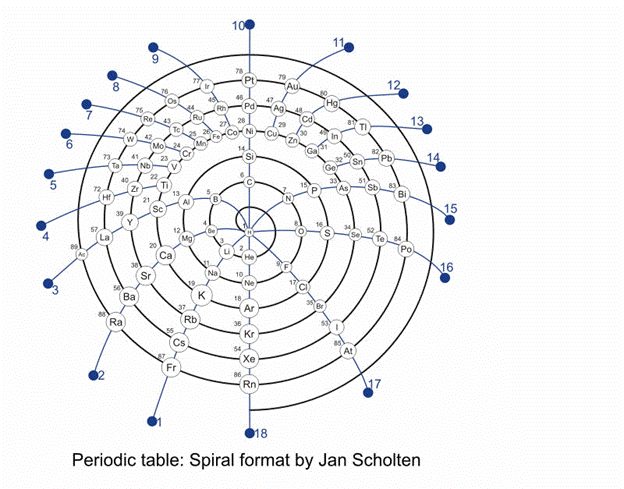
In summary, the 3rd through 17th column remedies can be understood as stages of performance, with the 18th column a state of transition. These remedies are chosen not on the basis of a person being engaged in a performance per se (because to some extent all of us are engaged in a performance!) but on whether some conflict related to performance becomes the main emphasis of the history. In choosing one of these remedies, one would want to:
1) perceive a “structure or order” to the history.
2) determine the theme of a self-directed performance (copper, silver or gold)
3) recognize where the person perceives themselves in relation to peak performance (anywhere between (3rd through 18th)*.
4) be attentive to the “meaning” or “significance” attached to the performance.
*The first and second columns may include performance themes, but the emphasis is not self-directed performance. The emphasis instead may include performance conflicts related to relationship to others and/or external structure.
Moving another step beyond the concepts above are use of lanthanide remedies, which Scholten described in his 3rd book “The Secret Lanthanides”. Lanthanides begin at the 3rd column of the gold series (lanthanum), but then form a subset of remedies between the 3rd and 4th columns. (With most periodic table charts, the row of lanthanides is listed below the main table). The fascinating use of lanthanides in homeopathic practice occurs when a client describes her attempts to apply her “silver gifts to a golden ideal”, and yet she is stymied in that manifestation. This sense of being stymied reflects the confusion of the 3rd column, but then the homeopath also has to assess the client’s relative degree of confidence re: whether their latent potential will ever be manifested. This determines the choice of the particular lanthanide, which needs to be aligned with the elements above it known for the same level of confidence. (In other words, lanthanum should be aligned below scandium and yttrium; cerium below titanium, zirconium, hafnium; praseodymium below vanadium, niobium tantalum, etc.). Finally, one needs to determine whether there’s an extra significance or meaning attached to one’s “eventual” performance—is it related to self-worth and value (eg., carb?), avoiding persecution and being blamed (eg., brom?), etc.
In recognizing a lanthanide theme in practice, one may first perceive mineral language, then a performance theme, then silver “abilities” which the client would like to manifest in a “golden way”, and finally he may describe the significance he attaches to his performance. A client might say ‘I want my poetry to make a difference in the world, but it seems like only friends and relatives show up at my poetry readings—it makes me feel worthless’ (carb?), or ‘I want my vision of enlightened economics and fair trade to someday change the world—I feel frustrated that people aren’t listening–I don’t feel acknowledged or appreciated’ (sulph?) or ‘I want my music to inspire children to see music as a universal language of peace—yet as hard as I work at it, I’m not any closer to realizing my dream—that makes me feel deeply disappointed and alone’ (mur?).
https://hpathy.com/clinical-cases/praseodymium-bromatum-in-fibromyalgia/
In conclusion, the remedies derived from the periodic table have become indispensable in my practice. Although Scholten’s progressions are an important aid in choosing remedies from the table, they’re not the only way. At this point, many of the remedies at the right side of the table may be more easily discerned through other routes of analysis. However, I’ve been able to use hundreds of compounds from the left and middle of the table–as well as the lanthanides–and have been amazed by their usefulness. Nearly every week some new facet of the periodic table reveals itself, and shows me how precisely a performance history can be matched with one of nature’s remedies. I hope this article also helps you to begin unlocking the wonderful potentials of the periodic table.
Visit David Johnson at his website: http://www.classicalhomeopathywisconsin.com




David Johnson’s article is very exhaustive and interesting.He explains the theory and technique of using elemental compounds from the periodic table. In fact it would have been still more beneficial to the readers had he given a few case histories explaining as to how he applied his technique in solving those cases, mentioning the remedy its potency, duration and the results obtained. However Dr.Johnson deserves all praise for his best efforts.
Dr. Singh,
Thank you for your suggestions. I agree, and hope to print some more illustrative cases in the future. The link near the end of the article ) is a lanthanide case which incorporates use of the main principles described above. (The patient continues to call periodically requesting re-doses of the remedy–praseodymium brom 1M–and has not required any intercurrent or other remedies since his first visit.)
Sincerely,
David Johnson
Its time we stopped just relying on intuition and guesswork for the periodical table. Let’s start an international program to prove the remainder of the Periodic Table and many of the combinations, in order to confirm all our understandings.
i appriciate u mr Roger.I think the provings should be done by team
and not by single doctor
Dear Mr. Barr,
Thank you for your comments. Yes, I agree provings provide a fundamental understanding for use of remedies, and an international program for gathering information would be ideal. However, the scope of such an undertaking is monumental (including remedies with limited information, we’re looking at a thousand or more provings) and in the meantime patients are suffering.
Another route to understanding remedy properties is the successful use of remedies in practice, and a great deal of cases elucidating “unproven” periodic table remedies has already been written–or at least demonstrated with video recordings at various seminars. I”ve been amazed at how the themes can so precisely match an individual’s dilemma. I’ve also seen how these remedies are chosen with a high degree of confidence and precision, rather than ungrounded intuition and guesswork. I wrote the article from the perspective of personal experience, and I hope to share more example cases in the future.
Nevertheless, your fundamental point is well-taken, and is one Luc de Schepper expressed when he wrote his periodic table book. You may be interested in the Links review, which suggests that based on existing proving information, de Schepper arrived at many of the same conclusions as Scholten:
Sincerely,
David Johnson
excellent articles,it should be more concise & more informative always,try next time better,
i very thankful for you for this article , very knowledgeful in practical and educational purposes. i got more knowledge.
Very knowlegeable and dependable article. I must say after reading this article that this is a great site for homeopaths. I learned a lot, thank you!
Hi Mr Johnson,
I am a student of Homeopathy and your article has helped tremendously in studying for my final year two exam. Wonderful description of the periodic table and it’s movement and evolution through a person’s life. I have a better grasp. The added info on specific remedies as they relate to the periodic table was an added bonus. PLEASE, keep it coming!
Thanks a million, Sylvia
Thank you for your feedback, Sylvia. I’m glad to know the article was helpful! In the future (next 6-8 months) the e-zine may include an article about recognizing lanthanides in practice. Links to other case examples of mineral remedies are at the end of the “hot seat interview” from March of this year. Best wishes with your studies and future career!
Lovely, clear essay! We do need more direct experience of the P.T. remedies. Provings by a single Homeopath can be Brill. Hahnemann said as much in the Organon. We know exactly what’s worth reporting and what’s not.
On that thought I just feel the need to clarify the introductory phrase describing the 7th column individual …. “who is on the brink of exerting his or her own power” .
… Rhenium, does have power, bags of it, they will take on all sorts of challenges, but they just don’t have quite enough to get over the obstruction. Not quite enough to feel totally comfortable and confident.. so they are glad of a helping hand. A bit of cooperation is needed!
They can get into a failed state if there’s no one there to push them forward.
thank you for a very interesting & informative article
Jan Scholten also has a plant theory where he has a system to chart the animal Kingdom and plant Kingdom according to the periodic table. Its a good start and need lots of work have gone through his book and web page Qjure.com. Look into it. It’s worth studying.