
II. The Homeopathic Process
The last article, In the Beginning was an introduction to homeopathy, explaining how its principles were discovered by Hahnemann with a plausible explanation of how it worked. Hahnemann was truly inspired to have conceived of this gentle system of healing, as well as to develop the foundation of basic principles of practice most adequately during his own lifetime. Unfortunately there persists till today some confusion with how these basic principles are clinically applied, a problem that Hahnemann himself faced with colleagues in his time. He was strongly critical of untenable variations of (mis)using these principles after critically perceiving their long term effects. He explained with reasons, various instances why a violation of some foundational principles were unacceptable for homeopathic treatment. This violation though, has continued to this day as homeopathy is misrepresented or remedies misused with the mistaken idea that there are no “side-effects”, as well as a lack of commitment to learning the basic guidelines already in place. Here is an article to read on Homeopathy Principles by Dr. Manish Bhatia which states that,
“Every science has certain fundamental principles which guide the whole system. Homeopathy as a science of medical treatment has a philosophy of its own and its therapeutics is based on certain fundamental principles. These are:
- Law of Similia
- Law of Simplex
- Law of Minimum
- Doctrine of Drug Proving
- Theory of Chronic Disease
- Theory of Vital Force
- Doctrine of Drug-Dynamisation”
When a patient comes to me for treatment, I often spend a considerable amount of time explaining to them the “homeopathic process”. Many develop misconceptions from previous experiences with homeopathy and with how remedies have been used. Complicating this problem, is an abundant exposure to a diametrically different approach to disease and its treatment (which can be alarmist and fatalistic) propagated by the dominant system of medicine. I have found it necessary to create an educated awareness so that my patients experience truly effective homeopathic treatment for long-term health. Part of this learning includes developing a confidence in one’s God given, inherent ability to fight disease through enhancing one’s own, well equipped, well developed, sophisticated Immune System.
The first misconception people have, is that homeopathy can be used like allopathy ie: a specific remedy indicated for a specific disease diagnosis. This unfortunately continues to be upheld by some homeopaths who still think “allopathically” and use homeopathic remedies in an allopathic way. For example: Arsenic for food poisoning, Nux Vomica for constipation, Allium Cepa for colds, Arnica for injuries, Belladonna for fever, etc. While this may work in first-aid emergencies or at a very basic level for some acute and temporary problems due to partial similarity, it can be a disastrous line of thinking for treating chronic disease with homeopathy. One cardinal principle in homeopathic treatment is that each person is individual and hence requires a remedy as well as case management which is individually tailored to the development of disease and hence the process of cure, in that person.
The second most common problem I encounter, is a patients’ (mis)conception of his/her state of disease. The disappearance of a symptom that may be disturbing or troubling is not necessarily a sign of cure, however satisfactory it appears, because it may be only temporary and will recur again in one form or another at a later time. For example: If someone has a bad eczematous patch on the arm which is oozing and itching, disturbing sleep. After some treatment (homeopathic or allopathic), this patch disappears. S/he feels better and is relieved. But a few months later the person has begun to have the first few attacks of wheezing bronchitis that develops in a year or so, into Chronic Asthma. What has happened here? The common interpretation is that the eczema is apparently “cured”, but now there is a new problem, Asthma. NO, from the homeopathic perspective, the disease expression is NOT cured has only been shifted, and pushed to a deeper organ of expression, from the superficial skin to the lungs. The disease has in fact progressed! The correct homeopathic treatment subsequent to this will relieve the asthma, but the previously suppressed eczema will recur in a mild form again. This too will be CURED in time, as the person continues with committed follow-up for homeopathic treatment. Sometimes this process can take 1 year, but at the end of it, there will be no asthma and no eczema as well. The person persists in stable health for quite a few years after.
Hence, correlation with the history of development of disease is the only way to know whether the disappearance of symptoms has been truly curative or is simply a form of suppression. Suppression means that the disease process continues unabated and is only taking a slightly deviated route. So if this happens under the influence of a homeopathic remedy without a general improvement in the disease condition, we consider that the remedy may have only palliated or suppressed a condition, but has not cured. This is not true homeopathic treatment.
What is it a true homeopathic physician seeks to do in the homeopathic treatment process?
The instructions below form the basis of my own developement as a homeopath. Becoming a true homeopath is a continious learning process through one’s lifetime. Here is a basic guideline from the Organon:
First, the homeopathic physician is expected to take a detailed homeopathic medical case history of a person seeking homeopathic treatment. This is in order that the homeopath fully understands the patient and his disease, as well as the type of homeopathic management this patient will require in the long term. This history includes homeopathic details of the predominant/chief complaint, other physical problems that are present and the mental (emotional) state. This information, when analyzed for characteristic homeopathic symptoms helps us reach the correctly matching homeopathic remedy or series of remedies needed. In addition, a detailed past history of illnesses and family history of disease is necessary. This helps the homeopath to perceive how disease developed and progressed in a persons lifetime in order to make, what is termed as, a “miasmatic analysis”.
Disease development and its Cure
You see, an expression of disease described as a ‘diagnosis’ by the dominant school of medicine, is not an isolated phenomenon of illness. It represents a continuing process of deteriorating health and imbalance, that initially starts with more simple ailments like skin allergies or common colds, but later in life moves to deeper organ disturbances like asthma, heart disease or brain diseases. In most people, serious health problems do not manifest themselves right at the start of ill-health. They only develop once the more simple problems have not been effectively treated. An initial imbalance produces these simple, superficial illnesses. But when these problems have been suppressed by symptomatic superficial medication, the initial imbalance that caused these symptoms in less life-threatening areas of the body remains uncorrected. They persist and may get worse under stressful conditions. It is now forced, in time, to express itself in more important and deeper organs.
This is the phenomenon of disease progression and has been observed over and over again in nature and in human beings. It is a natural progression of deteriorating health, one that each of us can easily perceive with a little common sense, because it is simply so obvious! This natural phenomenon is similar to the process of aging. It is a slow continuous deterioration that can progress faster if greater suppression (deviation) of superficial disease occurs. Hahnemann gives us various examples of these disease conditions and their subsequent progressions, in the Organon (eg: Aphorisms 35-51) as well as the Chronic Diseases, with appropriate case references which he collected from various Medical Journals and Papers. These were educated and scientific observations made by senior physicians of good repute. Hahnemann had access to all these works and studied them in detail. He knew many languages and was involved with the translation of some of these writings.
The process of cure of disease under homeopathic treatment, thus, is in the reverse order of its development. This means that the more serious disease symptoms especially those that have appeared last, will be the first to respond to a correctly chosen homeopathic similimum remedy, while symptoms that have been present for a longer time and are in more superficial organs will respond later. Only once the more recent and serious disease symptoms have been cured, can the older and more chronic problems be resolved. This occurs repeatedly in nature and was more closely observed by Dr. Hering. For homeopaths, this Natural “Law of Direction of Cure” (Aphorim 28) as it is termed, appropriately attributed to Hering’s observations (which I will talk more about in the next article), is one of the important guidelines to whether the homeopathic treatment course is correct and is following the right direction towards cure.
Every effort should be made to educate a patient to be part of understanding this process of disease development, as well as observing the process of cure in one’s own case. One then realises that though one experiences substantial relief when one begins treatment, the treatment remains incomplete if it is not followed through over a significant period of time i.e. at least 1 year. I have observed over this time period, that most patients experience adequate improvement of health in mind and body. They fall sick less often, and they develop a healthy immune response to infections (miasmas) from which they recover quickly and easily. So much so, that they HARDLY EVER become seriously sick with any major illness. Thankfully, this has been my clinical experience with most committed patients, and gives me the confidence to say that sticking to the true homeopathic principles propounded by Hahnemann is a great investment in ones future healthh.
Problems facing Homeopathy today
One of the aims of this Web Portal, hpathy.com, is to educate people for free, towards a better awareness of what the System of Homeopathy is capable of. In addition my aim in these articles has been to explain how this process is compatible with Christian philosophy. The latter, because of various recent allegations against the principles of homeopathy which I believe have arisen due to a lack of sufficient Christian information and interpretation of the homeopathic process readily available.
One can identify some general problems that contribute to the confusion and lack of unity in homeopathy today.
- It is unfortunate some homeopaths have either not fully understood this law of direction of cure or, they choose not to take the trouble to observe and pay close attention to their patients cases and be aware if they are truly “Healing” with the treatment protocol they follow.
- People could be subjected to “allopathic homeopathy” without an educated awareness of what the homeopathic principles of disease and cure are. These include continuous repetition of remedies that are partially indicated for days and months on end with no proper vigilance. Terrible ‘Proving’ situations develop from this hazardous type of remedy repetition that the Religious person I have referred to later in the article, termed as “homeopathic bondage”.
- Some have unclear motives for practice, as I have realised in the Indian perspective, and so may compromise on the quality of homeopathic service or treatment. Some of these motives include a desperate need to earn a living and support a family, or else a refusal to modify their methods for a better quality of homeopathic practice.
- At the other extreme are those who choose to use methods of selection of “deep acting” homeopathic remedies, methods that they are not well versed with or properly trained in, before having the requisite foundation in homeopathic philosophy and practice.
- One more “potentially dangerous” situation is the use of new remedies from questionable sources. Its important that the sources of remedies are explained and are natural substances found in nature. The method of collection and preparation should be from the the Homeopathic Pharmacopeia.
These are all situations, that can make the use of homeopathy to be “potentially dangerous” as alluded to in my previous article. All this requires serious attention for change in the future, if the Homeopathic System of Healing has to gain the respect that is required for its capacity to heal. It requires that we homeopaths become honest with ourselves and follow our conscience more closely when we seek to take on the responsibility of healing of the sick.
First and foremost, as Hahnemann stated in Aphorism 1 in the Organon: “The physician’s highest and only calling is to make the sick healthy, to cure, as it is called“. If this mission does not remain the corner-stone of one’s homeopathic practice, the possibility remains that this system of healing can be undermined with confusion and poor methodology. We have reached the computer age, where the world is wire-connected and has become a global village. Homeopaths from across the world are able to exchange experiences and seek guidance from each other. It is a time when we homeopaths need to formulate and stick to the basic guidelines that will situate the Homeopathic System of Healing on a strong foundation throughout this new Millennium.
Proper homeopathic management requires a great deal of vigilance by a homeopath, to be alert about response to dosages as well as an accurate analysis of these responses in each individual patient. This is very demanding on one person. My answer to this is that we promote the capacity of like-minded homeopaths to develop a mature team work approach to provide high quality homeopathic service. But, it is as important for each patient seeking homeopathic treatment to become well versed in the process of disease and cure outlined above, in order to make a choice of homeopath wisely when seeking homeopathic treatment.
Having said that, what is the essential requirement a homeopathic physician seeks from a person seriously seeking homeopathic treatment?
I’d say it was commitment to the process and patience to see it through in order to come out the other side more healed and more balanced. When patients are committed, they begin to feel so much better physically, their mental state improves so much, that they are even more able to pursue their Spiritual growth unhindered by physical tribulation. This is exactly what Hahnemann stated in Aphorism 9, that one’s mind and heart along with a healthy body, now becomes free to pursue “the higher purposes of one’s existence“. My personal experience in the homeopathic process based on the principles that were clearly laid down in the Organon and Chronic Diseases, has resulted in my Spiritual Growth being enhanced, and definitely not hindered in any way.
What is the explanation for all this? How does a correctly chosen, diluted and potentized homeopathic remedy, effect and stimulate a change in a person towards cure? How can such a minuscule quantity of energy have any effect at all in some apparently incurable and serious illnesses? No one else has come up with a better explanation than Hahnemann himself, whom I believe was truly inspired to visualize this process based on his abundant scientific reading as well as keen sense of scientific observation. One of the fundamental concepts that explains this process is that of the energy of life, the Vital Force. Let me try and offer a deeper insight into this concept.
Hahnemann’s Vital Force:
In Aphorism 10 of the Organon Hahnemann states,”The material organism without the vital force is capable of no sensation, no function, no self preservation; it derives all sensation and performs all functions of life solely by means of the immaterial being (the vital principle) which animates the material organism in health and in disease.”
David Little has numerous well researched articles on Vital Force on his website (simillimum.com ) which I have quoted with his permission. Some colleagues on the various lists have also helped me gain some insight with their points of view.
What is the Vital Force?
I have come to understand the Vital force as a “biological intelligence” that every living creature possesses. It is an energy that is present in ALL living things; plants, animals and humans. It necessarily involves the effect on the genetic coding in every living creature, as every biological instruction for development and function is coded into our genes. This vital force acts through, what is well known today as the PNEI Axis (Psycho-Neuro-Endocrino-Immuno Axis) that appears to coordinate all the processes in the body in a balanced fashion. It is slowly being understood that the early start of disease is reflected initially in the imbalances in this axis. Homeopathic remedies are considered to act at a level prior to this axis, which is the all encompassing vital force, an organic energy that influences the PNEI axis, and is common to all living creatures; plants, animals and humans.
This vital energy has a resonance which can be measured with crude instruments of today in remedies up to a certain (low) homeopathic potency. Specific remedies have been recorded as having a specific wavelength. These wavelengths of resonance have also been recorded from various organs and tissues of the human body and can be found to match with specific remedies. E.g.: The energy wavelength of the prostate and the energy wavelength of the remedy Sabal Serrulata are apparently similar. So, this energy is not occult, but will be more easily demonstrated to exist and be measured as instruments become more sophisticated. It is obvious that the Homeopathic System of Medicine requires serious foray into advanced research work. Hopefully in the future, futuristic research of homeopathy and its concepts will become a priority for those with the means, the talents, the inspiration and the learning to do so.
Identifying the Vital Force
One way to begin this research work is to first have a clear basic idea of what we’re referring to when we use the term Vital Force. There is some historical basis, both scientific and philosophical, to the various choice of words made by Hahnemann more than 200 years ago. David Little has a detailed article on his website that can be found here: http://www.simillimum.com/
I chose to quote as I think I’d need to acquire much more experience and insight before I wrote about these concepts as intelligently! He says:
Hahnemann used the term, Lebenskraft, from Lebens – life + kraft – force, power, and energy. He also used the terms Lebens-Energie, life-energy, Lenens-Erhaltungskraft, the substantive power of life, and Natur-Kraft, the power of nature. In the old historical German dictionary the term, Lebenskraft, is linked with the Latin root word, *Vigor Vitae*. This is important because the homoeopath must recognize the connection between the vital force and vitality, as it is essential to understanding the paradigm of healing. In the 6th edition of the Organon Hahnemann uses Stahl’s term, Lebensprincip, the life-principle in several places. This term is associated with the ANIMA MUNDI of vitalism. Vide Chamber’s English Dictionary,
“Vital Principle; that principle ANIMA MUNDI which according to the doctrine of vitalism, gives life to all nature: a principle that directs all the actions of functions of the living bodies”.
The key word is Vita, which means Life, the root of the Vigor Vitae. The Latin word Vita is the root of the term vital as used in the vital force and vital principle. Let’s look at the definitions of the principle terms for more insight.
1. Vital, being a manifestation of organic life: supporting, or necessary to, life: life-giving, invigorating: characteristic of life, or of living things: animate, living: full of life: lively, energetic: capable of living: pertaining to life, birth, and death: essential”.
2. Vitalize, to give life to: to stimulate activity: to give vigor to: to make lifelike.
3. Vitality, the state or quality of being alive: the principle of life, power of the living: the state of being alive: the quality of being fully or intensely alive: the capacity to endure and flourish: animation, liveliness: a living or vital thing or quality.”
4. Vital force, the force on which the phenomena of life in animals and plants depend – distinct from the chemical and mechanical force operating them.
5. Vital functions, the bodily functions essential to life, as the circulation of the blood.
Discussing the “dynamic power” of the vital force and remedies, in the same article he states:
In the note to aphorism 11 Hahnemann asks what is a dynamic influence and then points to the forces of physics as seen in our universe.
“What is dynamic energy?” Hahnemann asks in the footnote to §11. “Does the moon not circulate our planet, and in turn, cause the tides of sea of sea to ebb and flow without material contact? How does the mechanist explain this? The old philosopher went on, “Only someone who is cultivated, and therefore exercised in comparison and abstraction, can form a kind of supersensible idea of this, keeping far from his thoughts all that is material or mechanical. He terms such actions DYNAMIC, VIRTUAL, taking place by the absolute, specific pure power and action of one [event] upon the other”.
Hahnemann then discusses the forces of magnetism as another example of dynamic powers that can transmit force and magnetize other susceptible objects. He then likens the power of a magnet to magnetize iron to the transmission of a miasms from one organism to another susceptible organism. He also uses the analogy of magnetism to explain how the condition altering power of the homoeopathic remedy acts dynamically on the living tissue of the human organism. Hahnemann called these natural powers ‘spirit-like’ [invisible energy/power in every atom of nature -L] dynamic forces. This is the vitalist paradigm.
The Vital Force in Health:
The next step, lets understand and perceive the functioning of the vital force in a healthy body, as distinct from the human spirit. This is a process of scientific observation and repeated experimentation. Here is a good explanation offered in the same article:
Hahnemann’s extraordinarily evenhanded view of the vital force is hard for many to understand as he was pointing to the future. On the one side, there were those who attributed almost almightily powers to the organic life force, and on the other, those who refuted its very existence. The Founder was quick to point out that this instinctive vital force did not posses the higher qualities of reflection (Introspection/contemplation/meditation – L) like the human spirit and could not cure itself in chronic miasmatic disease. At the same time, the Hofrath that noted that true cure is only attained when the vital force asserts its superiority over the disease state under the influence of a homeopathic remedy. (emphasis added) No one else had pointed this out. This hypothesis is as misunderstood by today’s orthodox sciences as it was in Hahnemann’s time.
The Founder also pointed out that one must understand how our instinctive vital force is closely related to our animal natures and must be transformed by the reason gifted human spirit to the higher purposes of our existences. (emphasis added) This is part of Homoeopathic Psychology. Human beings have to learn to control the energetic instinctive vital force with their higher spirit through philosophy just like we must control the instinctive force with the homoeopathic materia medica.
The vital force does not express many symptoms when it is in balance and is healthy. It responds to external stimuli, stress, infection in a balanced manner and can easily bring the body back to homeostasis or health without too many disturbing symptoms.
The Vital Force in Disease:
The next step after perceiving the balanced function of the vital force is to be able to perceive the imbalances of its function when the disease process is set in motion. David continues to explain this concept:
‘Hahnemann was not sure if we mere mortals would ever understand all the mysteries of nature or the vital force. The use of the term tuning and mistuning is simply based what can be experienced rather than what can be only be called a concept. In the footnote to aphorism 33 Samuel makes clear how he uses the terms tuning and mistuning. It is simply the most unbiased, objective, and practical way to observe states of human heath and disease in Nature.
“When I call disease a tunement or mistunement of the human condition, I am far from wanting to give, thereby, a hyperphysical explanation about the inner nature of diseases generally, or of a single case of disease in particular. This explanation is only meant to imply what diseases, as has been proven, are not and cannot be. They are not mechanical or chemical alternations of the material substance of the organism; they are not dependant on material disease matter. They are solely spirit-like (energy that cannot be seen, but its effects can be measured and observed – L), dynamic mistunements of life.”
The German term, Stimmung, is closely related to the term, temperament. Langenschiet’s German-English English-German Dictionary offers this definition of temperament in German: Temperament n. Charakter m; Laune f. Stimmung f.. The terms, temperament, character, mood and tuning are closely related. Stimmung and temperament may also mean an aura, feeling or atmosphere such as the mood of the day, a social engagement, or a person. When one talks in terms of a bad atmosphere and bad vibrations or being out of tune they are speaking in the subconscious language of the vital force.’
When a remedy is chosen that correctly matches the whole picture of symptoms expressed by the vital force in disease (similimum), then it stimulates the imbalanced vital force to correct itself and take the body back to health. The stimulus used for this should be minimum, only what is required to set the vital force on track. Subsequently all symptoms resolve on their own through the body’s own mechanisms of the PNEI axis.
The Homeopathic Process and Christian Spirituality:
Recently I was exchanging emails with a ‘Religious person’ who earlier ‘practiced’ homeopathy and now claimed that homeopathy was not compatible with Christianity. He was advising fellow Christians to be wary of homeopathy and claimed I was too “deep into it” to see its dangers. He felt I was not on the right path and not discerning wisely. During a telephonic conversation, he mentioned that the incompatibility was mainly because of the principle of Similia Similibus Curentur. His explanation for this evoked my spontaneous laughter over the phone. I later apologized for my reaction; yet, as much as I tried to see his viewpoint, I simply cannot agree with his views. This encounter though made me question myself, and more deeply reflect on my faith as to how my practice of homeopathy and my Christian spirituality helps me integrate the various dimensions of my life.
At the outset I have to clarify that I’ve known wonderful ‘religious people’ of the Catholic Church, including my own extended family members who are priests and nuns. My own parents were very active in the Church and so I interacted with numerous sincerely committed people who lived their lives to serve others. They have always supported me in my profession as a homeopath. Each of these people were deeply inspired and spiritually motivated. My experience of Church has been a balance, of seeing people tremendously motivated in the Holy Spirit alongside their human limitations.
I realize that unfortunately some people’s experience of ‘church’ has been negative. And, as I responded to people who wrote critical feedback to my last article, I’m convinced that the buck stops and starts with me (as a Christian). If people seek to know (again) what Church is, or trust a Christian, a follower of Christ, they have to see it reflected in my life. I am the witness, not someone else out there whom I can point a finger at.
While I have talked about the problems we face in the System of Homeopathy today, its just as obvious that Modern Medicine does not have all the answers either. In fact, its difficult to bring to mind many people who’s health status has changed for the better in long term, while still on addictive and harsh allopathic medicine. Homeopathy in fact offers hope to those labeled as “incurable” by conventional doctors. Most chronic problems are curable through patient long-term homeopathic treatment, or else at least the quality of life is considerably improved in cases that are too far advanced in pathology.
To those who opine that homeopathy is incompatible with Christianity, let me put some queries regarding conventional medicine:
“Is a medical system that only believes in the body Christian? Is a medicine that never addresses the soul, Christian? Is a medicine that will not openly acknowledge the immaterial vital spark in human beings Christian? Is a medicine that only depends on man-made drugs and surgery truly Christian? Is a system that has been warped by business interests first, instead of the suffering individual truly Christain?
I wonder why no ‘religious person’ boldly speaks up against this assault on the mind and soul of the sick by harsh and questionable use of allopathic drugs. No, we seem to have lost our voice against the glorified might of ‘science’. Yet isn’t there even more need today to speak against this deviated abuse of Modern Medicine that is alienating our souls?
What about the Orthodox Medicine practiced during Hahnemann’s life-time? In Hahnemann’s time (1755 – 1843), the type of empirical medicine in vogue was seriously detrimental to life, which was why Hahnemann, a qualified MD was so disillusioned with it. David Little explains Hahnemann’s experience and observations in this way:
“Hahnemann taught that orthodox medicine mistook the instinctive actions of the vital force during crisis for the healing power of Nature (Physis). If the patient was plethoric they would bleed the patient because this is what “Nature” would do to someone with so-called excess blood in crisis. If the patient had a digestive upset one should use a emetic because vomiting is what “Nature” would do during a stomach crisis. In their view nature used diversion during crisis so they also sought to use diversion in the form of making artificial ulcers and irritations and the like. In this way they claimed they were imitating Nature and were Her ministers. Hahnemann was quite critical of their claim!
Hahnemann went to great lengths to point out that blindly following the instinctive actions of the vital force during crisis was not the best procedure to undertake. He opined that one should use their reason-gifted mind to understand the laws of Nature and follow them in such a manner that one can harness the positive aspects of the vital force while leaving its tendency to over react behind. This is best done by observing the cardinal principle of dynamic healing Similars Cure Similars and using homoeopathic remedies. Hahnemann realized that the disease-tuned vital force was a destructive power that should not be blindly mimicked while the homeopathically-altered vital force was an essential aspect of the healing process.”
There were various other destructive methods of treatment like venesections, applying leeches, counter-irritants, etc, prevalent at that time. These frequently resulted in death or prolonged unnecessary suffering in people. The continious inspiration for discovering and establishing the gentle system of healing through homeopathic remedies prompted Hahnemann to state in Aphorism 2 of the Organon : “The highest ideal of cure is rapid, gentle and permanent restoration of health, or removal and annihilation of the disease in its whole extent, in the shortest, most reliable and most harmless way, on easily comprehensible principles.”
Again in the words of David little:
“Homeopathy is a healing science based on experimentation not a system that uses occult forces in any manner. Homoeopathy does not involve magic, spirits or conjuring of any type which is associated with the occult. If it did I would not use it either! Homeopathy only uses the God given natural substances as found in nature and as an adjuvant homeopaths suggest right diet, exercise, temperance, morality and a healthy life style. I believe that Christians who question Homoeopathy as occult are missing the fact that God gave us natural foods and medicine in the Bible as part of His plan.”
The book of Sirach (Ecclesiaticus), Chapter 38 is a beautiful reminder of medicine compatible with Christianity Verse 4 says “God makes the earth yield healing herbs which the prudent man should not neglect;5 was not the water sweetened by a twig (Ex 15:12) that men might learn His power? 6 He endows men with knowledge to glory in His mighty works…8 Thus God’s creative work continues without cease in its efficacy on the surface of the earth.”
How aptly this explains the discovery of homeopathic healing in Nature by Hahnemann! Thus let us be careful that we do not – in ignorance, fear, prejudice and lack of spiritual insight, throw the baby out with the bathwater in considering that the proper practice of homeopathy is incompatible with Christianity. Rather it would be wise to seek and percieve the Will of God and God’s power in all creation which are the sources for our healing as well.
What is the Human Spirit? What is the Soul?
A discussion on the online lists as well as feedback to my last article, brought up a need to define various terms used. The semantics with the functions of soul and spirit remain subjective and experiencial, though I have provided some description below:
As a Christian, I understand the human spirit to originate from the breath of God. The book of Genesis 2:7 reads, “The Lord formed man out of the clay of the ground and blew into his nostrils the breath of life, and so man became a living being.” Man was created in God’s image and likeness. In communion with God, the human being is whole but does not become God.
The human spirit is thus blessed with the ability to seek Communion with the Spirit of God, the Holy Spirit. The human spirit is also blessed with the power of reason which no other living being is. This power of reason gives us the ability to acknowledge the transcendental need of the soul, the need for God, the need to be in communion with the Spirit of God who is “the higher purpose of our existence“.
The Soul, as defined in The Concise Dictionary of Theology is: The Spiritual principle of human beings which survives their death. According to the Old Testament the “nephesh” (Hebrew: “Breath of life”) comes from God (Gen2:7) and disappears at death. My “nephesh” can mean “myself” or “my soul”. The New Testament often uses “psyche” (Greek: “soul“) as the principle of life. Towards the end of the Old Testament, Greek language and thought introduced a sense of the human soul as distinct from the body and endowed by God with immortality (Wisdom 3:1-9,9:15, 16;13). The New Testament reflects a certain dualism between between body and soul (Matt:10:28, Lk 16:22, 2Cor 5:6-10, Phil 1:23, 1Pet 1:9) but primarily thinks of human beings as animated beings destined for final resurrection. Against the Neo-Aristotelianism of Pietro Pompanazzi (1464-1525) the Fifth Lateran Council taught in 1513, the individuality and the immortality of human souls.
From the homeopathic perspective, David Little gives an insight:
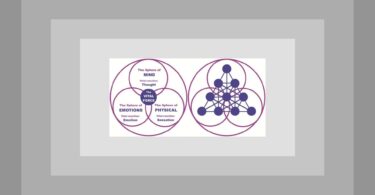
The powers of consciousness associated with free will, reason and feeling are related to the soul (Gr. Seele), intellect (Gr. Geist) and emotional disposition (Gr. Gemuet). The soul is transcendental; the intellect is related to the rational functions usually associated with the brain; and the emotional disposition is related to the feeling tones usually associated with the heart. The physical organism is the sum total of all physiological systems, organs and tissues. We can not see the human Esse nor the vital force but we can witness Vitae through the Gestalt-display of the total human organism, which includes psyche, the life force and soma. In this way, the psychic, dynamic and physical powers work together synergistically as a total unified field in which the whole is more than the sum of its parts.
Who is a Spiritual Person?
Based on the preceding understanding, we see that spirituality is a function of the soul, for the human spirit. The soul recognizes the need for transcendence, the need to be in communion with the Supreme Being whom we call God, and through the soul we experience the Spirit of God strengthening our human spirit.
We speak of intellectual maturity which is the maturity of the intellect, we speak of emotional maturity which is the maturity of the heart. Furthur we recognize the need for spiritual maturity, which is the maturity of the soul. Every human being has been created with a soul, spirit and body, but not everyone seeks spiritual maturity. In my perception, this results in an incomplete development of a human being, for, every human being is necessarily an intellectual (rational) being and a creature with feelings (emotional), but also a spiritual being with the capacity to relate to the transcendental Being, God.
The spiritual person is one who recognizes the need for spiritual maturity to become a truly “whole” person. The ability to use one’s reason (mind) must be assisted first by emotional maturity, followed by spiritual development, in order to be a truly balanced person in every aspect in life. Indeed a truly spiritual person is one, who in being ever aware of his/her humanness and limitations recognizes the need to be dependant on God in his/her soul. In my perception, the expression of a spiritually matured person (of any religious background) is one who seeks to interact for the benefit of others in simplicity, humility and compassion.
In the discovery of homeopathy, I perceive Hahnemann to be a scientifically rational person as well as a spiritual person.
Healing of Soul and Body : A Renewal of One’s Mind
In the last article, I mentioned the need for “being transformed by the renewal of one’s mind without conforming to this age“. There are eternal principles of healing, as much as there are eternal moral values for the soul. In homeopathy I see the principle of Similia Similibus Curentur as an eternal principle of healing that does not change with the latest fad or drug or medical technology. In fact, there has hardly been any significant change in homeopathic principles or remedies over the last 200 years, except to evolve a deeper and wider scientific understanding of their healing capacity. Similarly, the moral values in Christ that were relevant 2000 years ago are just as relevant today, because the living Christ, is the same, yesterday, today and forever .
One can renew one’s reason-gifted mind with a decision to understand the process of homeopathic healing that goes against the prevalent ideas of this age and the medical approach of today. One can perceive the truth of this simple method of healing through repeated experiences and observation of the effects of homeopathic remedies while following the principles of the philosophy laid down. It is in experiencing the benefits of a healthier mind and body, that one is convinced in one’s mind of the homeopathic paradigm.
In a similar way, the spiritual renewal of one’s mind begins with a decision to follow a simple process of being slowly transformed to eternal values of Christ. This is a progress through spiritual conviction and tangible experiences of God’s love without suppression or struggle against one’s human needs. It is a repeated experience of divine support in strengthening of one’s human spirit, beyond the weakness and limitations of the body, enhanced by the soul’s dependence on God. This practical method of transformation, is Biblical philosophy laid down nearly 2000 years ago in the New Testament (Study the entire Chapter 8 of the Letter of St. Paul to the Romans), which is continuously revealed with deeper and wider understanding today.
In this process, through the transcendental activity of one’s soul, the mind and heart are receptive to the Wisdom, Love and Gifts of the Spirit of God within us. In more psycho-spiritual terms, one achieves “self-actualization” and “self-awareness” which allows for a deep knowing and wisdom, of being in touch with one’s ‘Innermost Self’. One achieves greater transcendental activity through prayer, meditation and obedience to God’s Will. But one also necessarily remains interconnected with other people, family, friends in this process. This fosters special experiences that lead one to experience love (Greek: Agape) in one’s concrete human circumstances and suffering.
As a Christian, I seek to relate to God’s Spirit through Christ, who offered himself in unconditional love as a sacrifice for human salvation. I believe this is the simplest and most reliable form of meditation or prayer which evolves with deeper maturity. It is a hotline with God for any person whatever be one’s stage of intellectual or emotional development or stage of physical disease. It is a pure, simple method of receiving and experiencing unlimited love and wisdom from God. This is the secret of a personal encounter with Christ, “for the higher purpose of one’s existence” (Organon Aph. 9) i.e. being ready to serve and sacrifice with love for the good of humanity. This process of transformation is simple, gentle and permanent,… on easily comprehensible principles (Organon Aph. 2) – like homeopathy!
My human spirit is always fortified by the Spirit of God, through dependence on the divine. This necessarily requires that my human spirit is humbled so that the Spirit of God may be more powerful. This slowly and surely results in a renewal first of the mind and heart, which is followed by healing in the body; no matter what one’s past life of suffering has been, or what one has inherited, or what are one’s past experiences of hurt, failings, sin or physical disease. Human difficulties don’t cease, but one faces them with a deep sense of peace, courage and a supernatural strength called Grace. One feels loved and one is full of hope no matter what the external circumstances. Then there is no place for doubt, fear or narrow thinking.
This step is the basis of subsequent Spiritual Healing of the body through the Spirit of God which I will explain in the next and final chapter of this series. I will do this to parallel with the understanding of Miasm and the working of the Similimum in Homeopathy, with case examples in both homeopathy as well as Spiritual healing. My parents were involved in the Healing Ministry of the Catholic Church for almost 25 years till my father died in December 2001. With this background, it is a personal experience of Spiritual healing that I wish to share with you (fellow Christians), that remains in complete compatibility with healing through Homeopathy.
Thank you,
Dr. Leela D’Souza
http://www.homeopathy2health.com/
Bibliography
1. Organon of Medicine 6th Edition, by Dr. Samuel C. Hahnemann
2. The Chronic Diseases, by Dr. Samuel C. Hahnemann
3. The Holy Bible (The New American Bible)
4. Excerpts of Articles from David Little’s Site
5. The Genius of Homeopathy, by Stuart Close, MD
6. Dhawle’s ICR Symposiums (Volume C), Mumbai
7. Theory of Suppression, Predictive Homeopathy Part I, by Praful Vijaykar, LCEH
8. The End of Myasumtion of Miasms, Predictive Homeopathy Part III, by Praful Vijaykar, LCEH
9. An Insight into Plants, by Rajan Sankaran, LCEH
10. The Sensation in Homeopathy, by Rajan Sankaran, LCEH