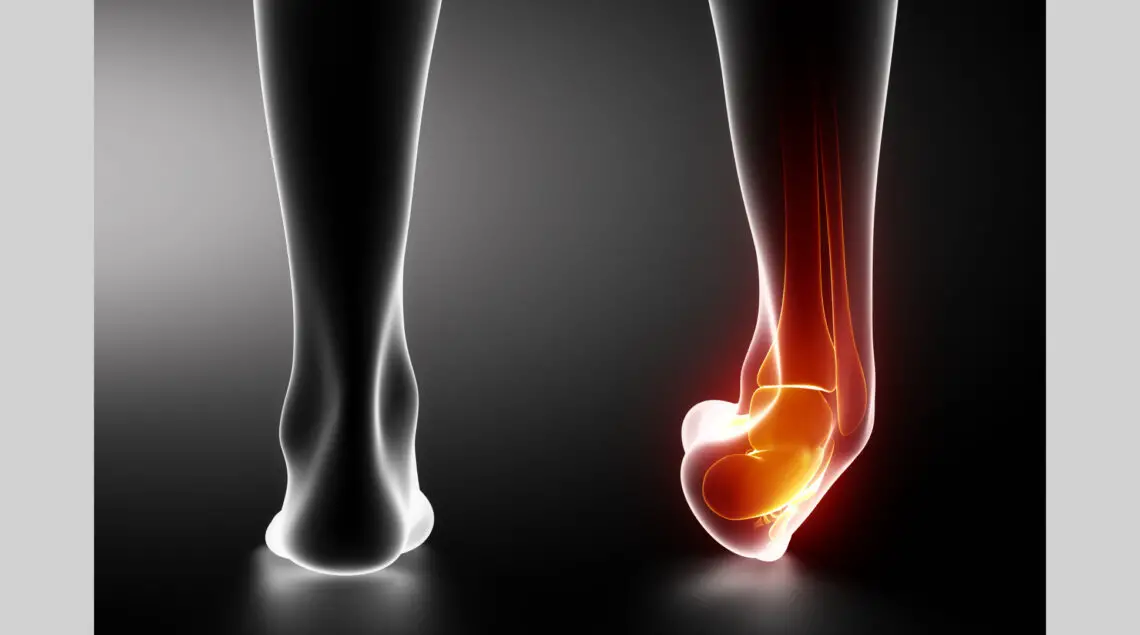

In the January issue of the Ezine, our Miracle Cure of the Month was one person’s story about her experience in treating her own sprained ankle. This is a fairly common injury, one we can easily suffer when playing in sports, or simply from being careless for a moment when walking. We received a letter from a reader in response to this column:
Hi,
I like your list of cold remedies, but your personal story of your sprained ankle could be taken as erroneous advice. I sprained my ankle badly several weeks ago, self-treated with a blend of homeopathic ingredients with arnica being the primary one, but was unable to walk on it for three weeks. After finally seeing an orthopedist, he explained I had a grade three sprain with a torn ligament, and recommended an air brace to guard against side-to-side movement, which was slowing the healing and producing the pain. So not everyone has the same type of sprain where the same remedy can work for everyone.
Regards,
M. D.
Author: The Healing Way, A Journal for Cancer Survivors
Ms. M. D., you make a valid point about individualization…and yet another one about understanding exactly what kind of accident has occurred in every individual “sprain” patient; finding the proper remedy for each patient involves individualization of the treatment, as usual, and the homeopathic remedy needed will vary from case to case.
First of all, we can clear up some confusion regarding sprains if we look at a few definitions:
- Contusion
A contusion (bruise) is an injury to the soft-tissue often produced by a blunt force such as a kick, fall, or blow. Contusions immediately result in pain, swelling, and discoloration. - Sprain
A sprain is a wrenching or twisting injury to a ligament. Sprains often affect the ankles, knees, or wrists. - Strain
A strain is an injury to a muscle or tendon, and is often caused by overuse, force, or stretching.
The distinction between these three types of accidents is a little easier to understand, and this helps us to match our remedy selection more effectively. Once we assess that we are actually treating a “sprain” as opposed to just a contusion or strain, we need to determine to what extent the sprain has effected the part. There are various grades used for this assessment:
Grade 1: Mild or minimal distortion with no rupture of ligaments (a fibrous band that connects bones and cartilage). The patient will experience some sensitivity in the area, along with slight swelling.
Grade 2: Moderate distortion, partial rupture and obvious swelling, with ecchymosis. The patient will experience difficulty in walking.
Grade 3: Complete rupture of a ligament with swelling, haemorrhage, instability of the ankle joint and inability to walk.
The symptoms of a sprain or strain
Everyone experiences the symptoms of these accidents differently. Here are some of the common ones:
· Pain in the injured area (The patient will typically guard or protect this area from being touched or looked at.)
· Swelling in the injured area
· Difficulty using or moving the injured area in a normal manner (The patient may have limited use or may not use the injured area at all. There may be a noticeable limp in walking if the injury occurred in the hip, leg, ankle, or foot area.)
· Warmth, bruising, or redness in the injured area
There may be “influences” in the body which predispose some people to ankle sprains, such as flaccid ligaments or weak calf muscles. A disc lesion affecting the nerve roots in L5/S1 or a peripheral neuropathy affecting Peroneus Nerve can definitely limit strength and control of the joint’s movement, resulting in sprains. A valgus (angulation away from the central axis of the body ) position of the forefoot may be a cause of a sprain, as can an inherited tendency to developing inverted subtalar joints.
Keep in mind that the symptoms of a sprain or strain may resemble other conditions. It is always a good idea to consult your physician for a diagnosis, especially if you are unclear about the extent to which the injured part has suffered damage.
Homeopathic Treatment for sprains or strains
Conventional treatment for sprain or strain can be implemented to help ease some of the discomfort while you wait for your remedy to work. Initial treatment includes resting, icing, compressing, and elevating the affected part. Besides that, conventional treatments are based on the patient’s age, overall health, and medical history; the extent of the injury; tolerance for specific medications, procedures and therapies; and also on the expectations for the course of the injury.
Other treatment options may include activity restrictions; using a splint or cast, crutches or a wheelchair; physical therapy; or surgery (especially if the injury recurs or if a muscle, tendon, or ligament is badly torn). No matter what treatment is selected, homeopathic remedies, properly selected to fit the case, can greatly ease the pain and speed the recovery time for your patient.
The following 23 remedies are mentioned in the Complete Repertory in rubric ‘Extremities – Dislocation, sprains – ankles: Adam., Agki-p., Agn., Anacardium, Arnica, Bell-p., Bryonia, Carb-an., Kali-bi., Ledum, M-aust., Medorrhinum, Nat-ar., Nat-c., Nux-v., Ph-ac., Phosphorus, Rhododendron, Rhus-t., Ruta., Silicea, Stront-c., Sulph.
Arnica montana: This is the first remedy we think of for trauma and ailments from overexertion. It reduces swelling and bruising, and takes away a great deal of the pain. The patient who needs arnica feels the pain severely—and is so sensitive and frightened of increasing the pain they will pull away from any possibility of the affected part being touched. Letting the limbs hang down ameliorates the pain, while movement aggravates it. The patient will feel a tearing pain at the maleolus and ankle. The ankle will feel lame and weak, with lots of purple discolouration.
Ruta graveolens: We think of this remedy if tendons or ligaments are overworked or strained, causing an inflammatory process. Ruta’s sphere of action focuses on cartilagenous tissue. There is stiffness, lameness, and paralysis in the case which needs Ruta, and the joint pain may be described as though the affected area has been smashed. Patients also experience a pulsation around the injured joint.
Adamas: The symptom of a sprained ankle accompanied with trembling is exclusive to this remedy. The pain is of the burning type and coldness is described at the affected area. Weakness of the joint may have been an existing predisposition to the ankle injury.
Agnus castus: The ankle feels weak and swollen, especially in the morning while walking. n.
Toxicophis Pugnax: This is a sprain which takes place as a result of a weakness, perhaps a chronic one, in the ankle joint.
Anacardium orientale: The affected parts feel numb and insensible. While stepping on the foot and while standing, the pain is aggravated. But rubbing the joint or applying massage ameliorates the condition.
Bellis perennis: This is a good remedy to try if the ankle feels like tingling or prickling.
Bryonia alba: Look for stitching or aching pains, with stitching pains felt at the outer lateral malleolus moving to the fibula. If the sensation is sore, or bruised, think of Bryonia. The slightest motion or pressure can aggravate the pain, but even activities such as stepping, walking, or sitting can aggravate the condition.
Carbo animalis: This is another great remedy for chronically weak ankles, ankles which “bend” easily, as they might in some children who are just learning to walk
Kalium bichromicum: This patient experiences heat from the affected part, which cracks when the joint is moved. Burning pains, as if the area affected were squeezed or pinched. The pains may be tearing or drawing, aggravated by motion.
Ledum palustre: A Ledum-patient is another vulnerable, easily sprained ankle patient. The area feels itchy and hot, but scratching aggravates the pains. The swelling is very painful, and the ankle is stiff, becoming even more stiff and inflexible with walking.
Medorrhinum: The ankle easily bends, as it is weak and prone to this kind of strain. Symptoms are a swollen ankle that feels tense and stiff.
Natrum arsenicosum: It might be considered in cases of weak ankles, too.
Natrium carbonicum: The weakness of the joint, especially in the morning, is a distinctive symptom. If the symptoms last for a prolonged period of time, Nat-c may be the remedy most able to finally stop the pain for the patient. This remedy is recommended by Boericke if the injury is not severe and if the ankles express the weakness tendency forcing them to bend. A rare symptom to remind you of this remedy is a painful cramp, extending from the ankles to the toes. The ankles express a weakness that is aggravated while walking. This weakness is, again, the type of weakness observed in children, learning to walk.
Nux vomica: Here again we may hear and feel some cracking on motion of the ankle, also while walking. The ankles show weakness while walking and on motion.
Phosphoricum acidum: Ankles itching and cracking when on motion, weakness of the joint, and a feeling of tension at the inner medial malleolus.
Phosphorus: Weak ankles on stepping, swelling of the tendons, being painfully stitching and the feeling of tension, especially while walking, are the main indications for Phosphorus
Rhus toxicodendron: We find signs of an inflammatory process to alert us to the need for this remedy, causing the ankle to be itchy, with pain in tonic spasms. Lameness, weakness of the joint, and swelling (especially after a period of sitting) may add to the stiffness that is frequently described. Painful ulcers and reddish discolouration are also typical signs of this remedy.
Silica: The ankle feels weak and the weakness is aggravated by walking. There is a sensation of heaviness or tiredness in the extremity, accompanied by fistulous, itching ulcers at the ankle. The ankle feels tense while sitting.
Strontium carbonicum: The swelling is due to an obvious edema. Pimples show up in the area of the ankle.
Sulphur: Herpes in the area of the ankle, itching of the right ankle in the evening. Moving the joint or walking may produce cracking within the joint and it may feel weak during the night. Walking aggravates the weakness of the ankle. The lower limbs feel tired and heavy. Stiffness of the ankle improves with exercise. During the night, the patient experiences a sensation of numbness or insensibility. Varices at the ankles are a rare symptom, but one that is particular to Sulphur.
Ankle Sprain Cured With Homeopathy Medicine
Lou’s Self-Help for a Sprained Ankle!-Lowanna Hugall